Menu
mtDNA Haplogroup • Maternal Lineage

W3B

mtDNA Haplogroup W3B

~6,000 years ago
Near East / South Asia
1 subclades
16 ancient samples
Scroll to explore
Chapter I

The Story

The journey of mtDNA haplogroup W3B

Origins and Evolution

mtDNA haplogroup W3B is a defined subclade nested within W3, itself a branch of haplogroup W. W lineages are broadly West Eurasian in character and are commonly interpreted as part of post‑Last Glacial Maximum and Holocene maternal dispersals that involved the Near East, South Asia, the Caucasus and Europe. Given the parent W3 has been estimated at roughly ~12 kya and the observed phylogenetic branching pattern for W subclades, W3B is plausibly a Holocene lineage that arose after the initial W3 diversification — a reasonable age estimate for the W3B node is in the mid‑Holocene, around ~6–7 kya.

The formation of W3B likely reflects localized demographic events after the initial post‑glacial expansions: either in the Near East with subsequent southeast and northwest diffusion, or within South Asia with backflow into the Near East/Caucasus. The presence of W3B in both South Asian and West Eurasian populations suggests movement along established west–east corridors in Eurasia during the Neolithic and later periods.

Subclades

As a named subclade (W3B), its internal diversity is comparatively limited in available databases; some downstream private variants have been reported in specific regional samples. Because W3B is relatively rare overall, dedicated full mitogenome sequencing of carriers is needed to resolve finer internal structure and to date sub‑branches with confidence. Where W3B samples have been typed only at the control region or partial coding variants, those sequences often group with other West Eurasian lineages, consistent with W3’s broader phylogeography.

Geographical Distribution

Modern occurrences of W3B are generally low frequency but geographically widespread across parts of Eurasia. Higher relative concentrations (moderate frequency) are reported in parts of South Asia and the Caucasus, while low frequency detections appear in Eastern and Northern Europe, Central Asia, the Near East and pockets of western China / southern Siberia (for example among Uyghur/Altaians). Ancient DNA recovery of W3B (15 samples in the referenced database) confirms its presence in archaeological contexts spanning Holocene periods and supports continuity of this maternal lineage in multiple regions over millennia.

W3B’s distribution pattern is consistent with a Holocene origin in the Near East / South Asia followed by dispersals tied to Neolithic farmer movements, later Bronze Age mobility, and subsequent regional gene flow.

Historical and Cultural Significance

While W3B is not a high‑frequency marker for any single major archaeological culture, its geographic footprint ties it to several important demographic processes:

  • Neolithic Farmer Movements: Because W lineages are present among populations descended in part from Near Eastern farmers, W3B is plausibly associated with Neolithic or early post‑Neolithic demographic expansions out of Near Eastern/South Asian source regions.
  • Bronze Age Interactions: Low‑frequency occurrences in Europe and Central Asia may reflect Bronze Age mobility and admixture (for example, interactions between steppe pastoralists and local farming groups), though W3B does not typify steppe maternal gene pools.
  • Regional Continuity in South Asia and the Caucasus: Moderate concentrations and ancient DNA finds indicate some level of regional continuity for maternal lineages related to W3B across the Holocene in these areas.

Because W3B occurs at low to moderate frequencies and across multiple populations, it is most useful in population genetics as a marker of broader West Eurasian maternal ancestry and fine‑scale regional connections, rather than as a signature of a single migration or culture.

Conclusion

mtDNA haplogroup W3B represents a mid‑Holocene subclade of W3 with origins in the Near East / South Asia ca. ~6–7 kya and subsequent low‑to‑moderate frequency dispersals across South Asia, the Caucasus, Central Asia and parts of Europe. It is attested in modern populations and in multiple ancient DNA samples, and it contributes to reconstructions of Neolithic and post‑Neolithic maternal movements in West Eurasia. Continued full mitogenome sampling among carriers will improve dating and clarify substructure and migration histories for this lineage.

Key Points

  • Origins and Evolution
  • Subclades
  • Geographical Distribution
  • Historical and Cultural Significance
  • Conclusion
Chapter II

Tree & Relationships

Phylogenetic context and subclades

Evolution Path

This haplogroup's evolutionary journey from its earliest ancestor to the present.

Steps Haplogroup Age Estimate Archaeology Era Time Passed Immediate Descendants Tested Modern Descendants Ancient Connections
1 W3B Current ~6,000 years ago 🪨 Chalcolithic 6,500 years 1 7 16
2 W3 ~12,000 years ago 🌾 Neolithic 12,000 years 2 126 4
3 W ~20,000 years ago 🏹 Mesolithic 20,000 years 6 419 114
4 N2 ~45,000 years ago 🦴 Paleolithic 45,000 years 2 423 0
5 N ~60,000 years ago 🦴 Paleolithic 60,000 years 15 15,452 13
6 L3 ~70,000 years ago 🦴 Paleolithic 70,000 years 11 17,621 6
7 L ~160,000 years ago 🦴 Paleolithic 160,000 years 7 18,987 5

Siblings (1)

Other branches from the same parent haplogroup

Chapter III

Where in the World

Geographic distribution and modern presence

Place of Origin

Near East / South Asia

Modern Distribution

The populations where mtDNA haplogroup W3B is found include:

  1. Eastern European populations (e.g., Russians, Ukrainians, Poles)
  2. Northern European populations (e.g., Scandinavians)
  3. South Asian populations (e.g., India, Pakistan — diverse caste and tribal groups)
  4. Caucasus populations (e.g., Armenians, Georgians, Azeris)
  5. Central Asian populations (e.g., Kazakhs, Uzbeks, Tajiks)
  6. Middle Eastern populations (e.g., Iranians, Anatolian Turks)
  7. Western China and southern Siberian groups (low-frequency occurrences, e.g., Uyghurs, Altaians)
  8. Diaspora/admixed populations in Europe and the Near East (low frequency)
CHAPTER IV

When in Time

Your haplogroup in the context of human history

~10k years ago

Neolithic Revolution

Agriculture begins, settled communities form

~6k years ago

Haplogroup W3B

Your mtDNA haplogroup emerged in Near East / South Asia

Near East / South Asia
~5k years ago

Bronze Age

Metalworking, writing, and early civilizations

~3k years ago

Iron Age

Iron tools, expanded trade networks

~2k years ago

Classical Antiquity

Greek and Roman civilizations flourish

Present

Present Day

Modern era

Your Haplogroup
Historical Era
Chapter IV-B

Linked Cultures

Ancient cultures associated with mtDNA haplogroup W3B

Cultural Heritage

These ancient cultures have been linked to haplogroup W3B based on matching ancient DNA samples from archaeological excavations. The presence of this haplogroup in these cultures provides insights into the migrations and population movements of populations carrying this haplogroup.

Anatolian Bronze Age Armenian LBA-EIA Avar Culture Early Croatian Gonur Culture Gumelnița Katelai Culture Steppe Nomadic Culture Sumbar Tepe Hissar Wuzan Culture
Culture assignments are based on archaeological context of ancient DNA samples and may represent regional associations during specific time periods.
Chapter V

Sample Catalog

Top 16 ancient DNA samples directly related to haplogroup W3B or parent clades

16 / 16 samples
Portrait Sample Country Era Date Culture mtDNA Match
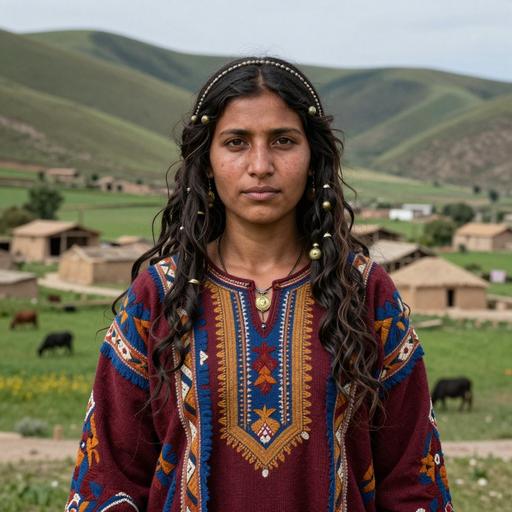
Portrait of ancient individual DA129 from Kazakhstan, dated 539 BCE - 208 BCE
DA129
Kazakhstan Iron Age Nomad, Kazakhstan 539 BCE - 208 BCE Steppe Nomadic Culture W3b Direct
Portrait of ancient individual DA129 from Kazakhstan, dated 539 BCE - 208 BCE
DA129
Kazakhstan The Nomadic Empires of the Eurasian Steppe 539 BCE - 208 BCE W3b Direct
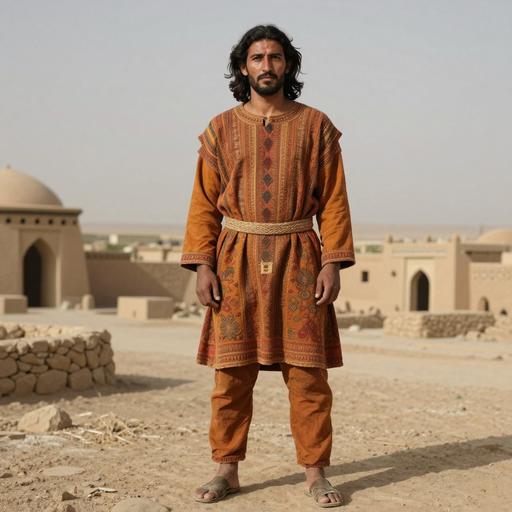
Portrait of ancient individual KFJ034 from Hungary, dated 670 CE - 720 CE
KFJ034
Hungary Middle Avar Period Hungary 670 CE - 720 CE Avar Culture W3b1 Direct
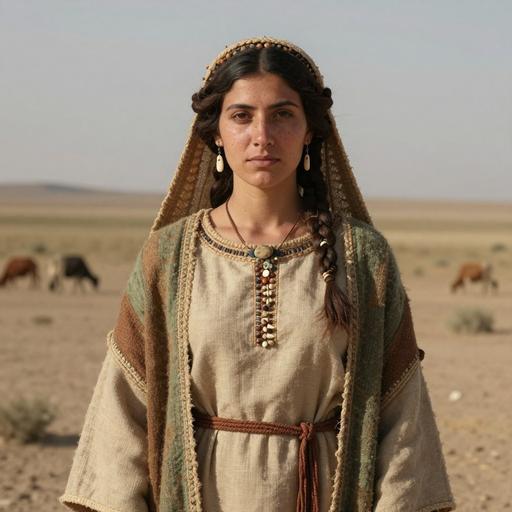
Portrait of ancient individual TMH-1273 from Hungary, dated 675 CE - 700 CE
TMH-1273
Hungary Late Avar Period Hungary 675 CE - 700 CE Avar Culture W3b Direct
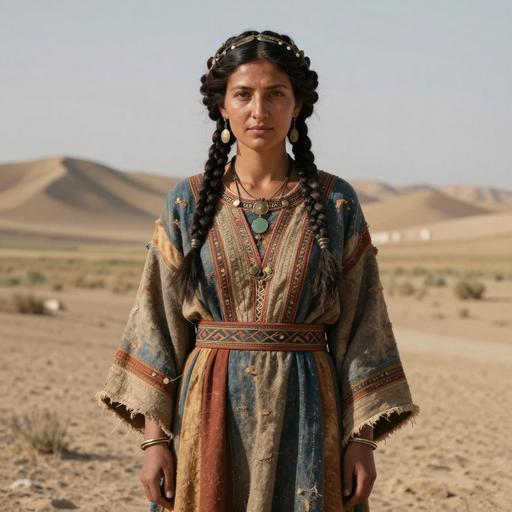
Portrait of ancient individual C847 from China, dated 743 BCE - 399 BCE
C847
China Iron Age Wuzan, Xinjiang, China 743 BCE - 399 BCE Wuzan Culture W3b Direct
Portrait of ancient individual I26749 from Croatia, dated 774 CE - 885 CE
I26749
Croatia Early Medieval Croatian Culture 774 CE - 885 CE Early Croatian W3b Direct
Portrait of ancient individual I12454 from Pakistan, dated 1000 BCE - 800 BCE
I12454
Pakistan The Pakistan Katelai Iron Age Culture 1000 BCE - 800 BCE Katelai Culture W3b Direct
Portrait of ancient individual PCA0376 from Poland, dated 1000 CE - 1200 CE
PCA0376
Poland Iron Age Santok Culture 1000 CE - 1200 CE Santok Culture W3b1 Direct
Portrait of ancient individual I15750 from Armenia, dated 1420 BCE - 1250 BCE
I15750
Armenia Late Bronze Age to Early Iron Age Armenia 1420 BCE - 1250 BCE Armenian LBA-EIA W3b Direct
Portrait of ancient individual I6675 from Turkmenistan, dated 1600 BCE - 1000 BCE
I6675
Turkmenistan Late Bronze Sumbar 1600 BCE - 1000 BCE Sumbar W3b Direct
Chapter VI

Carrier Distribution Map

Geographic distribution of 16 ancient DNA samples carrying haplogroup W3B

Time Period Filter
All Time Periods
Showing all samples
Each marker represents an ancient individual
Chapter VII

Temporal Distribution

Distribution of carriers across archaeological periods

Chapter VIII

Geographic Distribution

Distribution of carriers by country of origin

Chapter IX

Country × Era Distribution

Cross-tabulation of carrier countries and archaeological periods

Data

Data & Provenance

Source information and data quality

Last Updated 2026-02-16
Confidence Score 50/100
Coverage Low
Data Source

We use the latest phylotree for MTDNA haplogroup classification and data.