Menu
mtDNA Haplogroup • Maternal Lineage

W4

mtDNA Haplogroup W4

~12,000 years ago
Near East and South Asia
0 subclades
Scroll to explore
Chapter I

The Story

The journey of mtDNA haplogroup W4

Origins and Evolution

mtDNA haplogroup W4 is a subclade of haplogroup W, itself derived from the macro-haplogroup N. Based on the phylogenetic position of W4 relative to other W subclades and published molecular-clock estimates for haplogroup W, W4 most likely coalesced in the early Holocene (roughly ~12 kya, give or take several thousand years). This timing places its origin after the Last Glacial Maximum when human populations were re-expanding and mixing across the Near East, South Asia and adjacent regions. The origin in the Near East / South Asia is consistent with the broader distribution of parent haplogroup W and with archaeological and climatic contexts that favored population movements and localized differentiation during the Late Pleistocene–Early Holocene transition.

Subclades

W4 branches within the W phylogeny and can include downstream sublineages identified in high-resolution sequencing studies; however, W4 is generally treated as a defined internal branch within W rather than a large clade with many deeply diverged daughter clades. Where whole-mitochondrial-genome data are available, W4 can resolve into finer subclades that show regional structuring (for example, sublineages enriched in South Asia versus those in the Caucasus or Eastern Europe). Continued mitogenome sampling, particularly from under-sampled regions, refines the internal topology and age estimates for W4 subbranches.

Geographical Distribution

W4 is observed at low to moderate frequencies across a broad swath of Eurasia rather than being narrowly localized. Its presence has been reported in:

  • South Asia (India, Pakistan) — several modern samples and some regional diversity suggest a long-standing presence.
  • The Caucasus and adjacent Near East — consistent with W's role as a Near Eastern–Eurasian maternal lineage.
  • Central Asia and parts of Western China/Siberia — reflecting eastward dispersal corridors and historic contact zones.
  • Eastern and parts of Northern Europe — generally at low frequencies, likely reflecting Holocene migrations and later movements across Eurasia.

The observed pattern — low-to-moderate local frequencies but a wide geographic footprint — is typical of maternal lineages that expanded episodically and were carried by small but mobile groups across trade, pastoral, and migratory networks.

Historical and Cultural Significance

While haplogroup W4 is not diagnostic of any single archaeological culture, its spatio-temporal pattern aligns with several broad demographic processes of the Holocene:

  • Neolithic dispersals: Movement of people and genes from Near Eastern farming and forager–farmer interaction zones into South Asia and Europe could have transmitted W4-bearing maternal lines into new regions.
  • Bronze Age mobility: Steppe-associated and other trans-Eurasian contacts during the Bronze Age likely contributed to the trace-level presence of W4 in parts of Europe and Central Asia.
  • Regional persistence: In South Asia and the Caucasus, W4 may represent autochthonous maternal diversity that predates or was contemporaneous with Neolithic and later cultural horizons.

Because mtDNA tracks only maternal ancestry, W4 should be interpreted in combination with autosomal and Y-chromosome data to reconstruct complex demographic histories; nonetheless, its pattern helps illuminate maternal contributions to post-glacial and Holocene population structure across Eurasia.

Conclusion

mtDNA haplogroup W4 is a geographically widespread but typically low-frequency maternal lineage that likely arose in the Near East / South Asia in the early Holocene (~12 kya). Its distribution across South Asia, the Caucasus, Central Asia and parts of Europe reflects a history of gradual dispersal, localized persistence, and incorporation into multiple cultural contexts during the Neolithic and later periods. Increased whole-mitogenome sampling, especially from ancient DNA, will further clarify W4's internal structure, age, and specific migration episodes that shaped its present-day distribution.

Key Points

  • Origins and Evolution
  • Subclades
  • Geographical Distribution
  • Historical and Cultural Significance
  • Conclusion

Chapter II

Tree & Relationships

Phylogenetic context and subclades

Evolution Path

This haplogroup's evolutionary journey from its earliest ancestor to the present.

Steps Haplogroup Age Estimate Archaeology Era Time Passed Immediate Descendants Tested Modern Descendants Ancient Connections
1 W4 Current ~12,000 years ago 🌾 Neolithic 12,000 years 0 1 0
2 W ~20,000 years ago 🏹 Mesolithic 20,000 years 6 419 114
3 N2 ~45,000 years ago 🦴 Paleolithic 45,000 years 2 423 0
4 N ~60,000 years ago 🦴 Paleolithic 60,000 years 15 15,452 13
5 L3 ~70,000 years ago 🦴 Paleolithic 70,000 years 11 17,621 6
6 L ~160,000 years ago 🦴 Paleolithic 160,000 years 7 18,987 5

Subclades (0)

Terminal branch - no known subclades

Siblings (5)

Other branches from the same parent haplogroup

Chapter III

Where in the World

Geographic distribution and modern presence


Place of Origin

Near East and South Asia

Modern Distribution

The populations where mtDNA haplogroup W4 is found include:

  1. South Asian populations (India, Pakistan)
  2. Caucasus region populations
  3. Central Asian populations
  4. Eastern European populations
  5. Northern European populations (at low frequency)
  6. Middle Eastern populations
  7. Western China and Siberian fringe populations
CHAPTER IV

When in Time

Your haplogroup in the context of human history

~12k years ago

Haplogroup W4

Your mtDNA haplogroup emerged in Near East and South Asia

Near East and South Asia
~10k years ago

Neolithic Revolution

Agriculture begins, settled communities form

~5k years ago

Bronze Age

Metalworking, writing, and early civilizations

~3k years ago

Iron Age

Iron tools, expanded trade networks

~2k years ago

Classical Antiquity

Greek and Roman civilizations flourish

Present

Present Day

Modern era

Your Haplogroup
Historical Era
Chapter IV-B

Linked Cultures

Ancient cultures associated with mtDNA haplogroup W4

Cultural Heritage

These ancient cultures have been linked to haplogroup W4 based on matching ancient DNA samples from archaeological excavations. The presence of this haplogroup in these cultures provides insights into the migrations and population movements of populations carrying this haplogroup.

Armenian LBA-EIA Avar Culture Baden-Yamnaya Culture Bulgarian EBA Corded Ware Gonur Culture Linear Pottery Culture Loebanr Culture Montenegrin Bronze Age Norse Greenland Petrovka Culture Sapalli Shahr-i Sokhta Culture
Culture assignments are based on archaeological context of ancient DNA samples and may represent regional associations during specific time periods.
Chapter V

Sample Catalog

Top 50 ancient DNA samples directly related to haplogroup W4 or parent clades

50 / 50 samples
Portrait Sample Country Era Date Culture mtDNA Match
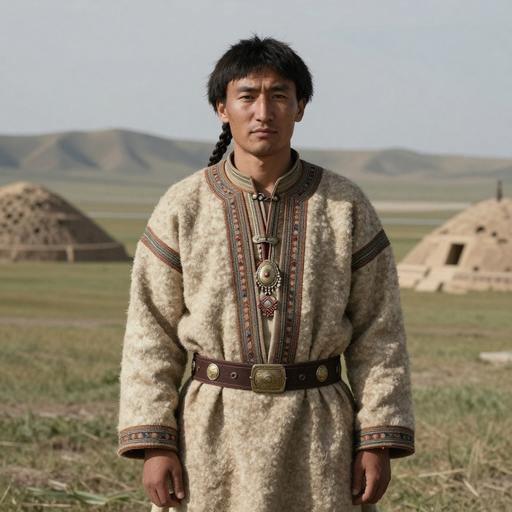
Portrait of ancient individual I8218 from Pakistan, dated 47 BCE - 62 CE
I8218
Pakistan Aligrama Iron Age Site in Swat Valley, Pakistan 47 BCE - 62 CE Aligrama Culture W6 Direct
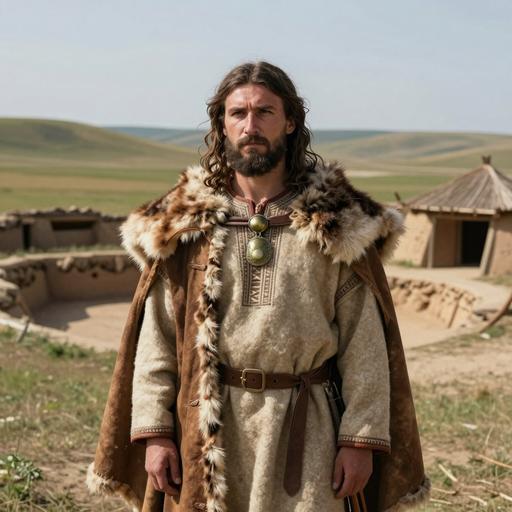
Portrait of ancient individual PCA0001 from Poland, dated 59 CE - 229 CE
PCA0001
Poland Wielbark Culture 59 CE - 229 CE Wielbark W Direct
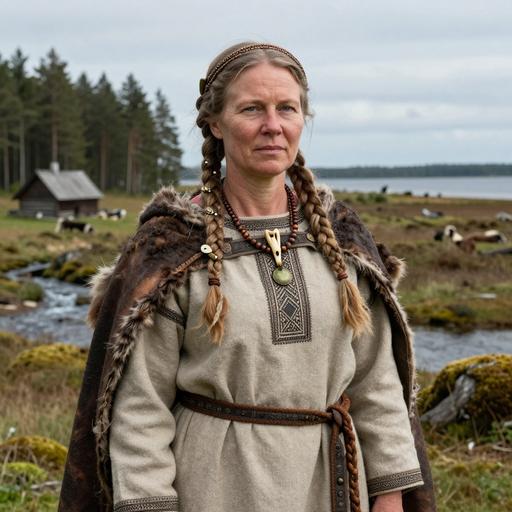
Portrait of ancient individual PCA0007 from Poland, dated 66 CE - 222 CE
PCA0007
Poland Wielbark Culture 66 CE - 222 CE Wielbark W1 Direct
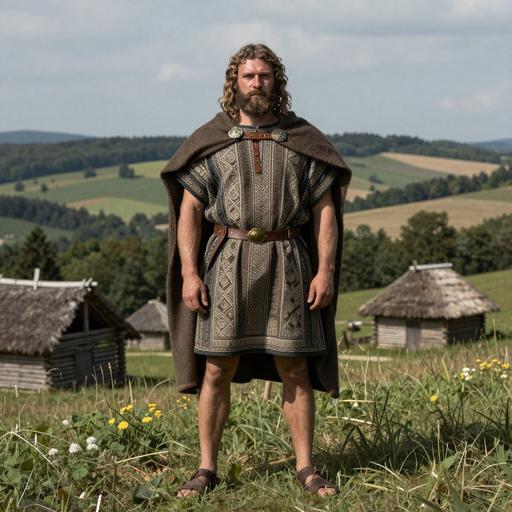
Portrait of ancient individual I1636 from Armenia, dated 72 BCE - 60 CE
I1636
Armenia Late Hellenistic Armenia 72 BCE - 60 CE Late Hellenistic Armenian W3a1 Direct
Portrait of ancient individual C3633 from China, dated 84 CE - 239 CE
C3633
China Historical Sampula, China 84 CE - 239 CE Sampula W3a1 Direct
Portrait of ancient individual KNT003 from Kazakhstan, dated 100 CE - 500 CE
KNT003
Kazakhstan Late Iron Age Kazakhstan 100 CE - 500 CE Late Iron Age W3a1 Direct
Portrait of ancient individual PCA0481 from Poland, dated 100 CE - 300 CE
PCA0481
Poland Wielbark Culture 100 CE - 300 CE Wielbark W5a1 Direct
Portrait of ancient individual UN19_merge from France, dated 120 BCE - 80 BCE
UN19_merge
France Iron Age Culture of Manche 120 BCE - 80 BCE Manche Culture W1c1 Direct
Portrait of ancient individual L8000 from Uzbekistan, dated 150 BCE - 50 CE
L8000
Uzbekistan Iron Age Rabat Culture of Surxondaryo 150 BCE - 50 CE Rabat Culture W1+119 Direct
Portrait of ancient individual MJ-38 from Russia, dated 162 BCE - 17 CE
MJ-38
Russia Sarmatian Culture, Russia 162 BCE - 17 CE Sarmatian W Direct
Chapter VI

Carrier Distribution Map

Geographic distribution of 100 ancient DNA samples carrying haplogroup W4

Time Period Filter
All Time Periods
Showing all samples
Each marker represents an ancient individual
Chapter VII

Temporal Distribution

Distribution of carriers across archaeological periods

Chapter VIII

Geographic Distribution

Distribution of carriers by country of origin

Chapter IX

Country × Era Distribution

Cross-tabulation of carrier countries and archaeological periods

Data

Data & Provenance

Source information and data quality

Last Updated 2026-02-16
Confidence Score 50/100
Coverage Low
Data Source

We use the latest phylotree for MTDNA haplogroup classification and data.