The Story
The journey of Y-DNA haplogroup N1A1A1A1A1A1
Origins and Evolution
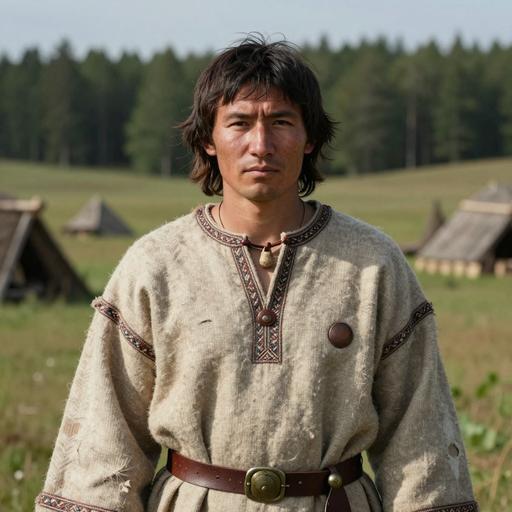
Haplogroup N1A1A1A1A1A1 sits as a very recent downstream branch of the N1 lineage that has a long history in northern Eurasia. Based on its position below N1A1A1A1A1A and the extremely short internal branch lengths reported in comparable micro‑clades, this lineage most plausibly arose in Fennoscandia within the last few hundred years (on the order of 0.1–0.3 kya). The pattern — a geographically restricted high frequency in parts of northern Finland and among some Fennoscandian groups combined with near absence elsewhere — is typical of a recent founder effect and subsequent genetic drift in small or isolated populations.
Because of its recent origin, N1A1A1A1A1A1 is unlikely to be represented in Paleolithic, Mesolithic, or most pre‑modern ancient DNA series; detection requires high‑resolution Y‑SNP typing or whole‑Y sequencing in modern and very recent archaeological contexts.
Subclades
At present this subclade appears to be a terminal or very shallow cluster with few well‑resolved downstream branches documented publicly, consistent with a single recent founder or a small number of closely related founders. Where higher resolution sequencing has been performed, microlineages defined by private SNPs or closely clustered Y‑STR signatures can be observed, reflecting rapid local expansion rather than long‑term diversification.
Geographical Distribution
The distribution of N1A1A1A1A1A1 is strongly northerly and regional. Highest frequencies and the greatest diversity of closely related Y‑STR haplotypes are observed in northern and central Finland and among some Sámi groups; lower but detectable frequencies occur in neighboring Baltic coastal communities and northern Russian populations. Very low occurrences have been reported in some Uralic and Siberian groups at the periphery, consistent with either low‑level gene flow or occasional deep sharing of broader N1 ancestry.
Because this lineage is so recent, its pattern is best explained by local demographic history (founder event, drift, and limited migration) rather than wide prehistoric migrations. Sampling bias and the need for targeted SNP testing mean reported frequencies can change as more populations are typed to SNP resolution.
Historical and Cultural Significance
The timing and geography of N1A1A1A1A1A1 suggest ties to medieval or later demographic processes in northern Fennoscandia — for example, local population expansions, clan or family founder events, and social structures that can amplify a single paternal lineage. In communities with small effective population sizes (island or upland settlements, mobile pastoralist groups such as reindeer pastoralists), Y‑lineages can rise to high frequency rapidly.
This haplogroup may be overrepresented in genealogical lineages and surname studies within Finland and neighboring regions, and it can be useful in forensic and family‑history contexts for distinguishing recent paternal ancestry within northern Europe.
Conclusion
N1A1A1A1A1A1 is a textbook example of a very recent, geographically restricted Y‑DNA lineage: derived from the broader N1 family that shaped much of northern Eurasian paternal diversity, but shaped itself by a localized founder effect and genetic drift in Fennoscandia. Its study illustrates how high‑resolution SNP and sequencing work can resolve very recent population events that are invisible at coarser phylogenetic scales.
Key Points
- Origins and Evolution
- Subclades
- Geographical Distribution
- Historical and Cultural Significance
- Conclusion