The Story
The journey of Y-DNA haplogroup O1A2
Origins and Evolution
Haplogroup O1A2 is a downstream branch of O1A (M119), a paternal lineage that is strongly associated with Austronesian-speaking groups and coastal southern East Asia. While O1A as a whole likely has older roots in southern China/Taiwan (parent O1A has been dated to the Late Pleistocene / early Holocene), O1A2 most plausibly diversified later during the Holocene (estimates ~5 kya) in the same geographic corridor that gave rise to the Neolithic and early Austronesian expansions. This timing places O1A2's emergence in the period when maritime adaptations, rice/taro cultivation, and Neolithic pottery traditions were spreading along the coasts of southern China, Taiwan, and into Island Southeast Asia.
Phylogenetically, O1A2 sits beneath the M119-defined clade and represents one of several regional sublineages that reflect localized diversification associated with sea-borne migration and founder events. The exact internal topology (naming of downstream SNPs) continues to be refined as more high-resolution sequencing and broader sampling of indigenous island populations are performed.
Subclades (if applicable)
At present, O1A2 is known to contain multiple downstream lineages that show geographic structure — some lineages are concentrated in indigenous Taiwanese groups, others are more common in the northern Philippines, and a subset appears in parts of Island Southeast Asia and Remote Oceania. Many of these subclades are still being described; high-coverage Y-chromosome sequencing and better sampling of under-represented island populations are revealing finer subdivisions that correlate with island-to-island founder effects and localized expansions.
Geographical Distribution
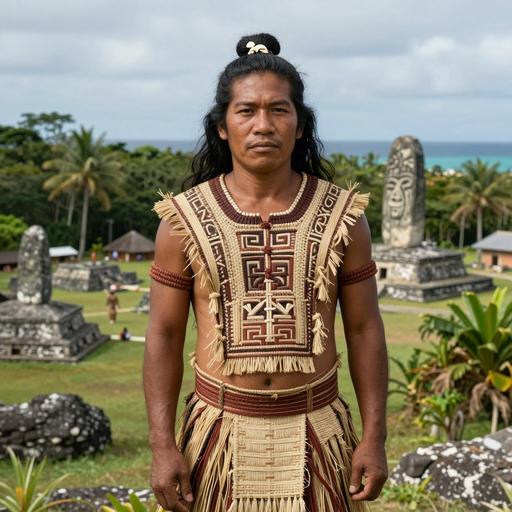
The modern distribution of O1A2 tracks the maritime Neolithic and Austronesian dispersal axis. It is frequent among indigenous Austronesian-speaking populations in Taiwan and the northern Philippines, moderate across parts of Island Southeast Asia (e.g., eastern Indonesia, parts of Borneo and Sulawesi), and occurs at lower but detectable frequencies in Remote Oceanian populations (including some Polynesian groups). Coastal southern Chinese populations (Fujian and Guangdong) also carry O1A2 at variable frequencies, reflecting prehistoric coastal contacts and back-migrations. Low-frequency occurrences have been reported in some mainland Southeast Asian groups and, sporadically, in coastal South Asia and Japan — often as the result of historical contact or more recent gene flow.
Ancient DNA evidence for specific O1A2 lineages is still limited, but where present it tends to appear in archaeological contexts related to Austronesian dispersal (Neolithic Dapenkeng / Taiwanese Neolithic contexts, and Lapita-associated remains in Remote Oceania), supporting a Holocene maritime expansion model.
Historical and Cultural Significance
O1A2 is important for understanding the paternal component of the Austronesian expansion — the rapid spread of people, languages and maritime culture from Taiwan into the Philippines, Island Southeast Asia, and eventually into Remote Oceania. Archaeologically relevant associations include the Dapenkeng / early Neolithic complex of Taiwan (which marks an early Neolithic cultural horizon linked to Austronesian origins) and the Lapita cultural horizon in the western Pacific (which marks the initial peopling of Remote Oceania).
Genetically, O1A2 complements maternal Austronesian markers (for example mtDNA lineages such as B4a1a1, the so-called Polynesian motif) and, together with archaeological and linguistic evidence, supports a model of demic diffusion (movement of people) coupled with substantial founder effects and island-specific drift. The haplogroup therefore serves as a useful paternal genetic marker for maritime Neolithic movements and subsequent island colonization events.
Conclusion
O1A2 is a Holocene-age subclade of O1A that documents paternal lineages involved in coastal and island expansions from southern China/Taiwan into Island Southeast Asia and the Pacific. Although research continues to resolve its finer substructure, current genetic and archaeological evidence places O1A2 as a key lineage for reconstructing Austronesian-related migrations, founder events on islands, and the peopling of Remote Oceania. Continued targeted sampling and whole-Y sequencing of underrepresented island and indigenous groups will refine the chronology and phylogeography of O1A2 further.
Key Points
- Origins and Evolution
- Subclades (if applicable)
- Geographical Distribution
- Historical and Cultural Significance
- Conclusion