The Story
The journey of Y-DNA haplogroup O1B1A1A1A1
Origins and Evolution
O1B1A1A1A1 is a downstream branch of O1B1A1A1A and is best interpreted as a Holocene coastal/maritime lineage that differentiated after the initial formation of its parent clade. Given the parent clade's estimated origin on the southern China–Taiwan coastal margin around ~3.8 kya, O1B1A1A1A1 plausibly arose sometime thereafter (on the order of ~3.0 kya), during the period of intensified Austronesian expansion and island-hopping dispersals across the Philippines and eastern Indonesia. Its phylogenetic position and geographic patterning suggest a role in localized demic expansions tied to seafaring communities rather than deep Pleistocene inland population structure.
Subclades (if applicable)
As a relatively downstream, named subclade, O1B1A1A1A1 likely contains further microlineages that have localized distributions (for example, island- or ethnolinguistic-group-specific branches). Where modern and ancient sampling is dense, substructure can reflect founder effects in island colonization (e.g., Philippines islands, Sulawesi or parts of eastern Indonesia). Comprehensive naming and resolution of internal subclades depend on higher-coverage Y-chromosome sequencing from both modern and ancient samples.
Geographical Distribution
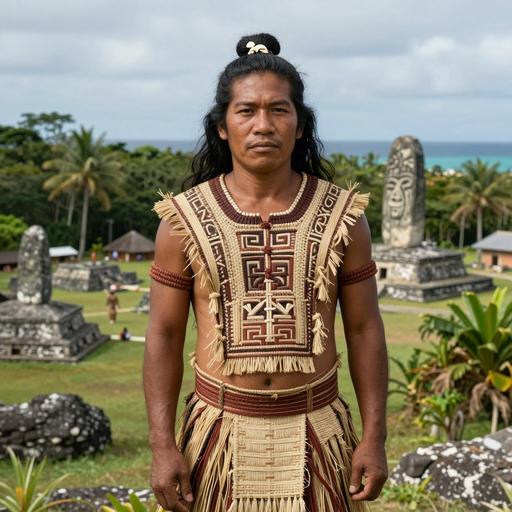
The modern distribution of O1B1A1A1A1 follows a coastal and insular belt of eastern Asia and maritime Southeast Asia. Highest frequencies and diversities are expected among indigenous Taiwanese (Formosan) groups and multiple Austronesian-speaking populations in the Philippines and eastern Indonesia, with lower frequencies extending into Ryukyuan and southwestern Japanese islands and occasional low-frequency occurrences in coastal mainland Southeast Asia and parts of Island Melanesia. Sparse, low-frequency occurrences in coastal South Asia or other regions likely reflect historical contact, trade, or recent migration rather than primary expansions.
Historical and Cultural Significance
Because of its geographic placement and time depth, O1B1A1A1A1 is informative for reconstructing Austronesian maritime dispersals and the demographic processes that accompanied Neolithic-to-Bronze Age seafaring. It complements maternal lineages (e.g., mtDNA B4a1a1 and other Austronesian-associated haplogroups) and frequently co-occurs with other regional Y-haplogroups (notably O1a/M119 in Formosan and Philippine contexts). Archaeological correlates include the earliest Formosan Neolithic pottery-making communities, coastal Neolithic expansions, and later Lapita-associated movements into Remote Oceania where related paternal lineages can be detected at low levels.
Conclusion
O1B1A1A1A1 represents a regionally important maritime Y-haplogroup that helps trace Holocene coastal and island colonization events in the western Pacific and maritime Southeast Asia. Its full phylogeographic picture will continue to sharpen as more high-resolution Y-chromosome sequencing and ancient DNA sampling are conducted across Taiwan, the Philippines, eastern Indonesia and adjacent island groups.
Key Points
- Origins and Evolution
- Subclades (if applicable)
- Geographical Distribution
- Historical and Cultural Significance
- Conclusion