The Story
The journey of Y-DNA haplogroup O2A1B1
Origins and Evolution
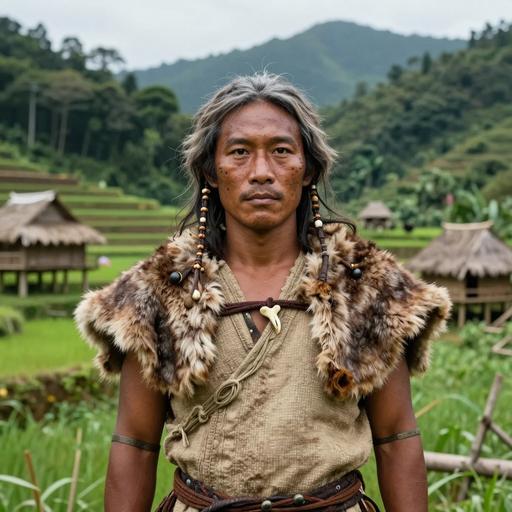
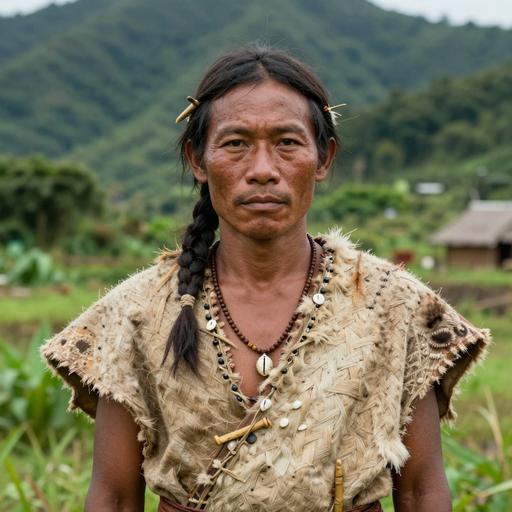
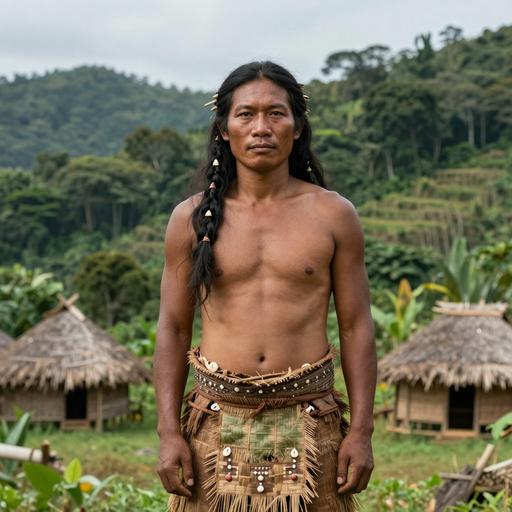
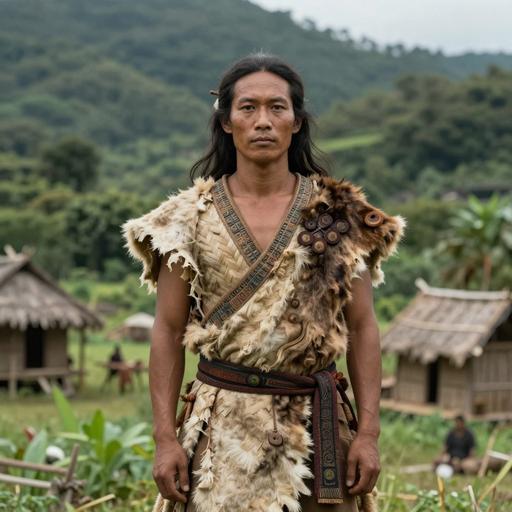
Haplogroup O2A1B1 is a downstream branch of O2A1B (a sublineage of O2A1 / O-M95). It most likely diversified in Mainland Southeast Asia or adjacent southern Chinese regions during the mid- to late Holocene, roughly within the last 4,000 years. This timing and location are consistent with population expansions linked to the spread of wet-rice agriculture and other Neolithic systems in mainland Southeast Asia. As a mid-level clade, O2A1B1 reflects local diversification of paternal lineages that were already widespread in the region through earlier movements associated with O-M95.
Genetically, O2A1B1 sits within a cluster of O-M95-derived lineages that show strong geographic structure in mainland Southeast Asia and southern China. Its emergence likely reflects demographic growth and localized founder effects among farming populations and their neighbors.
Subclades (if applicable)
Specific downstream subclades of O2A1B1 have been identified in some Y-tree builds and targeted studies, often defined by single SNPs or small sets of variants. These subclades tend to show regional specificity — some confined to Austroasiatic-speaking groups in mainland Southeast Asia, others recorded at low frequencies in Austronesian-speaking and South Asian populations. Due to ongoing refinement of the O haplogroup phylogeny, the number and names of O2A1B1 subclades can vary between nomenclature systems; targeted sequencing and high-resolution SNP testing continue to refine internal branching and geographic patterns.
Geographical Distribution
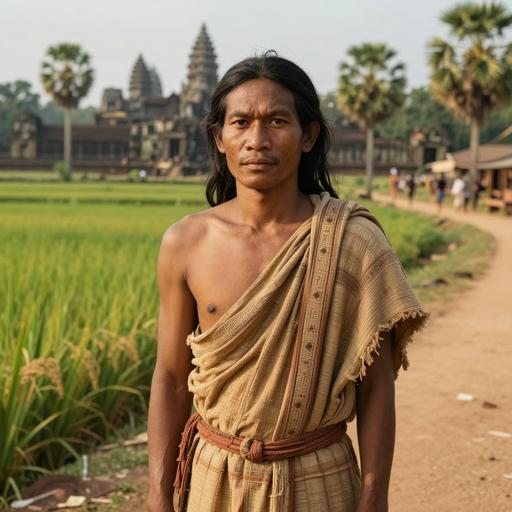
O2A1B1 is most frequent in mainland Southeast Asian populations — particularly among Austroasiatic-speaking groups (e.g., Khmer, Mon and related groups), various Tai–Kadai and Tai-speaking populations, and other regional groups in Myanmar, Thailand, Laos and Vietnam. It is also found among southern Chinese populations and ethnic minorities with historical connections to mainland Southeast Asia. At lower frequencies, O2A1B1 appears in Munda-speaking groups of eastern and central India (consistent with a wider O-M95 distribution and historical gene flow), in some Austronesian-speaking groups across Island Southeast Asia and indigenous Taiwanese, and sporadically in Japan and parts of Island Southeast Asia where later contact and admixture occurred.
The distribution pattern — high frequencies in mainland Southeast Asia with decreasing frequencies radiating into island Southeast Asia and parts of South Asia — mirrors archaeological and linguistic inferences about the spread of agriculturalists and secondary dispersals.
Historical and Cultural Significance
O2A1B1 is informative for reconstructing Holocene demographic processes in East and Southeast Asia. Its association with Austroasiatic and other mainland Southeast Asian groups links the clade to Neolithic agricultural expansions (wet-rice and associated technologies) and to the formation of regional ethnolinguistic patterns. The presence of O2A1B1 in Munda-speaking populations in India at low frequencies is consistent with the hypothesized westward movement or gene flow of Austroasiatic-associated paternal lineages into South Asia during the mid-Holocene.
In coastal and island settings, O2A1B1's reduced frequency but occasional presence is compatible with Austronesian-mediated maritime dispersals and later trade-mediated admixture. In short, O2A1B1 functions as a marker of localized Neolithic expansions in mainland Southeast Asia and of subsequent, lower-level dispersals into neighboring regions.
Conclusion
O2A1B1 exemplifies how sublineages of O-M95 diversified in Mainland Southeast Asia and southern China during the Holocene in association with farming and regional demographic expansions. It is most informative when combined with archaeology, linguistics, and high-resolution Y-chromosome phylogenies: as sequencing and SNP discovery progress, the internal structure and finer-scale migratory history of O2A1B1 will become increasingly well resolved.
Key Points
- Origins and Evolution
- Subclades (if applicable)
- Geographical Distribution
- Historical and Cultural Significance
- Conclusion