Menu
Y-DNA Haplogroup • Paternal Lineage

O2A1B1A1A1A1F

Y-DNA Haplogroup O2A1B1A1A1A1F

~200 years ago
Mainland Southeast Asia / Southern China
1 subclades
Scroll to explore
Chapter I

The Story

The journey of Y-DNA haplogroup O2A1B1A1A1A1F

Origins and Evolution

Haplogroup O2A1B1A1A1A1F is a terminal subclade nested under the O-M95 (also referenced as O2a) radiation. O-M95 is an older lineage associated broadly with Austroasiatic-speaking groups and has a deep history in mainland Southeast Asia and southern China. The F terminal is a very recent downstream split from its immediate parent (O2A1B1A1A1A1) and, based on the short branch length and distribution observed in modern samples, likely arose within the last few hundred years as a localized founder event.

Molecular data and the topology of the O-M95 tree indicate that F is not a deep, pan-regional lineage but rather a recent, geographically constrained descendant: its emergence post-dates the major Holocene demographic movements that dispersed O-M95 across Southeast Asia and into South Asia. Where sampled, F often appears on long shared haplotypes consistent with a recent common ancestor and subsequent rapid expansion within a narrow set of communities.

Subclades

As a very terminal designation, O2A1B1A1A1A1F may currently have few or no well-defined downstream named subclades in published public trees; most detected variation is observed as within-haplogroup short-range STR diversity or private SNPs. Future targeted sequencing in populations where F is detected may reveal additional internal structure (micro-subclades) reflecting recent demographic splits (e.g., patrilineal clans, village founder effects, or historical migration events).

Geographical Distribution

The geographical footprint of O2A1B1A1A1A1F is narrow relative to its parent. Modern sampling indicates highest representation in mainland Southeast Asia with sporadic occurrences in adjacent southern Chinese provinces and low-frequency traces in regions historically connected by migration or trade.

  • Concentrations are expected among Austroasiatic-speaking groups (e.g., some Mon, Khmer, and Vietic communities) and in multi-ethnic mainland SEA populations (Thai, Lao) where localized founder effects have amplified particular male lineages.
  • Peripheral occurrences may appear at low frequency in southern Han Chinese and minority groups in Guangxi/Yunnan, and as rare traces in Munda-speaking groups of eastern/central India and in Austronesian populations of Island Southeast Asia and Taiwan due to historic gene flow.

Sampling bias and limited targeted high-resolution sequencing mean the observed distribution may underrepresent true local frequencies in unsampled or undersampled communities.

Historical and Cultural Significance

Because O2A1B1A1A1A1F is so recent, its historical significance is best interpreted as the genetic signature of localized founder events rather than large-scale prehistoric expansions. Such founder events can correspond to:

  • The rise and local expansion of ruling lineages, clans, or patrilineal groups within medieval and early modern polities (for example, communities tied to regional centers like those in the Khmer cultural sphere or other mainland SEA polities).
  • Social practices that amplify certain male lines (e.g., inheritance rules, elite male lineage continuity, or founder colonization of new settlements).

There is currently no robust ancient DNA evidence tying F to a specific archaeological horizon. Its time depth and pattern are consistent with demographic processes operating during the last millennium (e.g., medieval–early modern period) rather than Neolithic or Bronze Age farmer/hunter‑gatherer transitions.

Conclusion

O2A1B1A1A1A1F represents a highly terminal, recent branch of the widespread O-M95 clade, notable for its localized, low- to moderate-frequency presence in Austroasiatic-associated populations and neighboring groups. It is most informative for reconstructing recent, fine-scale paternal histories (founder effects, clan expansions, and historic demographic events) within mainland Southeast Asia and adjacent southern China; additional high-resolution sequencing and broader population sampling will clarify its internal structure and micro-geographic patterns.

Key Points

  • Origins and Evolution
  • Subclades
  • Geographical Distribution
  • Historical and Cultural Significance
  • Conclusion
Chapter II

Tree & Relationships

Phylogenetic context and subclades

Evolution Path
This haplogroup's evolutionary journey from its earliest ancestor to the present.

Steps Haplogroup Age Estimate Archaeology Era Time Passed Immediate Descendants Tested Modern Descendants Ancient Connections
1 O2A1B1A1A1A1F Current ~200 years ago 🏭 Modern 200 years 1 0 0

Siblings (1)

Other branches from the same parent haplogroup

Chapter III

Where in the World

Geographic distribution and modern presence
Place of Origin

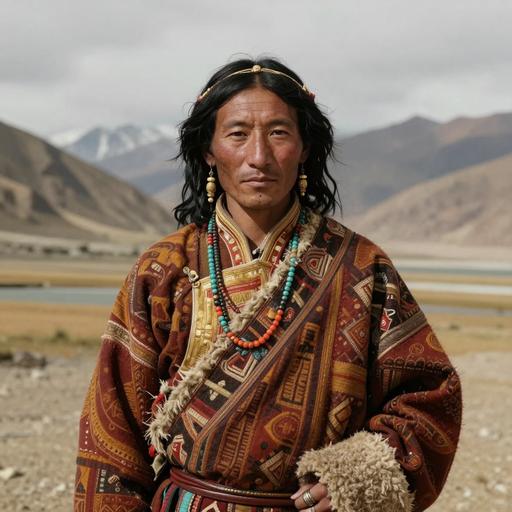
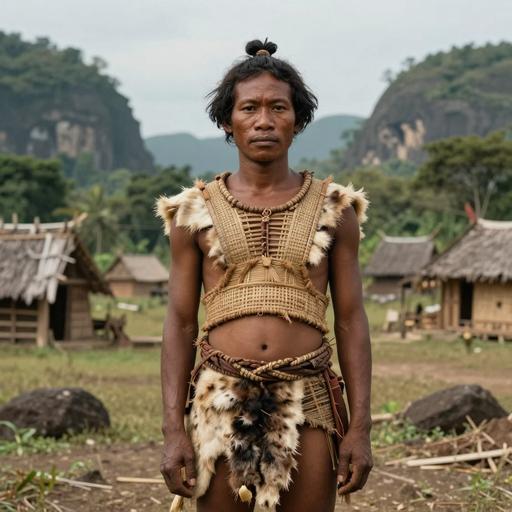
Mainland Southeast Asia / Southern China

Modern Distribution

The populations where Y-DNA haplogroup O2A1B1A1A1A1F is found include:

  1. Austroasiatic-speaking populations of mainland Southeast Asia (e.g., Khmer, Mon, Vietic subgroups)
  2. Mainland Southeast Asian multi-ethnic populations (e.g., Thai, Lao, Shan and related groups)
  3. Southern Han Chinese and ethnic minorities in southern China (e.g., Guangxi, Yunnan) at low frequency
  4. Munda-speaking groups in eastern and central India (sporadic, low frequency)
  5. Austronesian-speaking groups in Island Southeast Asia (variable, generally low frequencies)
  6. Indigenous Taiwanese populations (sporadic occurrences)
  7. Burmese and other mainland Southeast Asian hill populations (sporadic/low)
  8. Occasional, isolated detections in Japan and other East Asian populations due to later gene flow

Regional Presence

Southeast Asia Moderate
Eastern Asia (Southern China) Low
South Asia (Eastern/Central India) Low
Island Southeast Asia Low
CHAPTER IV

When in Time

Your haplogroup in the context of human history

~10k years ago

Neolithic Revolution

Agriculture begins, settled communities form

~5k years ago

Bronze Age

Metalworking, writing, and early civilizations

~3k years ago

Iron Age

Iron tools, expanded trade networks

~2k years ago

Classical Antiquity

Greek and Roman civilizations flourish

~200 years ago

Haplogroup O2A1B1A1A1A1F

Your Y-DNA haplogroup emerged in Mainland Southeast Asia / Southern China

Mainland Southeast Asia / Southern China
Present

Present Day

Modern era

Your Haplogroup
Historical Era
Chapter IV-B

Linked Cultures

Ancient cultures associated with Y-DNA haplogroup O2A1B1A1A1A1F

Cultural Heritage

These ancient cultures have been linked to haplogroup O2A1B1A1A1A1F based on matching ancient DNA samples from archaeological excavations. The presence of this haplogroup in these cultures provides insights into the migrations and population movements of populations carrying this haplogroup.

Chinese Longsangquduo Culture Sukhbaatar Culture West Liao River Culture Xiongnu
Culture assignments are based on archaeological context of ancient DNA samples and may represent regional associations during specific time periods.
Chapter V

Sample Catalog

Top 50 ancient DNA samples directly related to haplogroup O2A1B1A1A1A1F or parent clades

50 / 50 samples
Portrait Sample Country Era Date Culture Y-DNA Match
Portrait of ancient individual I3736 from Taiwan, dated 1 CE - 800 CE
I3736
Taiwan Iron Age Taiwan 1 CE - 800 CE Taiwanese Iron O1a1a1a1-CTS1711 Direct
Portrait of ancient individual I3614 from Taiwan, dated 1 CE - 800 CE
I3614
Taiwan Iron Age Taiwan 1 CE - 800 CE Taiwanese Iron O2a2b2-CTS1366 Direct
Portrait of ancient individual I3618 from Taiwan, dated 1 CE - 800 CE
I3618
Taiwan Iron Age Taiwan 1 CE - 800 CE Taiwanese Iron O2a2b2a2-F706 Direct
Portrait of ancient individual I3731 from Taiwan, dated 1 CE - 800 CE
I3731
Taiwan Iron Age Taiwan 1 CE - 800 CE Taiwanese Iron O1a1a1a1-CTS1711 Direct
Portrait of ancient individual I8076 from Taiwan, dated 1 CE - 800 CE
I8076
Taiwan Iron Age Taiwan 1 CE - 800 CE Taiwanese Iron O-M119 Direct
Portrait of ancient individual I8080 from Taiwan, dated 1 CE - 800 CE
I8080
Taiwan Iron Age Taiwan 1 CE - 800 CE Taiwanese Iron O1a1a1a-F518 Direct
Portrait of ancient individual I14933 from Taiwan, dated 1 CE - 800 CE
I14933
Taiwan Iron Age Taiwan 1 CE - 800 CE Taiwanese Iron O1a2-F1081 Direct
Portrait of ancient individual I14931 from Taiwan, dated 1 CE - 800 CE
I14931
Taiwan Iron Age Taiwan 1 CE - 800 CE Taiwanese Iron O2a2-P201 Direct
Portrait of ancient individual I14929 from Taiwan, dated 1 CE - 800 CE
I14929
Taiwan Iron Age Taiwan 1 CE - 800 CE Taiwanese Iron O2a2b-F130 Direct
Portrait of ancient individual I14934 from Taiwan, dated 1 CE - 800 CE
I14934
Taiwan Iron Age Taiwan 1 CE - 800 CE Taiwanese Iron O1a1a1a1-CTS10963 Direct
Chapter VI

Carrier Distribution Map

Geographic distribution of 100 ancient DNA samples carrying haplogroup O2A1B1A1A1A1F

Time Period Filter
All Time Periods
Showing all samples
Each marker represents an ancient individual
Chapter VII

Temporal Distribution

Distribution of carriers across archaeological periods

Chapter VIII

Geographic Distribution

Distribution of carriers by country of origin

Chapter IX

Country × Era Distribution

Cross-tabulation of carrier countries and archaeological periods

Data

Data & Provenance

Source information and data quality

Last Updated 2026-02-16
Confidence Score 50/100
Coverage Low
Data Source

We use the latest phylotree for YDNA haplogroup classification and data.