The Story
The journey of Y-DNA haplogroup O2A1B1A1A1A1F2
Origins and Evolution
Haplogroup O2A1B1A1A1A1F2 is a terminal subclade nested within the broader O-M95 (commonly called O2a) paternal lineage, a lineage long associated with Austroasiatic-speaking populations and expansions across mainland Southeast Asia and parts of South Asia. Unlike deeper branches of O-M95 that expanded thousands of years ago, O2A1B1A1A1A1F2 represents a very recent, likely historical founder event — on the order of a few hundred years — that gave rise to a localized patrilineal cluster detectable today in several neighboring populations. Its shallow time depth suggests emergence from a single or a few male ancestors and subsequent local amplification through drift, social structure (e.g., patrilineal clan growth), or recent demographic events.
Subclades (if applicable)
As a terminal branch currently designated F2 at this terminal level, O2A1B1A1A1A1F2 is understood as a very recent tip on the tree; published and curated phylogenies treat it as a fine-scale branch of O2a/M95. At present there are no widely recognized deeper nested subclades reported for F2 in public datasets beyond private or project-level SNPs, which is consistent with its recent origin. Future dense sampling and high-coverage sequencing in regionally focused studies could reveal further substructure within F2, indicating multiple recent founder lines or micro-differentiation among communities.
Geographical Distribution
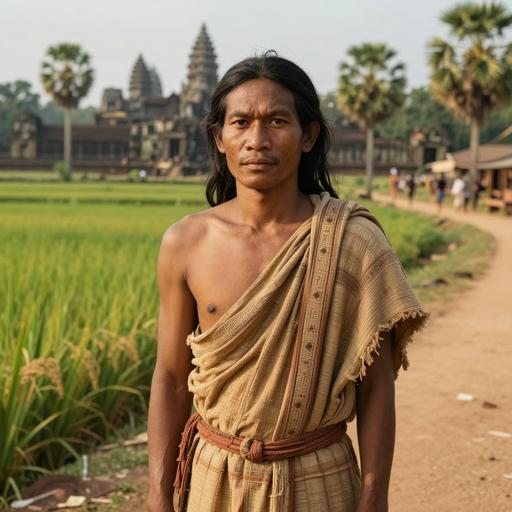
The distribution of O2A1B1A1A1A1F2 is strongly regional and patchy. It is most commonly documented in mainland Southeast Asia, where it appears as low- to moderate-frequency clusters in Austroasiatic-speaking groups (e.g., some Khmer, Mon, and Vietic subgroups) and in multi-ethnic mainland populations (Thai, Lao, Shan). Low-frequency occurrences are reported among southern Han Chinese and a range of ethnic minorities in Guangxi and Yunnan, reflecting recent cross-border gene flow. Sporadic detections in Munda-speaking groups of eastern and central India, Austronesian-speaking island populations, indigenous Taiwanese, and isolated finds in Japan likely reflect long-distance recent movement, historical admixture, or sampling of rare lineages rather than deep, widespread antiquity.
Notably, database records indicate at least one archaeological detection of a related lineage in ancient DNA resources, but that single aDNA occurrence should be interpreted cautiously — it confirms that the branch can be captured archaeologically but does not by itself indicate a broad ancient distribution.
Historical and Cultural Significance
Because O2A1B1A1A1A1F2 is so recent, its broader historical significance lies in illustrating how fine-scale Y-chromosome diversity can arise and become detectable through local founder effects and social transmission in the last few centuries. Its association with Austroasiatic-speaking groups fits a broader pattern in which the older O-M95 lineage tracks many Austroasiatic expansions; however, F2 reflects a more recent demographic episode layered atop that deeper history — for example, localized clan growth, male-line founder events associated with migration, settlement, or social stratification, or even the demographic effects of regional historical processes (trade, warfare, state formation).
Instances of F2 in Munda speakers of India or in Austronesian-speaking island populations are best interpreted as resulting from later gene flow (historic contacts, mercantile migrations, or isolated founder events) or from the persistence of rare ancestral lineages rather than indicating primary origins there.
Conclusion
O2A1B1A1A1A1F2 is a recent, geographically restricted terminal branch of the larger O-M95/O2a complex, primarily reflecting recent founder dynamics in mainland Southeast Asia and adjacent southern China. It is most informative for fine-scale population histories (local founder effects, clan-level demography, and recent cross-population contact) rather than for deep prehistoric migrations. Continued dense sampling and whole-Y sequencing in Southeast Asia and neighboring regions will clarify microstructure within F2 and help place its recent expansion into sharper temporal and social context.
Key Points
- Origins and Evolution
- Subclades (if applicable)
- Geographical Distribution
- Historical and Cultural Significance
- Conclusion