The Story
The journey of Y-DNA haplogroup O2A2B1A1A1A1A1B1A
Origins and Evolution
Haplogroup O2A2B1A1A1A1A1B1A is a highly downstream derivative of the O-M95 (also written O2a2) clade. Given its position very deep within a chain of terminal SNPs, it represents a very recent phylogenetic split — likely the result of a local founder event or a recent pedigree expansion in the Late Holocene. The parent lineage O-M95 has a long-established association with Austroasiatic-speaking populations across Mainland Southeast Asia and parts of South Asia; this terminal branch most likely arose within that broader geographic and ethnolinguistic context, probably in southern China or the Mainland Southeast Asian corridor.
Because the branch is so derived, its time depth is expected to be on the order of decades to a few centuries (tens to a few hundred years), reflecting either recent mutation discovery, fine-scale genealogical structure (clan/family expansion), or both. As with other very terminal Y-chromosome lineages, limited sampling and the discovery of private SNPs can make apparent age estimates sensitive to additional sampling.
Subclades
At present this designation (O2A2B1A1A1A1A1B1A) is an extremely downstream terminal node; any further subclades would represent still more recent splits, likely at the level of extended families, clans, or village-level founder events. Because the clade is already so deep in the tree, additional branching (if discovered) is more likely to reflect recent genealogical structure rather than ancient population processes.
Geographical Distribution
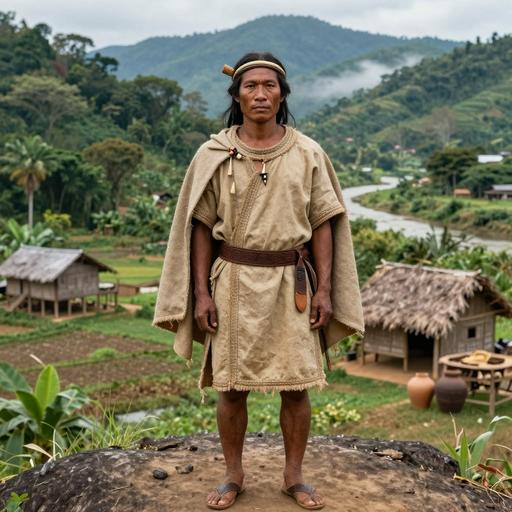
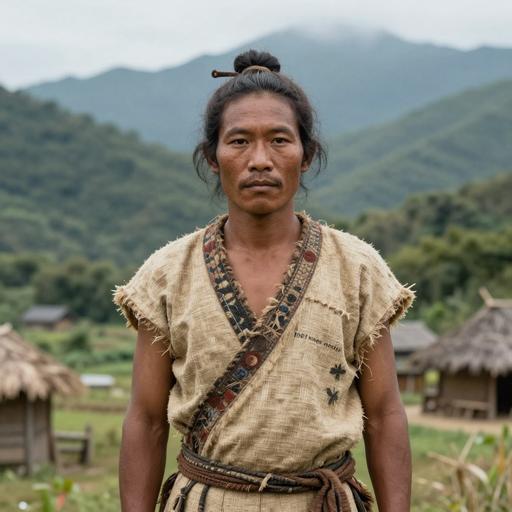
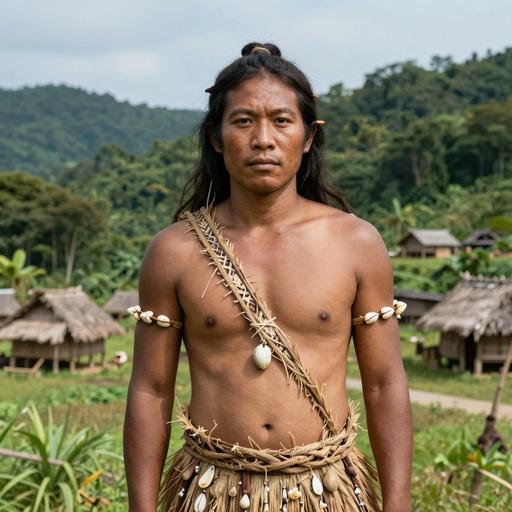
Observed occurrences of this haplogroup are concentrated among Austroasiatic-speaking groups in Mainland Southeast Asia and show low-frequency, sporadic presence in neighboring linguistic and ethnic groups because of historical admixture and local gene flow. The pattern corresponds to the distribution expected for a very recent localized founder lineage: high or moderate frequency in one or a few communities, and very low frequencies in surrounding populations (including Tai-speaking groups, southern Han Chinese, some Tibeto-Burman populations, and Austronesian-speaking groups that have experienced Mainland Southeast Asian admixture).
Sampling bias and uneven study coverage in Southeast Asia mean apparent concentration can change with broader population surveys. In some cases, identifications of such downstream clades arise from targeted deep sequencing or community-level sampling that reveals a recent expansion invisible to shallow genotyping.
Historical and Cultural Significance
Direct archaeological or ancient-DNA associations for this specific terminal clade are unlikely because of its very recent origin; it predates few, if any, well-defined archaeological horizons. However, in a cultural and population context it is best interpreted as a modern founder lineage embedded within broader Austroasiatic ethnolinguistic history. Possible social mechanisms producing the pattern include patrilineal clan expansions, recent demographic growth of a family or village, or historical events (local migrations, social stratification) occurring in the last several centuries.
Where it appears in Munda-speaking populations of eastern/central India or in Austronesian-admixed island populations, the presence is best explained by historical admixture or recent male-mediated gene flow rather than deep antiquity in those regions.
Conclusion
O2A2B1A1A1A1A1B1A should be treated as an indicator of very recent, localized paternal founder effects within the O-M95 continuum. Its significance is greatest for fine-scale haplotype and genealogical studies within Austroasiatic-linked communities and for reconstructing recent demographic events; broader inferences about prehistoric migrations should be made cautiously and only with corroborating wider-scale data (ancient DNA, larger population surveys). Ongoing dense sequencing in Southeast Asia will clarify its precise age, substructure, and distribution.
Key Points
- Origins and Evolution
- Subclades
- Geographical Distribution
- Historical and Cultural Significance
- Conclusion