The Story
The journey of Y-DNA haplogroup O2A2B1A2A1A1B1
Origins and Evolution
Y-DNA haplogroup O2A2B1A2A1A1B1 sits as a very downstream branch of the O‑M95 (also written O2a2) family. O‑M95 is a deeply important paternal lineage for many Austroasiatic-speaking groups and other mainland Southeast Asian populations and has an expansion history tied to Holocene demographic processes in mainland Southeast Asia. By contrast, O2A2B1A2A1A1B1 represents a micro‑branch that, based on its phylogenetic position and the very short branch lengths observed in high‑resolution SNP trees, most likely expanded very recently (on the order of decades to a few centuries) from the immediate parent clade O2A2B1A2A1A1B.
Because this clade is so downstream and recent, its presence is best interpreted as the product of localized male line founder events, recent population structure, or genealogical pedigrees rather than deep prehistoric migrations. Detection of O2A2B1A2A1A1B1 typically requires high‑coverage sequencing or targeted SNP assays that include the terminal mutations that define this group.
Subclades (if applicable)
At present O2A2B1A2A1A1B1 is recognized as a terminal or near‑terminal branch in current phylogenies, with few or no widely reported downstream subclades. If additional downstream SNPs are discovered in larger sequencing datasets, they would most likely reflect very recent splits within local lineages (familial or village‑level branches). Because of its recency and low diversity, the clade functions as an informative marker of recent male‑line relationships rather than broad prehistoric population structure.
Geographical Distribution
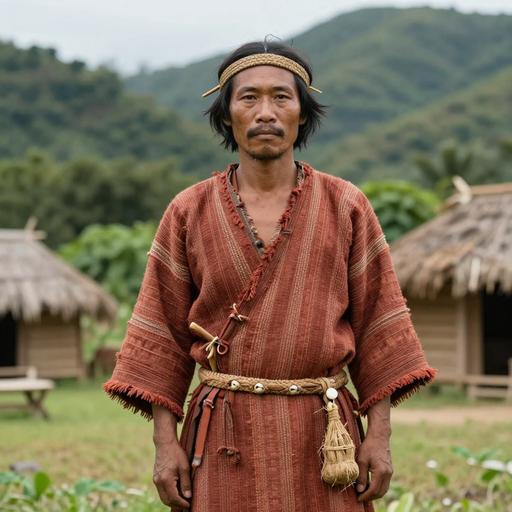
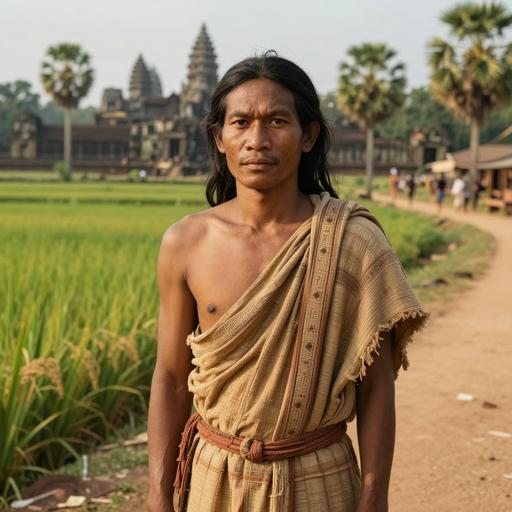
O2A2B1A2A1A1B1 is geographically concentrated in mainland Southeast Asia with occasional low‑frequency occurrences in neighboring regions. The clade is most often observed among Austroasiatic‑speaking groups (for example Khmer, Mon, and certain Vietic groups) and in mainland populations that have Austroasiatic ancestry (Thai, Lao and related Tai‑adjacent groups). Low‑frequency or sporadic occurrences may be found in southern Han Chinese and other ethnic minorities in southern China (reflecting historic contact and gene flow), in some Austronesian‑speaking communities of Island Southeast Asia via historical admixture, and very rarely in Munda‑speaking populations of India or Tibeto‑Burman groups where regional admixture has occurred.
Because the lineage is very recent and localized, its absolute frequency in broad population samples is typically low; however, in specific localities or family clusters it can reach appreciable frequency due to founder effects.
Historical and Cultural Significance
On its own, this terminal clade does not mark a major prehistoric migration event — its significance is primarily genealogical and regional. It can be useful in genetic genealogy and fine‑scale population studies to identify recent male‑line relationships and localized demographic events among Austroasiatic and neighboring groups. In a broader context, it sits within the O‑M95 story: an older expansion associated with the spread of Austroasiatic languages and lowland agricultural systems during the mid to late Holocene. Thus, while O2A2B1A2A1A1B1 is recent, it is nested inside a lineage with clear prehistoric relevance to mainland Southeast Asia.
Conclusion
O2A2B1A2A1A1B1 is best understood as a very recent, geographically localized subclade of the O‑M95 paternal family, valuable for resolving recent male genealogies and fine‑scale population structure in mainland Southeast Asia. Future high‑resolution sequencing of diverse Southeast Asian populations may identify additional downstream diversity or clarify its distribution, but current evidence points to a recent origin and primary association with Austroasiatic‑linked populations and their neighbors.
Key Points
- Origins and Evolution
- Subclades (if applicable)
- Geographical Distribution
- Historical and Cultural Significance
- Conclusion