The Story
The journey of Y-DNA haplogroup O2A2B1A2A1A1B1B
Origins and Evolution
Y-DNA haplogroup O2A2B1A2A1A1B1B sits very deep within the O‑M95 (also written O2a2) sublineage tree as an extremely downstream, recently derived clade. Given the known history of its parent clade—O2A2B1A2A1A1B1—this subclade most plausibly arose within mainland Southeast Asia or adjacent southern China within the last few hundred years (very low coalescence time measured in centuries). The very short branch length and low internal diversity typical of such observed downstream clades indicate a recent single-founder or very small number of founders followed by local expansion or persistence under drift.
Recent origin implies that the defining mutations of O2A2B1A2A1A1B1B accumulated after the broader Austroasiatic-associated diversification of O‑M95 during the late Holocene. Its emergence is best explained by a local mutational event in a patrilineal community followed by limited male-line transmission and geographic restriction rather than by an ancient broad-scale demographic event.
Subclades (if applicable)
As an ultra-fine subclade, O2A2B1A2A1A1B1B currently appears to have few if any well-documented downstream branches in published public phylogenies; most observations are defined by private or very recently discovered SNPs. Where downstream variation is observed, it typically manifests as singleton or very low-frequency private variants detected in targeted Y sequencing of modern individuals. Continued dense sampling and high-coverage Y-chromosome sequencing in Southeast Asia could reveal further subdivision, but at present this lineage behaves like a terminal/near-terminal branch.
Geographical Distribution
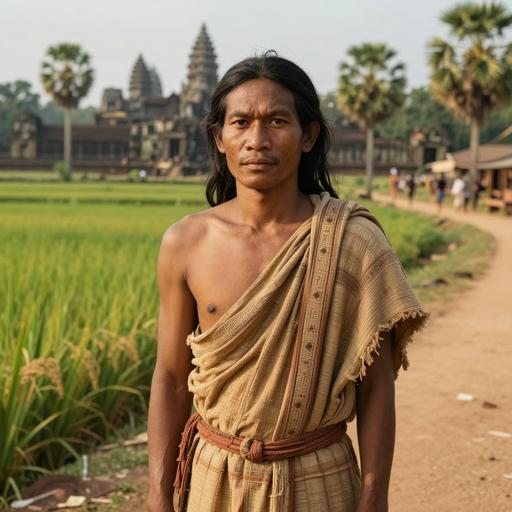
The distribution of O2A2B1A2A1A1B1B is highly localized and skewed toward populations in mainland Southeast Asia and nearby southern China. Detectable occurrences are concentrated in communities with Austroasiatic linguistic heritage (for example, Khmer, Mon, and several Vietic groups) and in neighboring mainland groups that have experienced Austroasiatic gene flow (some Thai and Lao populations). Low-frequency occurrences recorded in southern Han Chinese and select ethnic minorities of Guangxi/Yunnan likely reflect local contact and admixture. Sporadic appearances in Austronesian-speaking coastal or island groups, Tibeto-Burman groups, and Munda-speaking populations in South Asia are plausibly the result of historic admixture and recent movements rather than deep shared ancestry of the clade.
Historical and Cultural Significance
Because the clade is so recent, it cannot be reliably tied to ancient archaeological cultures on its own. Instead it is best interpreted as a marker of recent local demographic events: founder effects, surname-level or lineage-level expansions, or patrilineally structured communities maintaining a small set of male lines. In regions with strong male-line continuity (for example, village or clan systems in parts of mainland Southeast Asia), such recent subclades can reach measurable frequency within a few generations and then persist.
While older parent lineages of O‑M95 are often discussed in the context of Austroasiatic-associated Neolithic dispersals in the mid-to-late Holocene, O2A2B1A2A1A1B1B represents a much later micro-evolutionary development layered on that broader background. This haplogroup is therefore more informative about recent social history (local founder events, lineal descent) than about deep prehistory.
Conclusion
O2A2B1A2A1A1B1B is a terminal/near-terminal Y-chromosome branch that exemplifies how high-resolution phylogenies reveal very recent, geographically restricted paternal lineages. Its presence highlights the importance of dense regional sampling and high-coverage sequencing to resolve recent demographic processes. Interpretations should emphasize recent founder effects and local admixture rather than continent-scale migrations; additional targeted sequencing in Austroasiatic and neighboring populations will clarify its internal structure and precise geographic origin.
Key Points
- Origins and Evolution
- Subclades (if applicable)
- Geographical Distribution
- Historical and Cultural Significance
- Conclusion