The Story
The journey of mtDNA haplogroup D1G5
Origins and Evolution
mtDNA haplogroup D1G5 is a terminal subclade of D1G, itself a regional branch of the broader Native American haplogroup D1. Based on the parent clade's estimated time depth (D1G ~12 kya) and patterns seen in mitochondrial phylogenies, D1G5 most likely coalesced in South America during the Early to Mid Holocene (roughly around 9 kya). Its origin is best understood as a post‑glacial, within‑continent diversification event — arising after the initial entrance of D1 lineages into the Americas and reflecting local population structure, founder effects, and genetic drift in relatively small, regionally distributed groups.
Coalescence age estimates for small, regionally restricted mtDNA clades are typically derived from complete mitochondrial genomes using molecular clock approaches; given the limited number of observed D1G5 sequences (including two archaeogenetic occurrences in available databases), the estimated age is necessarily provisional and subject to revision as more ancient and modern complete mtDNA genomes are sampled.
Subclades
At present D1G5 is treated as a relatively terminal or narrowly defined branch within D1G with little published evidence for extensive downstream substructure. The paucity of reported sequences and the small number of ancient samples indicate limited internal diversification or limited sampling. Future dense sampling of modern and ancient mitogenomes from Andean and Amazonian contexts could reveal additional sublineages or refine the internal phylogeny.
Geographical Distribution
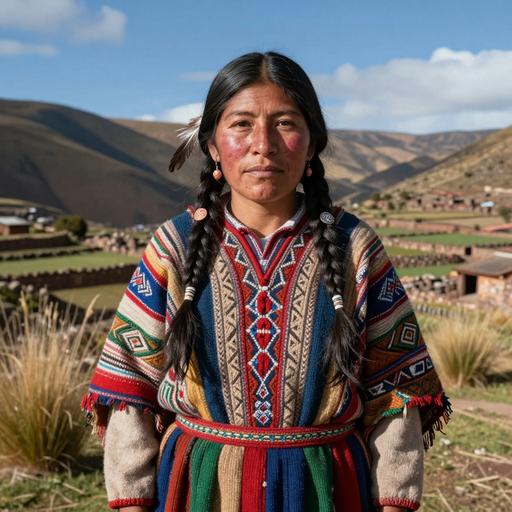
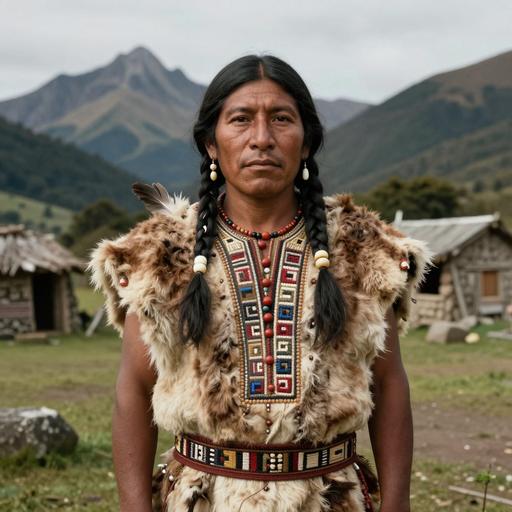
D1G5 shows a geographically restricted distribution concentrated in parts of South America. Highest relative occurrences are observed among some Andean and adjacent Amazonian groups, with low to sporadic frequencies reported in the Southern Cone and rare/isolated occurrences in Central and North American contexts. The pattern—localized presence with low overall frequency—fits a model of early regional diversification followed by drift and/or localized demographic continuity among indigenous maternal lineages.
Archaeogenetic data indicating D1G5 in at least two ancient South American individuals supports continuity of this lineage through the Holocene in specific regions. The current geographic footprint likely reflects a combination of early Holocene settlement patterns, later micro‑regional expansions, and population size fluctuations that amplify or reduce certain maternal lineages locally.
Historical and Cultural Significance
While D1G5 is not a marker for any broad continental migration event, it is valuable for reconstructing fine‑scale maternal demographic history in South America. Its presence in both ancient and modern individuals can help trace local continuity across archaeological transitions (for example, from preceramic hunter‑gatherer groups into later formative and regional societies), and provide evidence for routes of movement between Andean highlands and adjacent lowland areas.
Because D1G5 is low frequency and regionally restricted, it is most useful in conjunction with other genetic, archaeological and linguistic data to infer micro‑regional demographic processes such as founder effects, isolation, and small‑scale gene flow across diverse South American landscapes.
Conclusion
mtDNA haplogroup D1G5 is a localized, Holocene‑aged maternal lineage nested within D1G that highlights post‑peopling diversification in South America, particularly in Andean and Amazonian settings. Although currently rare in modern samples and attested in a small number of ancient individuals, D1G5 contributes to our understanding of regional maternal lineages and underscores the importance of increased sampling (both modern and ancient) to fully resolve the phylogeography of Native American mtDNA diversity.
Key Points
- Origins and Evolution
- Subclades
- Geographical Distribution
- Historical and Cultural Significance
- Conclusion