Menu
mtDNA Haplogroup • Maternal Lineage

D4G2

mtDNA Haplogroup D4G2

~7,000 years ago
Northeast Asia
1 subclades
Scroll to explore
Chapter I

The Story

The journey of mtDNA haplogroup D4G2

Origins and Evolution

Haplogroup D4G2 is a subclade of the D4G lineage, itself nested within the broader East/Northeast Asian mitochondrial haplogroup D4. The parental clade D4G diversified in the Late Pleistocene to Early Holocene (around ~15 kya), and D4G2 represents a later, more restricted branching event likely occurring in the Early to Mid-Holocene (roughly 6–9 kya). Its emergence is consistent with regional postglacial demographic processes: small-scale population differentiation, coastal and inland refugial expansions, and localized founder effects in northern East Asia and the Russian Far East.

Molecular diversity within D4G2 is relatively limited compared with older D4 subclades, which is compatible with a younger time depth and a history of restricted geographic spread and drift in peripheral or insular populations.

Subclades (if applicable)

Genetic surveys and sequencing efforts indicate that D4G2 can show internal structure (reported as minor sublineages such as D4G2a in some datasets), but these subclades are often sparsely sampled and not yet universally resolved across published phylogenies. As more complete mitogenomes from Northeast Asia and adjacent regions are generated, the internal branching of D4G2 may be clarified; current evidence suggests a handful of local sub-branches that reflect regional founder events rather than large-scale population expansions.

Geographical Distribution

D4G2 shows a geographically focused distribution centered on the Northeast Asian and Siberian region. It is typically found at low to moderate frequencies in:

  • Insular and coastal populations of northern Japan (notably among groups with Jomon or Ainu ancestry) and some Ryukyuan samples;
  • Indigenous Siberian groups and peoples of the Russian Far East (e.g., Yakut, Evenks, and other Tungusic-speaking groups) at sporadic to low-moderate frequencies;
  • Northern Han Chinese and certain northern Chinese ethnic minorities in low frequencies, reflecting regional admixture;
  • Scattered occurrences among Mongolic and Turkic groups in northern China and adjacent Central Asia, usually as rare, probably secondary introductions;
  • Ancient DNA samples from Northeast Asian Holocene contexts, where it appears occasionally in coastal hunter-gatherer assemblages.

Overall, its distribution is patchy and concentrated toward the north-eastern edge of East Asia rather than widespread across the continent.

Historical and Cultural Significance

D4G2 is most informative for regional population-history questions rather than large-scale migrations. It is useful for:

  • Tracing maternal continuity in Jomon-derived and Ainu-associated lineages in northern Japan and nearby islands, where founder effects and long-term isolation have preserved certain mitochondrial variants;
  • Documenting postglacial recolonization and localized Holocene demographic processes in the Russian Far East and northeastern China (coastal vs inland contrasts);
  • Complementing archaeological interpretations of coastal hunter-gatherer networks (e.g., Jomon and related Holocene cultures) and later regional contacts with circumpolar groups.

D4G2 is not strongly associated with the major Neolithic farming expansions that reshaped much of East and Southeast Asia; instead, it is more characteristic of northern hunter-gatherer and mixed coastal-hunter-gatherer populations that persisted through the Holocene.

Conclusion
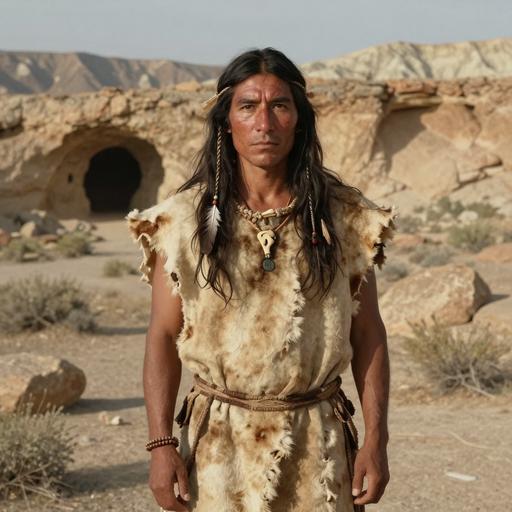
As a localized branch of D4G, D4G2 represents a Holocene maternal lineage that contributes to our understanding of northeastern Asian and Siberian population structure. Its restricted distribution, occasional presence in island populations (Ainu, Ryukyuan), and appearance in ancient coastal hunter-gatherer samples make it a valuable marker for studying regional continuity, founder effects, and small-scale maternal demography in the North Pacific and adjacent continental areas. Further mitogenome sequencing from understudied northern populations will improve resolution of its internal structure and historical dynamics.

Key Points

  • Origins and Evolution
  • Subclades (if applicable)
  • Geographical Distribution
  • Historical and Cultural Significance
  • Conclusion
Chapter II

Tree & Relationships

Phylogenetic context and subclades

Evolution Path

This haplogroup's evolutionary journey from its earliest ancestor to the present.

Steps Haplogroup Age Estimate Archaeology Era Time Passed Immediate Descendants Tested Modern Descendants Ancient Connections
1 D4G2 Current ~7,000 years ago 🌾 Neolithic 7,000 years 1 5 0
2 D4G ~15,000 years ago 🏹 Mesolithic 15,000 years 1 5 0
3 D4 ~25,000 years ago 🦴 Paleolithic 25,000 years 12 276 19
4 D ~45,000 years ago 🦴 Paleolithic 45,000 years 7 398 137
5 M ~60,000 years ago 🦴 Paleolithic 60,000 years 11 1,200 41
6 L3 ~70,000 years ago 🦴 Paleolithic 70,000 years 11 17,621 6
7 L ~160,000 years ago 🦴 Paleolithic 160,000 years 7 18,987 5
Chapter III

Where in the World

Geographic distribution and modern presence

Place of Origin

Northeast Asia

Modern Distribution

The populations where MTDNA haplogroup D4G2 is found include:

  1. East Asian populations (Han Chinese, Japanese, Korean — generally at low to very low frequencies in regional samples)
  2. Indigenous Siberian groups (Yakut, Evenk, Nganasan and related Tungusic and Turkic-speaking groups, often at low-to-moderate frequency)
  3. Ainu and some Ryukyuan and other insular Japanese subpopulations (reported in some studies, possibly reflecting founder effects)
  4. Mongolic and Turkic groups in parts of northern China and adjacent Central Asia (low frequencies, likely via regional admixture)
  5. Certain northern Chinese ethnic minorities and populations in the Russian Far East (sporadic occurrences)
  6. Ancient Northeast Asian and coastal East Asian archaeological samples (detected in some Holocene-period aDNA studies)
  7. Low-frequency, sporadic occurrences in neighboring Southeast Asian or Central Asian samples due to historic gene flow
CHAPTER IV

When in Time

Your haplogroup in the context of human history

~10k years ago

Neolithic Revolution

Agriculture begins, settled communities form

~7k years ago

Haplogroup D4G2

Your mtDNA haplogroup emerged in Northeast Asia

Northeast Asia
~5k years ago

Bronze Age

Metalworking, writing, and early civilizations

~3k years ago

Iron Age

Iron tools, expanded trade networks

~2k years ago

Classical Antiquity

Greek and Roman civilizations flourish

Present

Present Day

Modern era

Your Haplogroup
Historical Era
Chapter IV-B

Linked Cultures

Ancient cultures associated with mtDNA haplogroup D4G2

Cultural Heritage

These ancient cultures have been linked to haplogroup D4G2 based on matching ancient DNA samples from archaeological excavations. The presence of this haplogroup in these cultures provides insights into the migrations and population movements of populations carrying this haplogroup.

Boisman Devil's Cave Culture Lokomotiv Culture Yellow River Culture
Culture assignments are based on archaeological context of ancient DNA samples and may represent regional associations during specific time periods.
Chapter V

Sample Catalog

Top 50 ancient DNA samples directly related to haplogroup D4G2 or parent clades

50 / 50 samples
Portrait Sample Country Era Date Culture mtDNA Match
Portrait of ancient individual I3727 from Taiwan, dated 1 CE - 800 CE
I3727
Taiwan Iron Age Taiwan 1 CE - 800 CE Taiwanese Iron D6a2 Direct
Portrait of ancient individual I15156 from Taiwan, dated 1 CE - 800 CE
I15156
Taiwan Iron Age Taiwan 1 CE - 800 CE Taiwanese Iron D6a2 Direct
Portrait of ancient individual R78 from Italy, dated 1 CE - 200 CE
R78
Italy Imperial Rome 1 CE - 200 CE Roman Empire D4j11 Direct
Portrait of ancient individual Lovelock2 from USA, dated 26 CE - 207 CE
Lovelock2
USA Lovelock Cave, Nevada, USA 1,850 Years Ago 26 CE - 207 CE Lovelock D1 Direct
Portrait of ancient individual Lovelock2 from USA, dated 26 CE - 207 CE
Lovelock2
USA The First Peoples of North America 26 CE - 207 CE D1 Direct
Portrait of ancient individual L8619 from Uzbekistan, dated 39 BCE - 88 CE
L8619
Uzbekistan Iron Age Rabat Culture of Surxondaryo 39 BCE - 88 CE Rabat Culture D4b2b Direct
Portrait of ancient individual I6228 from Mongolia, dated 40 BCE - 109 CE
I6228
Mongolia Early Iron Age Xiongnu Culture 7, Mongolia 40 BCE - 109 CE Xiongnu Culture D4j12a* Direct
Portrait of ancient individual I11287 from USA, dated 41 BCE - 106 CE
I11287
USA Chumash Culture 41 BCE - 106 CE Chumash D1 Direct
Portrait of ancient individual DUU001 from Mongolia, dated 43 BCE - 64 CE
DUU001
Mongolia Late Medieval Xiongnu 43 BCE - 64 CE Late Xiongnu D4b1a2a1 Direct
Portrait of ancient individual Lovelock1 from USA, dated 49 BCE - 110 CE
Lovelock1
USA Lovelock Cave, Nevada, USA 1,850 Years Ago 49 BCE - 110 CE Lovelock D1 Direct
Chapter VI

Carrier Distribution Map

Geographic distribution of 100 ancient DNA samples carrying haplogroup D4G2

Time Period Filter
All Time Periods
Showing all samples
Each marker represents an ancient individual
Chapter VII

Temporal Distribution

Distribution of carriers across archaeological periods

Chapter VIII

Geographic Distribution

Distribution of carriers by country of origin

Chapter IX

Country × Era Distribution

Cross-tabulation of carrier countries and archaeological periods

Data

Data & Provenance

Source information and data quality

Last Updated 2026-02-16
Confidence Score 50/100
Coverage Low
Data Source

We use the latest phylotree for MTDNA haplogroup classification and data.