The Story
The journey of mtDNA haplogroup D5A2A
Origins and Evolution
mtDNA haplogroup D5A2A is a downstream branch nested within D5A2, itself part of the broader D5a/D5 subclade of macro-haplogroup D. As a daughter lineage, D5A2A represents a localized diversification event that likely occurred in East to Northeast Asia during the early to mid-Holocene (~7 kya in this estimate). The clade is defined by private mutations that occur on the genetic backbone inherited from D5A2, and its pattern of distribution and diversity is consistent with postglacial population continuity and regional expansion rather than a very recent diaspora.
Subclades (if applicable)
D5A2A may contain further minor sub-branches characterized by additional private mutations observed in single individuals or small clusters in modern population surveys. Because many deep branches within East Asian mtDNA remain undersampled, cataloguing of subclades within D5A2A depends on dense mitogenome sequencing; targeted studies have occasionally reported novel sublineages within the D5A2 clade, but D5A2A itself remains a modest-sized lineage compared with some more widespread East Asian haplogroups.
Geographical Distribution
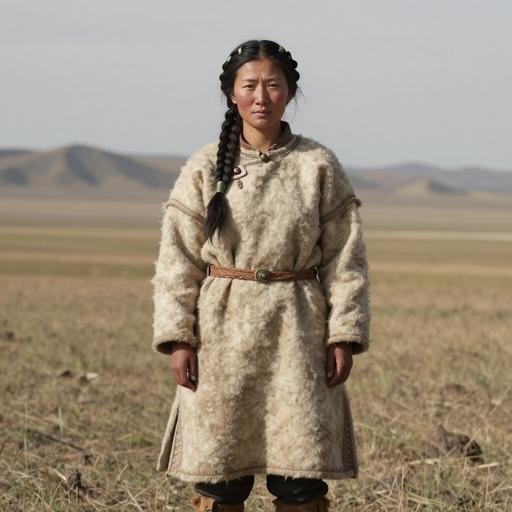
D5A2A shows its highest frequency and diversity in East and Northeast Asian populations, especially among Han Chinese, Japanese and Koreans. It is also observed at lower to moderate frequencies among Tibetan and other Sino-Tibetan speaking groups, and has sporadic but notable occurrences among Mongolic and Tungusic peoples and in parts of Siberia. Low-frequency occurrences in Central Asia and Southeast Asia likely reflect historical gene flow and ancient north–south contacts within Eurasia. Ancient DNA results, including identifications in Jomon-era and other Holocene East Asian remains, support continuity of this maternal lineage in the region over millennia.
Historical and Cultural Significance
The presence of D5A2A in both present-day populations and ancient East Asian contexts implies it was carried by local hunter-gatherer and early agricultural communities in the Holocene. In Japan, detections of related D5 lineages in Jomon-associated samples suggest that some components of the modern Japanese maternal gene pool containing D5 derivatives may trace to pre-Neolithic and early-Holocene inhabitants. In mainland East Asia, D5A2A likely reflects a mix of long-term regional continuity and demographic processes associated with Neolithic population spread, local expansions, and later movements among neighboring groups.
Conclusion
D5A2A is a regional East/Northeast Asian mtDNA subclade reflecting Holocene diversification within the D5a/D5 framework. Its distribution across Han, Japanese, Korean and several adjacent populations, together with occasional ancient DNA matches, marks it as a useful marker for studying maternal continuity and microevolutionary processes in East Asia. Continued mitogenome sequencing in under-sampled groups will clarify its internal structure and finer-scale history.
Key Points
- Origins and Evolution
- Subclades (if applicable)
- Geographical Distribution
- Historical and Cultural Significance
- Conclusion