The Story
The journey of mtDNA haplogroup G1B
Origins and Evolution
mtDNA haplogroup G1B is a subclade of haplogroup G1, itself derived from macro-haplogroup G, a lineage associated with Upper Paleolithic settlement of Northeast and East Asia. Based on its phylogenetic position within G1 and the geographic pattern of modern and ancient occurrences, G1B most likely coalesced in the early Holocene (~9 kya), following the Last Glacial Maximum. Its emergence fits a broader pattern in which numerous regional maternal lineages diversified in northeastern Asia as human populations expanded and restructured during the warming climate of the Holocene.
Subclades (if applicable)
G1B sits under G1 and may contain further downstream branches defined by a small number of private mutations; however, G1B is not one of the largest or most deeply subdivided G1 branches. Where high-resolution mitogenomes have been sampled, G1B can show localized substructure reflecting founder effects and drift in island and high-latitude populations (for example, some Japanese and Siberian subpopulations). Continued mitogenome sequencing in understudied groups may reveal additional internal clades.
Geographical Distribution
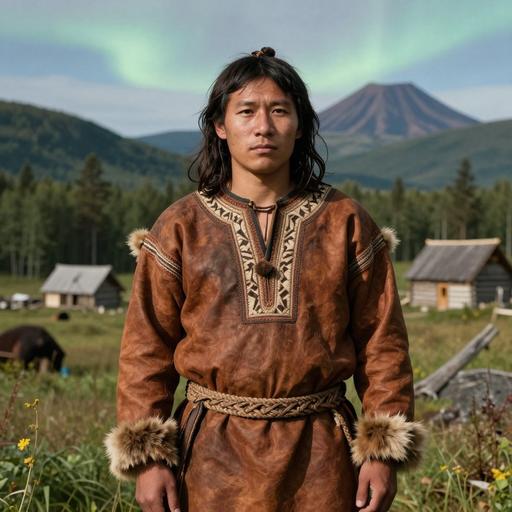
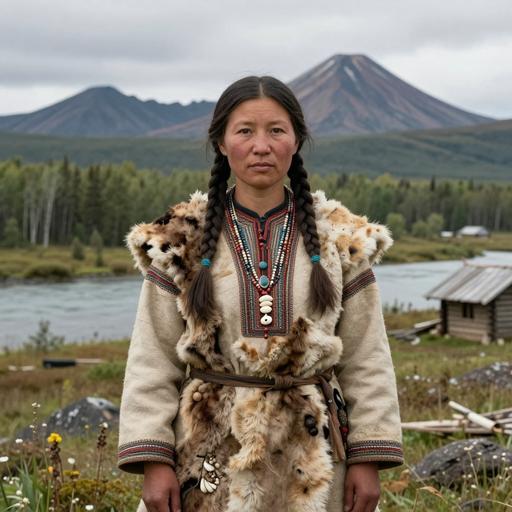
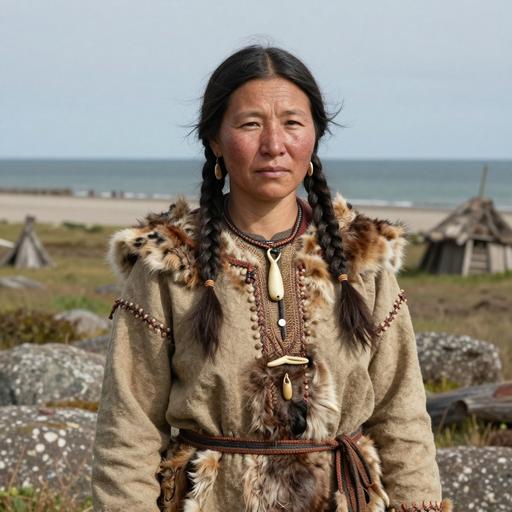
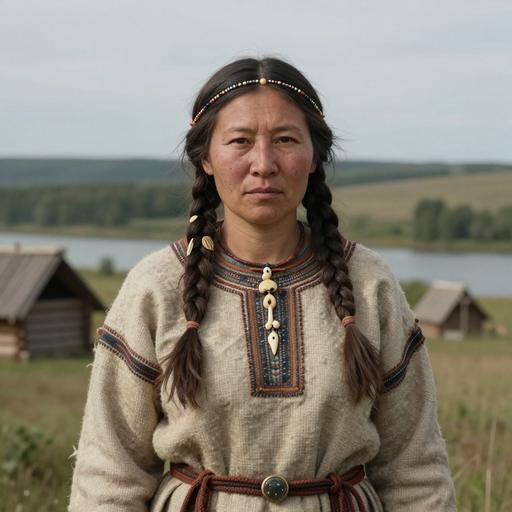
Contemporary distribution: G1B is concentrated in Northeast Asia with the highest frequencies reported in subsets of northeastern Siberian and some Japanese and Korean populations. It occurs at low-to-moderate frequency in northeastern Han Chinese, Mongolic groups (e.g., Buryat), and some Central Asian populations where east–west gene flow has introduced northeastern maternal lineages. Extremely rare and localized occurrences have been reported in circumpolar groups and, sporadically, in the Americas linked to ancient Beringian and later movements.
Ancient DNA: G1 lineages (including G1 subclades) have been recovered in Holocene contexts from northeast Asia and adjacent regions, supporting continuity of maternal lineages in the region. G1B specifically appears in a limited number of ancient mitogenomes, consistent with a pattern of regional persistence and occasional local expansions rather than a wide prehistoric dispersal.
Historical and Cultural Significance
G1B's distribution corresponds to populations and cultural contexts associated with postglacial hunter-gatherer persistence and later localized demographic events in northeast Asia. In Japan, subclades of G1 (including G1B-like lineages) are found among populations with ties to the Jomon and subsequent island populations; in Siberia and the Russian Far East, G1B-type lineages are part of the genetic landscape of indigenous groups (e.g., Yakut-related and other Tungusic populations). The lineage thus informs studies of regional continuity, migration along the Pacific rim, and interactions between hunter-gatherer and incoming farming or pastoral groups in parts of East Asia.
Conclusion
G1B is a regionally informative mtDNA lineage: a moderate-age Holocene branch of G1 whose modern and ancient occurrences reflect northeastern Asian continuity, localized founder events, and the complex demographic history of Siberia, the Japanese archipelago, Korea, and nearby areas. As more full mitogenomes are sampled from understudied populations, the internal structure and finer-scale prehistory of G1B will become clearer, improving its resolution as a marker of maternal ancestry in Northeast Asia.
Key Points
- Origins and Evolution
- Subclades (if applicable)
- Geographical Distribution
- Historical and Cultural Significance
- Conclusion