The Story
The journey of mtDNA haplogroup G2A1D2
Origins and Evolution
mtDNA haplogroup G2A1D2 is a terminal subclade nested within G2A1D, itself part of the broader haplogroup G2 family. Based on its phylogenetic position and available coalescent estimates for the parent clade, G2A1D2 most likely originated during the mid-Holocene (around 5–6 kya) as a regional diversification of maternal lineages in northeastern/East Asia. This timing places its origin after the initial post-glacial expansions and during a period of localized population differentiation and cultural change in northeast Asia.
The pattern of variation seen in extant samples—low to moderate frequency, low internal diversity and several geographically clustered occurrences—suggests a history shaped by founder effects, localized expansions, and genetic continuity in some coastal and high-latitude communities rather than a large-scale continental dispersal.
Subclades (if applicable)
G2A1D2 is currently recognized as a downstream/terminal lineage within G2A1D. As with many relatively recent mtDNA subclades, documented internal branching is limited by sample size; available data indicate G2A1D2 behaves largely as a discrete lineage with few deep internal sub-branches reported to date. Further sequencing of full mitochondrial genomes from under-sampled populations may reveal additional substructure.
Geographical Distribution
G2A1D2 is principally a northeastern/East Asian maternal lineage with the following distributional features:
- Japan: Occurs at low to moderate frequencies; detected among mainland Japanese and in some Ainu and Ryukyuan individuals, consistent with partial continuity from Holocene hunter-gatherer and early Holocene populations in the archipelago.
- Korea and northeastern China: Present at low frequencies in Korean samples and in northeastern (Manchurian) Han populations, reflecting regional sharing across the Korea–Japan–NE China corridor.
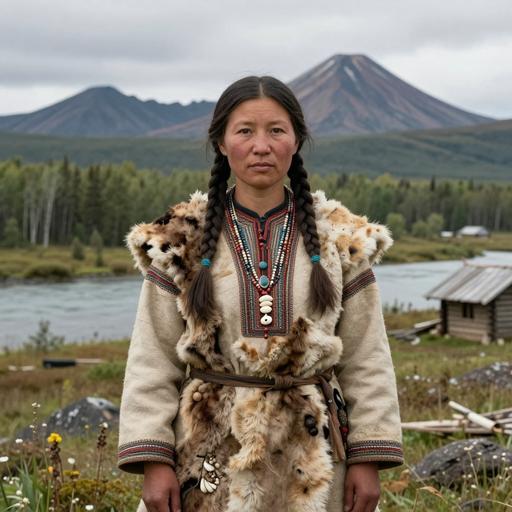
- Siberia and circumpolar groups: Found sporadically among indigenous Siberian peoples (Yakut, Evenk, Nganasan, Koryak) at low frequencies, pointing to gene flow or shared ancestry across northern Eurasia.
- Mongolia and Central Asia: Low-frequency occurrences among Mongolic and nearby Central Asian groups (e.g., Buryat, some Mongol populations) indicate east–central Eurasian contacts.
- Occasional peripheral/ancient occurrences: Very rare reports in circumpolar communities and isolated instances linked to the Americas have been noted, but these are exceptional and generally of very low confidence.
Three ancient DNA occurrences in curated databases indicate G2A1D2 has been recovered from archaeological contexts, supporting at least several thousand years of regional persistence.
Historical and Cultural Significance
While G2A1D2 is not a high-frequency lineage that defines major demographic shifts, its distribution and age make it informative for understanding regional population history in northeast Asia:
- Hunter-gatherer continuity: The presence of G2A1D2 in Ainu-related lineages and other northern Japanese contexts is compatible with a degree of maternal continuity from pre-agricultural hunter-gatherer groups (e.g., Jomon-related ancestries) in parts of the Japanese archipelago.
- Interactions with agricultural migrations: The mid-Holocene origin post-dates initial Paleolithic settlement but precedes and overlaps with agricultural expansions and cultural transformations (e.g., Yayoi migration into Japan); patterns of co-occurrence with other East Asian mtDNA lineages suggest admixture between incoming farming populations and local maternal pools.
- Northern Eurasian connectivity: Low-frequency presence across Siberia and Mongolic groups reflects historical north–south and east–west contacts in the boreal and steppe zones, possibly mediated by mobility, trade, and localized demographic events.
Conclusion
G2A1D2 is a regional, Holocene-aged mtDNA subclade characteristic of northeastern/East Asia and nearby Siberia and Central Asia. Its limited diversity and patchy distribution point to a history of localized survival, occasional expansion, and admixture with neighboring populations rather than broad continental dispersal. Additional full-mitogenome sequencing from under-sampled regions will refine its phylogeny and clarify the timing and pathways of its dispersal.
Key Points
- Origins and Evolution
- Subclades (if applicable)
- Geographical Distribution
- Historical and Cultural Significance
- Conclusion