The Story
The journey of mtDNA haplogroup G2A1E
Origins and Evolution
mtDNA haplogroup G2A1E is a downstream lineage within the G2A1 branch of haplogroup G, a maternal clade that diversified primarily in Northeast and East Asia during the Late Pleistocene to early Holocene. Based on its position under G2A1 (which has an inferred origin around the early Holocene) and the geographic pattern of modern and ancient occurrences, G2A1E most likely emerged in the early to mid-Holocene (~7.5 kya), reflecting post-glacial population structure and localized expansions among hunter-gatherer groups in northeastern Eurasia and the Japanese archipelago.
Subclades (if applicable)
At present, G2A1E is best treated as a distinct terminal/near-terminal branch under G2A1 in many published and database phylogenies. Very limited sampling and incomplete resolution of whole mitochondrial genomes for many Northeast Asian populations means that few well-defined downstream subclades of G2A1E are robustly described; additional high-coverage mitogenome sequencing from the region could identify finer substructure and help time internal splits. Where substructure is observed in databases it tends to be shallow, consistent with a Holocene origin and local diversification rather than deep Paleolithic differentiation.
Geographical Distribution
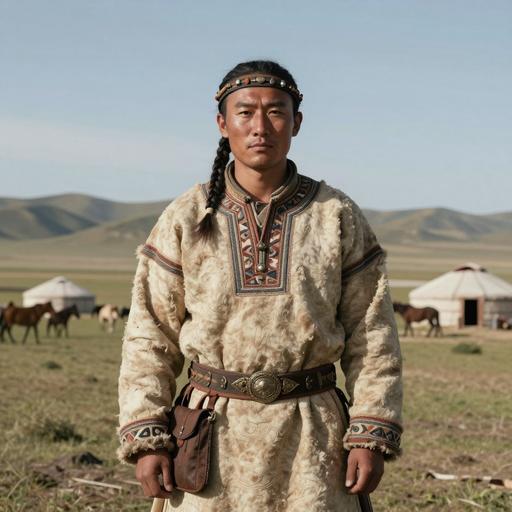
G2A1E is concentrated in Northeast/East Asia with its highest frequencies and diversity reported in the Japanese archipelago (including Ainu and some Ryukyuan groups) and among certain Siberian and Mongolic populations. It also occurs at low to moderate frequencies in Koreans and northeastern Han Chinese, and appears sporadically in circumpolar groups and rare cases in the Americas linked to later or localized Beringian-derived dispersals. The overall distribution points to a northeastern Asian focus with secondary spread into adjacent parts of Central and Arctic Asia.
Historical and Cultural Significance
Because its geographic pattern overlaps strongly with ancient and modern hunter-gatherer populations of northeast Eurasia, G2A1E is informative about Holocene demographic processes in the region: persistence of local maternal lineages in Japan (including Jomon-descended groups), continuity and gene flow among Siberian forager communities, and limited incorporation into later farming or pastoralist expansions. Ancient DNA records (including a small number of archaeological samples) show G2A1 lineages present in early Holocene contexts, consistent with survival of maternal lineages through major cultural transitions in the region.
Conclusion
G2A1E represents a localized Holocene branch of mtDNA haplogroup G that highlights continuity among northeastern Asian maternal lineages. Its modest diversity and patchy but regionally focused distribution reflect post-glacial demographic structure, local persistence in Japan and Siberia, and occasional dispersal into neighboring populations. Improved mitogenome sampling, especially from ancient contexts across northeast Eurasia, will refine timing and microgeographic patterns for this subclade.
Key Points
- Origins and Evolution
- Subclades (if applicable)
- Geographical Distribution
- Historical and Cultural Significance
- Conclusion