Menu
mtDNA Haplogroup • Maternal Lineage

G2B1

mtDNA Haplogroup G2B1

~8,000 years ago
Northeast Asia (Japan and Siberia)
2 subclades
Scroll to explore
Chapter I

The Story

The journey of mtDNA haplogroup G2B1

Origins and Evolution

mtDNA haplogroup G2B1 is a downstream branch of the broader G2/G haplogroup family. It likely emerged in Northeast Asia during the early Holocene (on the order of ~8 thousand years ago), a period of climatic amelioration and population reorganization after the Last Glacial Maximum. The coalescence time for G2B1 is younger than its parent clade G2B (estimated ~10 kya), consistent with a local differentiation event within populations inhabiting the Japanese archipelago, the Russian Far East, and adjacent Siberian regions. As with many mtDNA lineages, G2B1's phylogeography reflects both deep Paleolithic/early Holocene settlement patterns and later population movements and contacts.

Subclades

G2B1 exhibits internal structure detectable with high-resolution mtDNA sequencing; however, the fine-scale nomenclature and number of named downstream subclades vary between studies. Some population surveys that include full mitogenomes report further branches within G2B1 consistent with localized diversification (for example, geographically restricted lineages in Hokkaido/Ainu or among particular Siberian groups). Because mitochondrial phylogenies are continually refined with new mitogenomes, researchers should consult up-to-date phylogenetic trees (e.g., Phylotree, GenBank mitogenomes) for the most current subclade labels and their distributions.

Geographical Distribution

G2B1 shows a clear Northeast Asian focus. It is most frequent and diverse in Japan — including elevated representation among Ainu and some Ryukyuan groups — and in parts of eastern Siberia. Moderate occurrences are reported in Koreans and northeastern Han Chinese, and it reaches low to moderate frequencies in Mongolic populations (e.g., Buryat) and other adjacent Central and North Asian communities. Very low-frequency and often isolated occurrences have been documented in circumpolar groups and sporadically in the Americas; these are typically interpreted as the result of recent Siberian–circumpolar gene flow or rare long-distance movements rather than a dominant founding lineage for New World populations.

Historical and Cultural Significance

The distribution of G2B1 is informative for reconstructing Holocene population dynamics in Northeast Asia. Its presence in Jomon-associated skeletal series and modern Ainu supports a role in the maternal heritage of long-term inhabitants of the Japanese archipelago. In Siberia and the Russian Far East, G2B1 aligns with lineages typical of Holocene hunter-gatherer and later circumpolar groups, indicating continuity as well as regional exchanges along coastal and inland routes. In populations of the Korean peninsula and northeastern China, G2B1 likely reflects admixture between local East Asian agricultural/forager groups and northern forager-derived gene pools.

Archaeologically, G2B1 is often discussed in relation to the Jomon cultural complex (as a primary association), and to later coastal cultures of the Okhotsk and other northern maritime traditions where continuity of maternal lineages can be observed. It is less strongly tied to Bronze Age steppe movements and more indicative of East Asian/Amur–Okhotsk–Japanese regional demographic histories.

Conclusion

G2B1 is a Northeast Asian maternal lineage that encapsulates aspects of early Holocene differentiation and subsequent regional demography in Japan and Siberia. While not among the most globally widespread mtDNA haplogroups, its geographic concentration and occasional deep splits make it a useful marker for studies of Jomon ancestry, Siberian hunter-gatherer continuity, and the complex peopling history of Northeast Asia and adjacent circumpolar zones. Continued mitogenome sampling, especially from ancient remains, will refine subclade structure and timing and clarify low-frequency occurrences outside the core range.

Key Points

  • Origins and Evolution
  • Subclades
  • Geographical Distribution
  • Historical and Cultural Significance
  • Conclusion

Chapter II

Tree & Relationships

Phylogenetic context and subclades

Evolution Path

This haplogroup's evolutionary journey from its earliest ancestor to the present.

Steps Haplogroup Age Estimate Archaeology Era Time Passed Immediate Descendants Tested Modern Descendants Ancient Connections
1 G2B1 Current ~8,000 years ago 🌾 Neolithic 8,000 years 2 3 0
2 G2B ~10,000 years ago 🌾 Neolithic 10,000 years 2 4 6
3 G2 ~20,000 years ago 🏹 Mesolithic 20,000 years 2 40 10
4 G ~35,000 years ago 🦴 Paleolithic 35,000 years 4 300 3
5 M ~60,000 years ago 🦴 Paleolithic 60,000 years 11 1,200 41
6 L3 ~70,000 years ago 🦴 Paleolithic 70,000 years 11 17,621 6
7 L ~160,000 years ago 🦴 Paleolithic 160,000 years 7 18,987 5

Siblings (1)

Other branches from the same parent haplogroup

Chapter III

Where in the World

Geographic distribution and modern presence

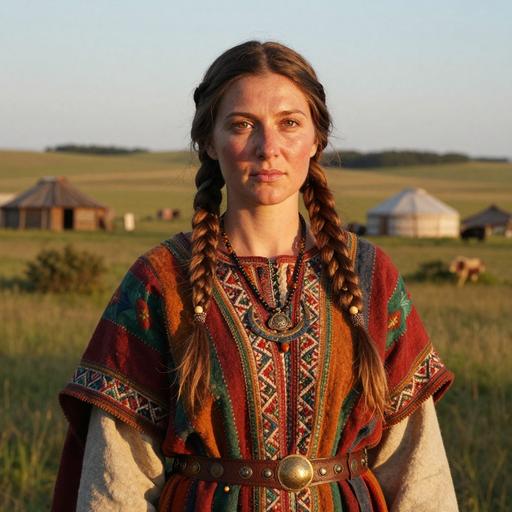
Place of Origin

Northeast Asia (Japan and Siberia)

Modern Distribution

The populations where mtDNA haplogroup G2B1 is found include:

  1. Japanese populations (including Ainu and some Ryukyuan groups)
  2. Koreans and northeastern Han Chinese
  3. Indigenous Siberian groups (e.g., Yakut, Evenk, Nganasan, Koryak)
  4. Mongolic and some Central Asian populations (e.g., Buryat, Mongol)
  5. Northern Tibeto-Burman and other highland East Asian groups (at low to moderate frequencies)
  6. Circumpolar communities and rare occurrences in the Americas (generally low frequency and localized)
CHAPTER IV

When in Time

Your haplogroup in the context of human history

~10k years ago

Neolithic Revolution

Agriculture begins, settled communities form

~8k years ago

Haplogroup G2B1

Your mtDNA haplogroup emerged in Northeast Asia (Japan and Siberia)

Northeast Asia (Japan and Siberia)
~5k years ago

Bronze Age

Metalworking, writing, and early civilizations

~3k years ago

Iron Age

Iron tools, expanded trade networks

~2k years ago

Classical Antiquity

Greek and Roman civilizations flourish

Present

Present Day

Modern era

Your Haplogroup
Historical Era
Chapter IV-B

Linked Cultures

Ancient cultures associated with mtDNA haplogroup G2B1

Cultural Heritage

These ancient cultures have been linked to haplogroup G2B1 based on matching ancient DNA samples from archaeological excavations. The presence of this haplogroup in these cultures provides insights into the migrations and population movements of populations carrying this haplogroup.

Chinese Paleolithic Early Avar Khovd Bronze Age Simutasi Culture Slab Grave Culture Thai Iron Age Upper Yellow River Culture Uvurkhangai Culture Yappa Nhae
Culture assignments are based on archaeological context of ancient DNA samples and may represent regional associations during specific time periods.
Chapter V

Sample Catalog

Top 50 ancient DNA samples directly related to haplogroup G2B1 or parent clades

50 / 50 samples
Portrait Sample Country Era Date Culture mtDNA Match
Portrait of ancient individual BUR004 from Mongolia, dated 40 BCE - 109 CE
BUR004
Mongolia Early Medieval Xiongnu 40 BCE - 109 CE Xiongnu G2a5 Direct
Portrait of ancient individual DCZ-M21II from China, dated 120 CE - 248 CE
DCZ-M21II
China Iron Age Upper Yellow River, China 120 CE - 248 CE Upper Yellow River Culture G2b1b Direct
Portrait of ancient individual DCZ-M21II from China, dated 120 CE - 248 CE
DCZ-M21II
China Han Dynasty China 120 CE - 248 CE G2b1b Direct
Portrait of ancient individual SKT006 from Mongolia, dated 162 BCE - 47 BCE
SKT006
Mongolia Xiongnu to Late Medieval Khuvsgul, Mongolia 162 BCE - 47 BCE Khuvsgul Transition G2a1e Direct
Portrait of ancient individual IMA004 from Russia, dated 200 BCE - 100 CE
IMA004
Russia Xiongnu Period Buryatia, Russia 200 BCE - 100 CE Xiongnu Buryat G2a-a Direct
Portrait of ancient individual TAK001 from Mongolia, dated 200 BCE - 100 CE
TAK001
Mongolia Xiongnu Period Khovd, Mongolia 200 BCE - 100 CE Xiongnu Khovd G2a1 Direct
Portrait of ancient individual UVG001 from Mongolia, dated 200 BCE - 100 CE
UVG001
Mongolia Xiongnu Period Bulgan, Mongolia 200 BCE - 100 CE Xiongnu G2a2 Direct
Portrait of ancient individual YPN018 from Thailand, dated 200 CE - 450 CE
YPN018
Thailand Yappa Nhae Log Coffin Culture Iron Age 200 CE - 450 CE Yappa Nhae G2b1a Direct
Portrait of ancient individual YPN023 from Thailand, dated 200 CE - 450 CE
YPN023
Thailand Yappa Nhae Log Coffin Culture Iron Age 200 CE - 450 CE Yappa Nhae G2b1a Direct
Portrait of ancient individual DA73 from Kyrgyzstan, dated 236 CE - 421 CE
DA73
Kyrgyzstan The Hun Period in Kyrgyzstan 236 CE - 421 CE Hunnic Period G2a1 Direct
Chapter VI

Carrier Distribution Map

Geographic distribution of 100 ancient DNA samples carrying haplogroup G2B1

Time Period Filter
All Time Periods
Showing all samples
Each marker represents an ancient individual
Chapter VII

Temporal Distribution

Distribution of carriers across archaeological periods

Chapter VIII

Geographic Distribution

Distribution of carriers by country of origin

Chapter IX

Country × Era Distribution

Cross-tabulation of carrier countries and archaeological periods

Data

Data & Provenance

Source information and data quality

Last Updated 2026-02-16
Confidence Score 50/100
Coverage Low
Data Source

We use the latest phylotree for MTDNA haplogroup classification and data.