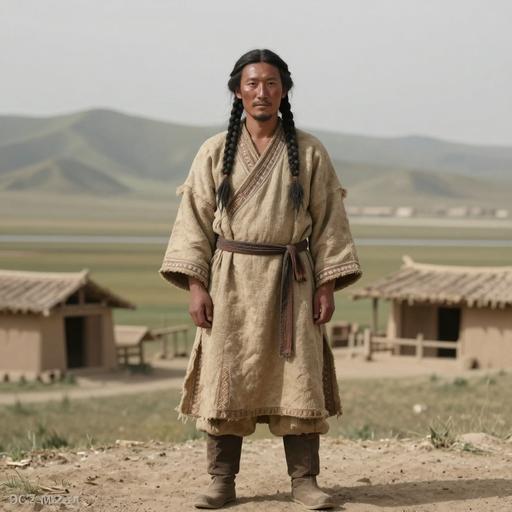
The Story
The journey of mtDNA haplogroup G2B1B
Origins and Evolution
mtDNA haplogroup G2B1B is a downstream branch of parent haplogroup G2B1, itself a member of macro-haplogroup G. Based on the phylogenetic placement beneath G2B1 (coalescence of which is estimated near the early Holocene ~8 kya) and the distribution of observed modern and ancient samples, G2B1B most likely diverged in northeast Asia during the mid-to-late Holocene (on the order of ~6 kya). The lineage shows the typical pattern of a regionally restricted, low-to-moderate frequency maternal clade that persisted among coastal and inland hunter-gatherer populations and later persisted in some island populations.
Mitochondrial phylogenies place G2B1B as a narrowly defined subclade with a small number of diagnostic mutations relative to G2B1. The limited number of observed mutations and its relatively concentrated geographic distribution suggest a local founder event or a series of demographic processes (population substructure, drift, and limited female-mediated gene flow) that amplified the clade in particular communities.
Subclades (if applicable)
At present, G2B1B appears to be a terminal or near-terminal subclade in available phylogenies, with only a few internal branches detected in modern sequencing datasets. If additional whole-mitochondrial genomes are sampled from underrepresented northeast Asian and circumpolar populations, further substructure (G2B1B1, G2B1B2, etc.) might be discovered. Because the clade is relatively rare, high-resolution mitogenome sequencing from archaeological and modern samples is the most effective way to resolve internal subclades.
Geographical Distribution
The distribution of G2B1B is concentrated in northeast Asia, with highest frequencies recorded in parts of Japan (including Ainu and some Ryukyuan groups) and measurable presence among certain Siberian groups. Lower or sporadic occurrences have been reported among Koreans, northeastern Han Chinese, Mongolic-speaking populations (for example Buryat), and a range of circumpolar communities. A few low-frequency and localized instances reported in the Americas likely represent later contacts or rare dispersal events tied to past circumpolar gene flow.
Ancient DNA evidence for G2B1B is limited but informative: the clade has been identified in a small number of archaeological samples (two in the referenced database), consistent with continuity of maternal lineages in northeastern Eurasia from the mid-Holocene onward. These aDNA hits support an interpretation of regional continuity rather than a recent introduction.
Historical and Cultural Significance
G2B1B's concentration in Japan and nearby regions links it to prehistoric coastal and interior foraging communities such as those represented by the Jomon cultural sequence. Its persistence in Ainu and some Ryukyuan groups suggests maternal-line continuity across the Holocene, through periods of cultural change (e.g., Jomon to later interactions with Yayoi-associated populations). The clade's presence in Siberian and circumpolar groups is consistent with shared maternal ancestry among northern Eurasian hunter-gatherer populations and later population movements across the Okhotsk and Beringian corridors.
Where G2B1B occurs alongside other east Eurasian maternal and paternal markers, the pattern usually reflects local demographic histories: genetic drift in small island or high-latitude populations, retention of ancestral lineages in communities with limited female-mediated gene flow, and episodic admixture with neighboring agricultural or pastoral groups.
Conclusion
mtDNA G2B1B is a regionally informative maternal lineage for northeast Asia, especially Japan and parts of Siberia. Its mid-Holocene origin, narrow phylogenetic scope, and presence in both modern and a small number of ancient samples paint a picture of localized maternal continuity among northeastern Eurasian hunter-gatherers and their descendants. Additional mitogenome sequencing—particularly from understudied populations and archaeological contexts—will clarify its internal structure, deeper time-depth, and finer-scale geographic history.
Key Points
- Origins and Evolution
- Subclades (if applicable)
- Geographical Distribution
- Historical and Cultural Significance
- Conclusion