The Story
The journey of mtDNA haplogroup H2A1E1
Origins and Evolution
H2A1E1 is a terminal subclade nested under H2A1E, itself part of the broader H2A branch of haplogroup H. Haplogroup H2A lineages are generally interpreted as derivatives associated with Neolithic farming expansions from West Asia into Europe, and H2A1E1 appears to have differentiated in the Near East or eastern Mediterranean region in the later Holocene (~4 kya). Its emergence post-dates the initial Paleolithic and early Neolithic dispersals of haplogroup H, indicating a more regional and temporally recent diversification likely driven by local demographic processes such as population structure, migration, and founder effects.
Because H2A1E1 sits several nodes downstream of the root of H, its phylogenetic position implies a closer relationship to other H2A subclades found across West Asia and southern Europe, rather than to the more common western European H sublineages. The low-to-moderate modern frequencies and the scarce ancient DNA occurrences suggest that H2A1E1 experienced limited expansions and has been subject to genetic drift and population-specific founder events since its origin.
Subclades (if applicable)
As a named terminal subclade (H2A1E1), it may have few or no deeply nested, widely recognized downstream branches reported in public phylogenies; many H sublineages of this depth are defined by a small number of private or regionally restricted mutations. Any further subdivision of H2A1E1 would likely be detectable only with high-coverage full mitochondrial genomes and large regional sample sizes. Researchers typically identify H2A1E1 by its defining control-region and coding-region polymorphisms relative to the rCRS and the parent H2A1E node.
Geographical Distribution
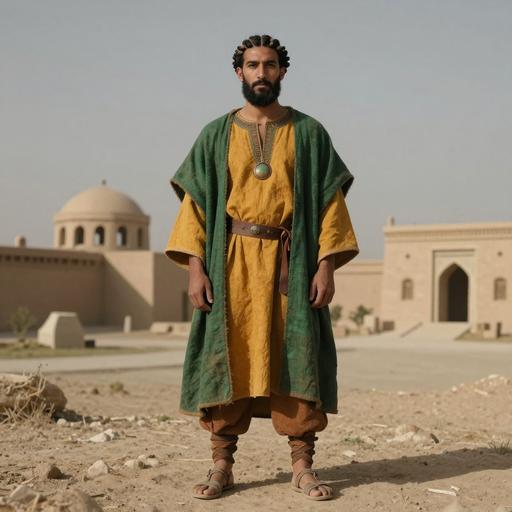
H2A1E1 shows a geographically patchy distribution consistent with a Near Eastern origin and later localized dispersal into adjoining regions. It is observed at low-to-moderate frequencies in Iberia (including Basque groups), southern Europe (Italy, Greece), parts of the Balkans and eastern Europe at lower frequencies, the Caucasus, and in North Africa (Maghreb) at low frequencies. Sporadic occurrences are also reported in some Central and South Asian samples and among certain Jewish diaspora groups (notably some Sephardic and Mizrahi lineages), reflecting historic mobility and long-range gene flow.
The rare appearance of H2A1E1 in archaeogenetic datasets (only a few confirmed ancient instances reported to date) supports a model of limited but detectable prehistoric dispersal — likely associated with later Neolithic, Chalcolithic and Bronze Age movements rather than the earliest Neolithic farmer expansions.
Historical and Cultural Significance
H2A1E1 should be viewed as part of the maternal legacy of Near Eastern-derived farming populations that influenced the genetic landscape of the Mediterranean and adjacent regions during the later Holocene. Its pattern fits expectations for a lineage that expanded regionally with local demographic events rather than undergoing a continent-wide replacement.
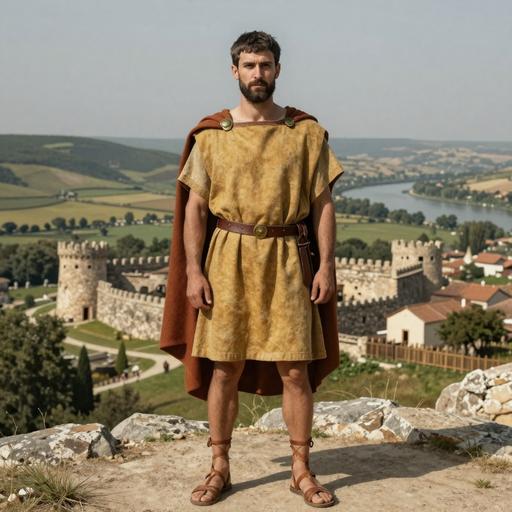
In archaeological terms, H2A1E1's chronology and distribution align best with Chalcolithic / Early Bronze Age demographic processes in West Asia and the Mediterranean; it may appear in contexts associated with later Neolithic-derived cultures and, regionally, with Bell Beaker-influenced or local Chalcolithic communities in Iberia where numerous maternal lineages of Near Eastern origin persisted at low frequencies. Its presence in North Africa and the Caucasus likely reflects both prehistoric coastal and trans-Mediterranean contacts and later historic population movements.
Conclusion
H2A1E1 is a regionally restricted, Neolithic-farmer–derived mtDNA subclade that originated in the Near East/West Asia around ~4 kya and dispersed into southern Europe, Iberia, the Caucasus and North Africa at low-to-moderate frequencies. Its limited modern and ancient occurrence indicates localized expansions, founder effects and ongoing low-level gene flow rather than a major demic diffusion. Continued sampling, full mitochondrial genomes, and ancient DNA from Chalcolithic and Bronze Age sites in the eastern Mediterranean and Iberia will clarify its finer-scale phylogeography and demographic history.
Key Points
- Origins and Evolution
- Subclades (if applicable)
- Geographical Distribution
- Historical and Cultural Significance
- Conclusion