Menu
mtDNA Haplogroup • Maternal Lineage

H40A

mtDNA Haplogroup H40A

~4,000 years ago
Western Europe (Iberian/Atlantic fringe)
0 subclades
3 ancient samples
Scroll to explore
Chapter I

The Story

The journey of mtDNA haplogroup H40A

Origins and Evolution

mtDNA haplogroup H40A is a derived subclade within H40, which itself sits inside the broader H4 branch of haplogroup H. H4 and its subclades are part of the predominant Western Eurasian H macro-haplogroup. Based on the phylogenetic position of H40A beneath H40 (whose estimated origin is on the western European/Atlantic fringe in the early Holocene, ~7 kya), H40A most likely formed later during the Holocene — plausibly in the mid-to-late Neolithic or Bronze Age period on the Atlantic façade of Iberia. Its time depth is therefore shallower than H40, consistent with a localized emergence and limited subsequent spread.

Genetic divergence leading to H40A would have required the accumulation of private mutations on an H40 maternal lineage. Given the rarity of H40 overall and the low absolute numbers of observed H40A carriers in modern and ancient datasets, H40A represents a geographically restricted drifted lineage rather than a broad continental expansion.

Subclades (if applicable)

As a narrowly distributed subclade, H40A currently has few or no well-characterized downstream subdivisions recognized in public phylogenies. If additional private mutations are discovered in larger sequencing datasets or ancient DNA studies, further sub-branches of H40A may be defined, but at present H40A is best treated as a terminal or near-terminal branch under H40 in most published trees.

Geographical Distribution

H40A is primarily recorded at low frequencies along the Atlantic and western Mediterranean fringe. Modern detections concentrate in Iberian populations (Spain and Portugal, including some Basque groups) and Atlantic France, with sporadic occurrences reported in the British Isles, parts of southern Europe (including Italy and Sardinia), and extremely low-frequency signals in Anatolia/Levant and in the Maghreb. The pattern is consistent with an origin and long-term presence in western Iberia and the Atlantic façade, with occasional gene flow or drifted introductions farther afield.

Ancient DNA evidence for H40/H40A lineages is limited; where H40 or its derivatives appear in archaeological contexts, they tend to come from coastal and Atlantic-associated Neolithic–Bronze Age sites. The small number of ancient observations is compatible with a low-frequency, regionally persistent maternal lineage rather than a population-replacing event.

Historical and Cultural Significance

Because H40A is rare and regionally localized, its significance is chiefly as a marker of maternal continuity and local demographic processes on the Atlantic fringe of western Europe. It may mark lineages that persisted through the Neolithic agricultural transition and into later cultural episodes such as the Atlantic megalithic phenomenon and the Bell Beaker/Bronze Age horizon, but H40A has not been implicated as a driver of large-scale population movements.

  • Megalithic and Atlantic Neolithic contexts: H40 and related H4 lineages are compatible with maternal heritage established in early farming and coastal Neolithic communities in western Europe.
  • Bell Beaker / Bronze Age: The timeframe for H40A's emergence overlaps with Bell Beaker and subsequent Bronze Age social networks, so limited spread through maritime contacts and exchange is plausible, though evidence points to only sporadic transmission.

Overall, H40A is most useful to researchers and genealogists as a fine-scale marker of maternal ancestry tied to the Iberian/Atlantic region, helpful for reconstructing micro-demographic histories rather than continental-scale migrations.

Conclusion

H40A is a geographically focused, low-frequency mtDNA lineage derived from H40 on the Atlantic fringe of western Europe. Its modest time depth and restricted distribution make it an informative lineage for studies of regional maternal continuity and local demographic processes in Iberia and neighboring Atlantic regions, but not a signature of major prehistoric population turnover. Continued full mitochondrial sequencing and expansion of ancient DNA sampling along the Atlantic façade will clarify any further substructure or historical episodes linked to H40A.

Key Points

  • Origins and Evolution
  • Subclades (if applicable)
  • Geographical Distribution
  • Historical and Cultural Significance
  • Conclusion
Chapter II

Tree & Relationships

Phylogenetic context and subclades

Evolution Path

This haplogroup's evolutionary journey from its earliest ancestor to the present.

Steps Haplogroup Age Estimate Archaeology Era Time Passed Immediate Descendants Tested Modern Descendants Ancient Connections
1 H40A Current ~4,000 years ago 🔶 Bronze Age 4,500 years 0 0 3
2 H40 ~7,000 years ago 🌾 Neolithic 7,000 years 1 0 0
3 H4 ~9,000 years ago 🌾 Neolithic 9,000 years 13 264 14
4 H ~25,000 years ago 🦴 Paleolithic 25,000 years 9 6,551 991
5 HV ~30,000 years ago 🦴 Paleolithic 30,000 years 10 7,905 228
6 R ~60,000 years ago 🦴 Paleolithic 60,000 years 12 10,987 57
7 N ~60,000 years ago 🦴 Paleolithic 60,000 years 15 15,452 13
8 L3 ~70,000 years ago 🦴 Paleolithic 70,000 years 11 17,621 6
9 L ~160,000 years ago 🦴 Paleolithic 160,000 years 7 18,987 5

Subclades (0)

Terminal branch - no known subclades

Chapter III

Where in the World

Geographic distribution and modern presence

Place of Origin

Western Europe (Iberian/Atlantic fringe)

Modern Distribution

The populations where MTDNA haplogroup H40A is found include:

  1. Iberian populations (Spain, Portugal, including some Basque groups)
  2. Western Europeans (Atlantic France)
  3. British Isles populations (occasional detections in England, Scotland, Ireland)
  4. Southern Europeans (low-frequency occurrences in Italy and Sardinia)
  5. Near Eastern populations (very low frequencies in Anatolia and the Levant)
  6. North African populations (sporadic low-frequency detections in the Maghreb)
CHAPTER IV

When in Time

Your haplogroup in the context of human history

~10k years ago

Neolithic Revolution

Agriculture begins, settled communities form

~5k years ago

Bronze Age

Metalworking, writing, and early civilizations

~4k years ago

Haplogroup H40A

Your mtDNA haplogroup emerged in Western Europe (Iberian/Atlantic fringe)

Western Europe (Iberian/Atlantic fringe)
~3k years ago

Iron Age

Iron tools, expanded trade networks

~2k years ago

Classical Antiquity

Greek and Roman civilizations flourish

Present

Present Day

Modern era

Your Haplogroup
Historical Era
Chapter IV-B

Linked Cultures

Ancient cultures associated with mtDNA haplogroup H40A

Cultural Heritage

These ancient cultures have been linked to haplogroup H40A based on matching ancient DNA samples from archaeological excavations. The presence of this haplogroup in these cultures provides insights into the migrations and population movements of populations carrying this haplogroup.

Anatolian Neolithic Balaton-Lasinja Bell Beaker Culture Bulgarian Neolithic Canaanite Iron Gates Culture Late Bronze Age Armenian Linear Pottery Culture Natufian Shahr-i Sokhta Culture Shanidar Culture Trypillia Culture
Culture assignments are based on archaeological context of ancient DNA samples and may represent regional associations during specific time periods.
Chapter V

Sample Catalog

Top 3 ancient DNA samples directly related to haplogroup H40A or parent clades

3 / 3 samples
Portrait Sample Country Era Date Culture mtDNA Match
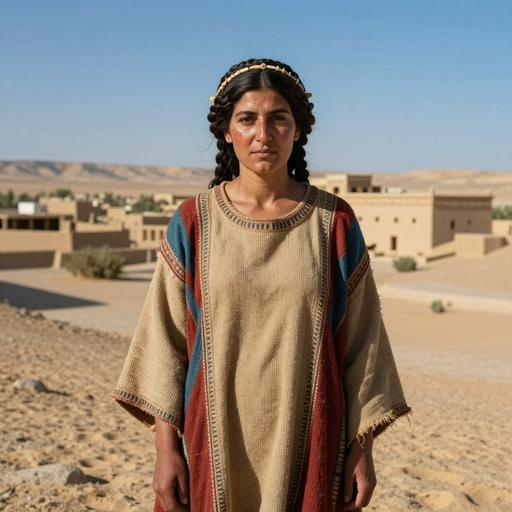
Portrait of ancient individual I6928 from Israel, dated 2000 BCE - 1550 BCE
I6928
Israel Middle to Late Bronze Age Israel 2000 BCE - 1550 BCE Canaanite H40a Direct
Portrait of ancient individual I11469 from Iran, dated 3200 BCE - 2900 BCE
I11469
Iran Shahr-i Sokhta Bronze Age 3200 BCE - 2900 BCE Shahr-i Sokhta Culture H40a Direct
Portrait of ancient individual I11469 from Iran, dated 3200 BCE - 2900 BCE
I11469
Iran Bronze Age Iran 3200 BCE - 2900 BCE H40a Direct
Chapter VI

Carrier Distribution Map

Geographic distribution of 3 ancient DNA samples carrying haplogroup H40A

Time Period Filter
All Time Periods
Showing all samples
Each marker represents an ancient individual
Chapter VII

Temporal Distribution

Distribution of carriers across archaeological periods

Chapter VIII

Geographic Distribution

Distribution of carriers by country of origin

Chapter IX

Country × Era Distribution

Cross-tabulation of carrier countries and archaeological periods

Data

Data & Provenance

Source information and data quality

Last Updated 2026-02-16
Confidence Score 50/100
Coverage Low
Data Source

We use the latest phylotree for MTDNA haplogroup classification and data.