The Story
The journey of mtDNA haplogroup H4A1A2
Origins and Evolution
mtDNA haplogroup H4A1A2 is a downstream lineage of H4A1A, itself nested within the broader H4 branch of haplogroup H. Based on the phylogenetic position of H4A1A2 beneath H4A1A and the geographic pattern of its detections, the lineage most plausibly originated on the Atlantic/Iberian fringe during the late Neolithic to Chalcolithic period (roughly ~4.0 kya). Like other low-frequency H4 subclades in western Europe, H4A1A2 appears to represent a localized maternal founder or small set of founders whose descendants persisted regionally and were later sampled in both ancient and modern populations.
The lineage is defined by downstream mutations within H4A1A; while specific mutation labels for this subclade are used in specialized phylogenies and databases, the key point for population-history interpretation is that H4A1A2 is a derived, geographically-focused branch that reflects post-Neolithic demographic processes along Atlantic Europe.
Subclades
At present, H4A1A2 is recognized as a fine-scale subclade of H4A1A. There are few (if any) widely reported downstream sub-branches with significant sample counts; published and public sequence repositories list only a small number of H4A1A2 mitogenomes and a small set of ancient DNA occurrences. This limited sample size means further substructure may exist but is undersampled — additional full mitogenomes from Iberian and Atlantic archaeological contexts would clarify internal branching.
Geographical Distribution
The distribution of H4A1A2 mirrors that of its parent in being concentrated along the western European/Atlantic margin with low-level presence elsewhere. Modern and ancient detections place the lineage primarily in:
- Iberian populations (including Basque-speaking groups), where H4A1A lineages show their strongest signal
- Neighboring Atlantic France and the broader Atlantic façade of western Europe
- The British Isles at low frequencies, consistent with maritime contacts and later mobility
- Scattered occurrences in southern Europe (Italy, Sardinia) and in low frequencies further afield (Anatolia/Levant and the Maghreb)
The presence of three identified ancient DNA samples carrying this branch (from Atlantic/Western European archaeological contexts in available databases) supports a post-Neolithic antiquity in the region rather than a recent modern arrival.
Historical and Cultural Significance
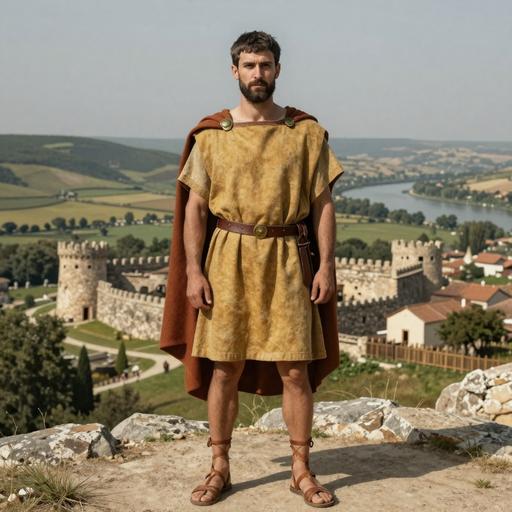
Because H4A1A2 arose during the late Neolithic–Chalcolithic transition on the Atlantic fringe, it likely reflects regional demographic processes associated with coastal and Atlantic cultural networks. Possible cultural connections include local Chalcolithic/Atlantic traditions and later movements that linked Iberia, Atlantic France and the British Isles (maritime exchange, small-scale mobility). Associations with pan-European phenomena such as the Bell Beaker complex are plausible as lines of contact or vectors for movement, but H4A1A2's overall low frequency suggests it was not a major demic marker of large continent-scale migrations.
In present populations the lineage contributes to the characteristic western European mtDNA landscape dominated by H sublineages (e.g., H1, H3) and other maternal haplogroups; its persistence at low levels is consistent with founder effects, genetic drift, and regional continuity in parts of Iberia and the Atlantic coast.
Conclusion
H4A1A2 is a geographically focused, low-frequency maternal subclade that likely originated on the Iberian/Atlantic fringe in the late Neolithic–Chalcolithic (~4.0 kya). Its detection in a small number of ancient samples and scattered modern populations across Atlantic and adjacent regions supports a history of regional continuity with occasional long-distance dispersal. Better resolution of its internal structure awaits increased mitogenome sampling from Atlantic European archaeological and modern collections.
Key Points
- Origins and Evolution
- Subclades
- Geographical Distribution
- Historical and Cultural Significance
- Conclusion