The Story
The journey of mtDNA haplogroup H85
Origins and Evolution
mtDNA haplogroup H85 is a derived branch of haplogroup H8, itself a subclade of the broadly distributed European lineage H. Based on the phylogenetic position within H8 and the geographic pattern of related lineages, H85 most plausibly arose in the Near East / West Asia region during the later Early Holocene or early Neolithic period (on the order of ~7 kya). Its emergence is consistent with the Neolithic expansions and subsequent regional differentiation of maternal lineages that accompanied farming spread and post‑glacial demographic changes.
Like many low-frequency downstream H clades, H85 appears to be the product of a localized founder event or small-scale expansion from a subset of H8 diversity. The time depth estimated here is a reasoned inference from the parent clade (H8, ~12 kya) and the general pace of coalescence observed for other H subclades; published dense mtDNA phylogenies and ancient DNA sampling remain sparse for extremely rare sublineages, so precise dating requires future sequencing of ancient and modern mitogenomes bearing H85.
Subclades
At present H85 is defined as a narrow branch under H8 with few well-documented downstream subclades in publicly available datasets. In contemporary population screenings it typically appears as an isolated terminal lineage or with very limited internal structure, which is typical for rare, regionally restricted maternal subclades. As more whole mitogenomes are reported from the Near East, Anatolia, the Caucasus and southern Europe, additional internal diversity or micro‑subclades of H85 may be revealed.
Geographical Distribution
The geographic footprint of H85 largely mirrors that of its parent H8 but at substantially lower frequencies. It has been observed sporadically or inferred by phylogenetic placement in:
- Southern Europe (Italy, Iberia) in small numbers, reflecting maritime and Mediterranean dispersal routes;
- The Balkans (Greece and adjacent regions) where Neolithic and later gene flow concentrated diverse maternal lineages;
- The Caucasus (Armenia, Georgia, Azerbaijan) where Near Eastern and steppe contacts foster localized lineage persistence;
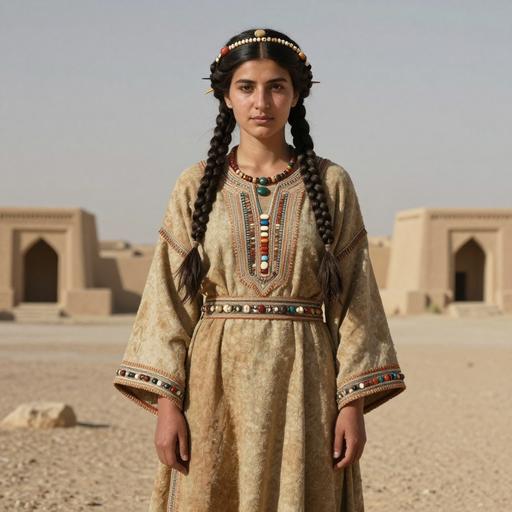
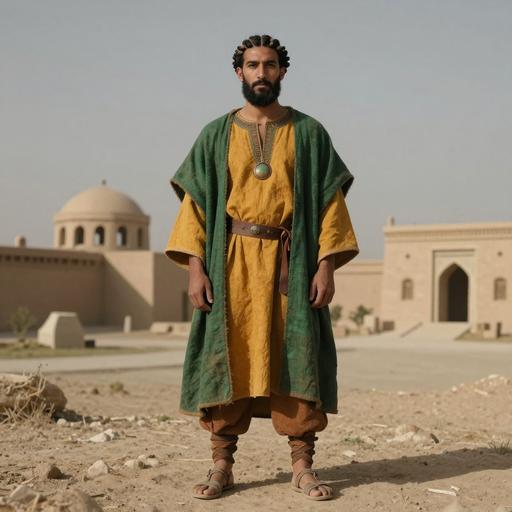
- Anatolia and the Levant, consistent with an origin or early presence in West Asia;
- Central and Eastern Europe, only as sporadic occurrences likely due to later mobility;
- Some Jewish and Near Eastern communities at low frequencies, reflecting the shared Near Eastern maternal heritage of these populations.
Frequencies are generally very low, and the haplogroup is best characterized as rare but geographically coherent, concentrated on east–west routes between the Near East, Anatolia and southern Europe.
Historical and Cultural Significance
Because H85 is rare, it is not associated with a single large archaeological culture in the way some common haplogroups are. However, its inferred origin and distribution allow reasonable archaeological correlations:
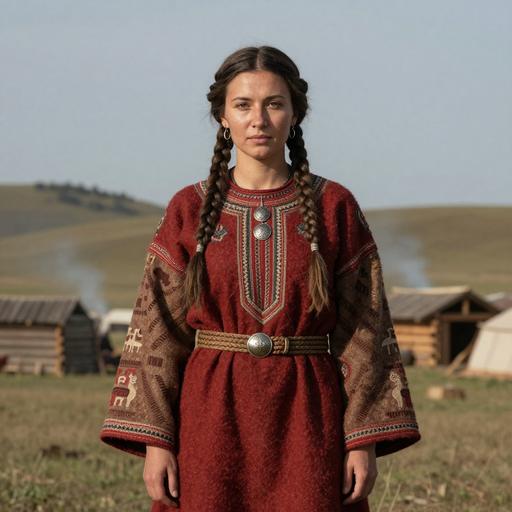
- Anatolian Neolithic / Early Farmer expansions: H85 plausibly entered Europe alongside Neolithic farmers or formed shortly after their dispersal, making the Anatolian Neolithic a primary cultural context for its early history.
- Mediterranean Neolithic (Cardial/Impressed Ware) and later Chalcolithic/Bronze Age networks: secondary episodes of coastal and inland mobility could explain its appearance in southern Europe and the western Balkans.
- Local continuity in the Caucasus and Anatolia: small, persistent maternal lineages like H85 can reflect regional continuity through the Bronze and Iron Ages, including in communities that experienced repeated cultural overlays but retained maternal genetic continuity.
In modern population genetics and genealogical studies, H85 is primarily of interest for reconstructing fine‑scale maternal ancestry and tracing localized founder events rather than for explaining continent‑scale demographic shifts.
Conclusion
mtDNA H85 is a rare, regionally distributed subclade of H8 that most likely originated in the Near East / West Asia in the later Early Holocene (~7 kya) and dispersed at low levels into Anatolia, the Caucasus and southern Europe. It currently appears at low frequencies in multiple neighboring populations and functions as a useful marker for fine‑scale maternal ancestry and local founder effects; fuller understanding will depend on expanded whole‑mitogenome sequencing from the key regions and from ancient samples.
Key Points
- Origins and Evolution
- Subclades
- Geographical Distribution
- Historical and Cultural Significance
- Conclusion