The Story
The journey of mtDNA haplogroup J1B1A1
Origins and Evolution
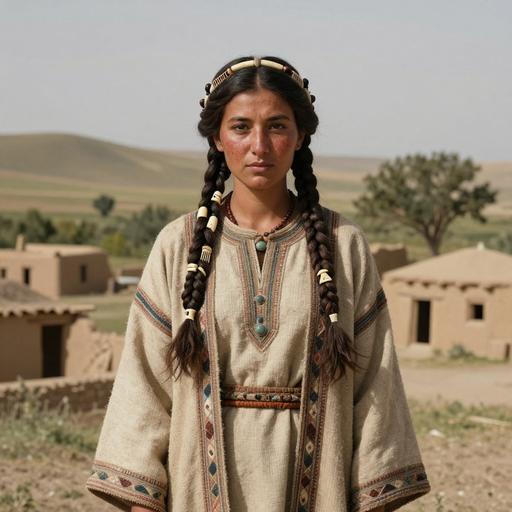
mtDNA haplogroup J1B1A1 is a subclade of J1B1A, itself part of the broader haplogroup J1b/J lineage that expanded in Western Eurasia during the early Holocene. Based on the phylogenetic position of J1B1A1 downstream of J1B1A and on the distribution of closely related lineages, the clade most likely originated in the Near East (Anatolia/Levant) in the early to mid-Holocene (on the order of ~8 thousand years ago). Its emergence fits into the wider pattern of maternal lineages that spread with early farming communities and maritime Neolithic expansions from Anatolia into the Mediterranean.
Subclades (if applicable)
J1B1A1 is a terminal or near-terminal branch within many modern phylogenies and may contain a small number of closely related sub-lineages defined by private control-region mutations or rare coding-region variants. Where present in phylogenies, these sub-branches tend to show geographic microstructure (for example, variants enriched on particular Mediterranean coasts or within specific communities), but J1B1A1 as a whole is treated as a fine-scale subclade of J1B1A for population and aDNA studies.
Geographical Distribution
The modern and ancient distribution of J1B1A1 is concentrated around the eastern and central Mediterranean and adjacent regions. It occurs at moderate frequencies in parts of the Near East and Southern Europe, and at low to moderate frequencies in the Caucasus and North Africa, with occasional low-frequency occurrences in Central Asia. Ancient DNA identifications (dozens of specimens in several published datasets) confirm that J1B1A1 was present in archaeological contexts associated with Neolithic and later Bronze/Iron Age populations around the Mediterranean.
- Near East/Anatolia: Central area of origin and a reservoir of diversity for the lineage.
- Southern Europe (Mediterranean coasts): Appears in Neolithic and post-Neolithic contexts consistent with maritime farmer spread around the Mediterranean basin.
- North Africa and the Maghreb: Low-frequency presence consistent with Mediterranean gene flow and historic contacts (trade, colonization).
- Caucasus and Central Asia: Scattered, low-frequency occurrences reflecting later regional movements and long-distance contacts.
- Jewish communities: Certain Ashkenazi and Sephardi maternal lineages include J1B1A1 or close relatives, reflecting Near Eastern origins and subsequent diaspora history.
Historical and Cultural Significance
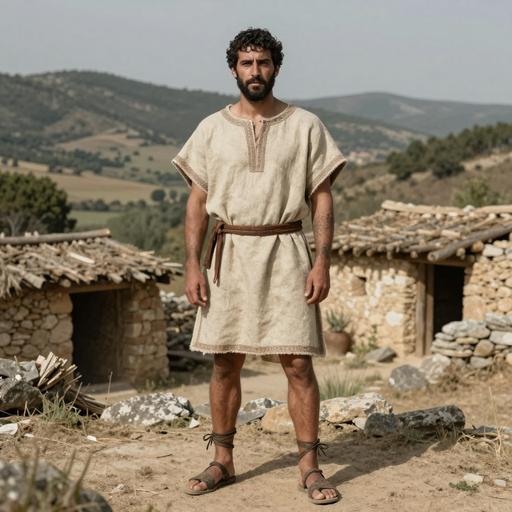
J1B1A1 is informative for questions about the Neolithic expansion of farmers from Anatolia into Europe and the maritime colonization of Mediterranean coastal regions (Cardial/Impressed Ware-related movements). Its presence in ancient samples tied to Neolithic and Bronze Age contexts supports a role as a marker—among others—of westward and coastal Neolithic dispersals. Later historic processes (Phoenician and Greek trade networks, Roman-era connectivity, medieval population movements and Jewish diaspora history) help explain its persistence and patchy distribution in North Africa, the Mediterranean islands, and parts of Europe.
While J1B1A1 is not a high-frequency pan-regional marker, its distribution and presence in archaeological specimens make it a useful lineage for reconstructing maternal ancestry connected with Near Eastern farmers and Mediterranean networks. In forensic or genealogical contexts, a J1B1A1 result often points to a West Eurasian maternal ancestry with a Near Eastern/Mediterranean signal, though low-frequency occurrences elsewhere mean conclusions must be paired with autosomal and archaeological evidence.
Conclusion
As a downstream branch of J1B1A, J1B1A1 reflects early Holocene maternal diversification centered in the Near East and subsequent dispersal along Mediterranean and adjacent routes. It is a low-to-moderate frequency lineage that appears in both modern populations and aDNA from Neolithic through historical periods, and thus is valuable for tracing Neolithic farmer movements, coastal Mediterranean contacts, and later historical connections across the Near East, Europe and North Africa.
Key Points
- Origins and Evolution
- Subclades (if applicable)
- Geographical Distribution
- Historical and Cultural Significance
- Conclusion