The Story
The journey of mtDNA haplogroup J1C1B1
Origins and Evolution
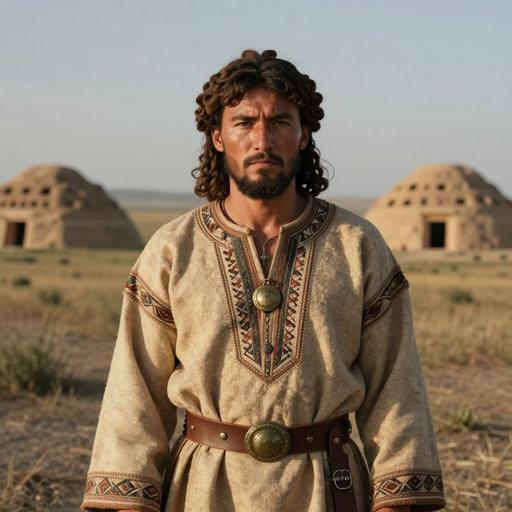
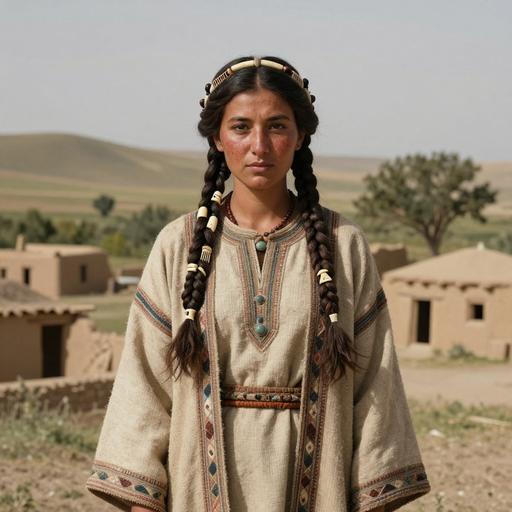
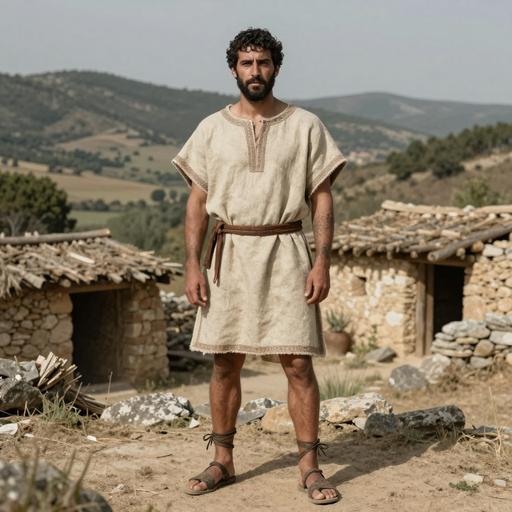
J1C1B1 is a subclade of mtDNA haplogroup J1C1B, itself nested within haplogroup J1, a lineage with deep roots in the Near East and adjacent regions. Based on the phylogenetic position of J1C1B1 downstream of J1C1B and the archaeological contexts in which related lineages appear, J1C1B1 most plausibly arose in the Near East or the Caucasus during the later Neolithic to early Bronze Age (on the order of ~5,000 years ago). The subclade likely diversified locally from J1C1B as human populations that had adopted agriculture and complex social networks expanded and mixed across the eastern Mediterranean and adjacent regions.
Subclades (if applicable)
At present, J1C1B1 is known primarily as a defined subbranch of J1C1B; modern sequencing and ancient DNA sampling have revealed minor downstream branches in some datasets but no single widely distributed, deeply divergent daughter clade analogous to major branches seen in older haplogroups. Continued high-resolution mitogenome sequencing may reveal additional substructure within J1C1B1, particularly when more ancient samples from the Near East, Anatolia and the Mediterranean are added to reference databases.
Geographical Distribution
J1C1B1 shows a patchy but geographically coherent distribution consistent with a Near Eastern origin and later spread into adjacent regions. It is observed at low-to-moderate frequencies in parts of Southern Europe (especially Mediterranean coastal areas), in the Near East and the Caucasus, and at lower frequencies in North Africa and pockets of Central Asia. The lineage is also recorded in some Jewish populations (both Ashkenazi and Sephardi), reflecting historical gene flow and diaspora movements. The presence of J1C1B1 in multiple archaeological samples (14 entries in the referenced database) supports continuity of this maternal lineage in the region from prehistoric into historic times.
Historical and Cultural Significance
The temporal and spatial pattern of J1C1B1 is consistent with maternal lineages that participated in Neolithic farmer expansions from the Near East into the Mediterranean, followed by additional movements during the Bronze Age (maritime trade, population movements around the Levant, Aegean and Mediterranean basin). In historical eras, the lineage could have been spread further by trade networks, seafaring populations (including Phoenician and later classical and medieval movements), and by the Jewish diasporas that relocated maternal lineages across Europe and the Mediterranean.
Genetically, J1C1B1 often co-occurs in populations with other Near Eastern-derived maternal haplogroups (for example H, K, and T2), reflecting shared demographic histories tied to agriculture, trade and urbanization in the eastern Mediterranean and adjoining regions.
Conclusion
J1C1B1 represents a relatively young, regionally focused maternal lineage arising from the Near East/Caucasus in the later Holocene and carried into Southern Europe, North Africa and parts of Central Asia through a mixture of Neolithic, Bronze Age and historical movements. While not a high-frequency lineage anywhere, its detection in both modern and ancient samples makes it a useful marker for tracing post-Neolithic maternal connections across the Mediterranean and Near East. Ongoing mitogenome sequencing and broader ancient DNA sampling will refine its internal branching and improve resolution of its temporal and geographic history.
Key Points
- Origins and Evolution
- Subclades (if applicable)
- Geographical Distribution
- Historical and Cultural Significance
- Conclusion