Menu
mtDNA Haplogroup • Maternal Lineage

J1C2K

mtDNA Haplogroup J1C2K

~9,000 years ago
Near East / Caucasus
0 subclades
8 ancient samples
Scroll to explore
Chapter I

The Story

The journey of mtDNA haplogroup J1C2K

Origins and Evolution

mtDNA haplogroup J1C2 is a derived branch within the J1C subclade of haplogroup J, a lineage that expanded in western Asia and into adjacent regions after the Last Glacial Maximum. Based on phylogenetic position and molecular-clock estimates for related J1C lineages, J1C2 most likely originated in the Near East or the Caucasus during the early Holocene (around ~9 kya). Its emergence fits the timeframe of the early Neolithic transition when populations associated with expanding Anatolian‑derived farming groups spread into Europe, the Mediterranean basin, and parts of North Africa.

Subclades (if applicable)

J1C2 sits below J1C in the mtDNA tree; internal diversification within J1C2 is limited compared with larger haplogroups, and documented sublineages are relatively sparse in both ancient DNA datasets and modern population surveys. The scarcity of deeply branching, well-sampled subclades suggests a modest founder population size and subsequent patchy dispersal rather than a broad rapid expansion. Ancient DNA currently records a small number of J1C2 occurrences (the user dataset notes eight archaeological samples), which helps anchor its presence in Neolithic and post‑Neolithic contexts but indicates it did not reach the high frequencies seen in some other maternal lineages.

Geographical Distribution

Modern and ancient occurrences of J1C2 cluster in the Near East and Caucasus, with lower-frequency appearances across southern and western Europe, North Africa, and parts of Central Asia. The distribution pattern is consistent with Neolithic demic diffusion from Anatolia and subsequent admixture and migrations around the Mediterranean and into Europe. In Europe J1C2 is typically low frequency but detectable in coastal and inland populations influenced by early farming and later historical movements; in North Africa it appears sporadically, likely reflecting Holocene gene flow across the Mediterranean and Sahara margins.

Historical and Cultural Significance

Because J1C2 is tied to a maternal lineage that likely expanded with or shortly after early agriculturalists, it is often discussed in the context of Anatolian‑derived Neolithic farmer dispersals. Its appearance in some Jewish communities (both Ashkenazi and Sephardi) and in populations of the Caucasus and Near East indicates additional later movements and founder events, including historical migrations and diasporas. The haplogroup's low to moderate frequencies and presence in ancient individuals make it useful as a marker for studying regional continuity and maternal ancestry in archaeological contexts, but its limited diversity constrains fine-scale phylogeographic resolution.

Conclusion

J1C2 is a localized, early Holocene maternal lineage that reflects Near Eastern origins and Neolithic expansions into adjacent regions. It is notable for its association with Anatolian‑derived farming dispersals and its patchy, low-to-moderate frequency distribution across the Mediterranean, Europe, the Caucasus, and North Africa. While not a major pan‑regional lineage, its presence in both ancient and modern samples provides valuable information about maternal gene flow and population structure during the Neolithic and subsequent periods.

Key Points

  • Origins and Evolution
  • Subclades (if applicable)
  • Geographical Distribution
  • Historical and Cultural Significance
  • Conclusion
Chapter II

Tree & Relationships

Phylogenetic context and subclades

Evolution Path

This haplogroup's evolutionary journey from its earliest ancestor to the present.

Steps Haplogroup Age Estimate Archaeology Era Time Passed Immediate Descendants Tested Modern Descendants Ancient Connections
1 J1C2K Current ~9,000 years ago 🌾 Neolithic 9,000 years 0 6 8
2 J1C2 ~9,000 years ago 🌾 Neolithic 9,000 years 14 73 0
3 J1C ~12,000 years ago 🌾 Neolithic 12,000 years 9 605 319
4 J1 ~30,000 years ago 🦴 Paleolithic 30,000 years 2 1,069 55
5 J ~45,000 years ago 🦴 Paleolithic 45,000 years 4 1,622 16
6 JT ~45,000 years ago 🦴 Paleolithic 45,000 years 2 3,237 1
7 N ~60,000 years ago 🦴 Paleolithic 60,000 years 15 15,452 13
8 L3 ~70,000 years ago 🦴 Paleolithic 70,000 years 11 17,621 6
9 L ~160,000 years ago 🦴 Paleolithic 160,000 years 7 18,987 5

Subclades (0)

Terminal branch - no known subclades

Chapter III

Where in the World

Geographic distribution and modern presence

Place of Origin

Near East / Caucasus

Modern Distribution

The populations where MTDNA haplogroup J1C2 is found include:

  1. Southern and Western European populations
  2. Middle Eastern populations
  3. North African populations
  4. Caucasus region populations
  5. Some populations in Central Asia
  6. Jewish populations (Ashkenazi and Sephardi)
CHAPTER IV

When in Time

Your haplogroup in the context of human history

~10k years ago

Neolithic Revolution

Agriculture begins, settled communities form

~9k years ago

Haplogroup J1C2K

Your mtDNA haplogroup emerged in Near East / Caucasus

Near East / Caucasus
~5k years ago

Bronze Age

Metalworking, writing, and early civilizations

~3k years ago

Iron Age

Iron tools, expanded trade networks

~2k years ago

Classical Antiquity

Greek and Roman civilizations flourish

Present

Present Day

Modern era

Your Haplogroup
Historical Era
Chapter IV-B

Linked Cultures

Ancient cultures associated with mtDNA haplogroup J1C2K

Cultural Heritage

These ancient cultures have been linked to haplogroup J1C2K based on matching ancient DNA samples from archaeological excavations. The presence of this haplogroup in these cultures provides insights into the migrations and population movements of populations carrying this haplogroup.

Estonian Bronze Age Linear Pottery Culture Starčevo-Criș Viking Viking Denmark
Culture assignments are based on archaeological context of ancient DNA samples and may represent regional associations during specific time periods.
Chapter V

Sample Catalog

Top 8 ancient DNA samples directly related to haplogroup J1C2K or parent clades

8 / 8 samples
Portrait Sample Country Era Date Culture mtDNA Match
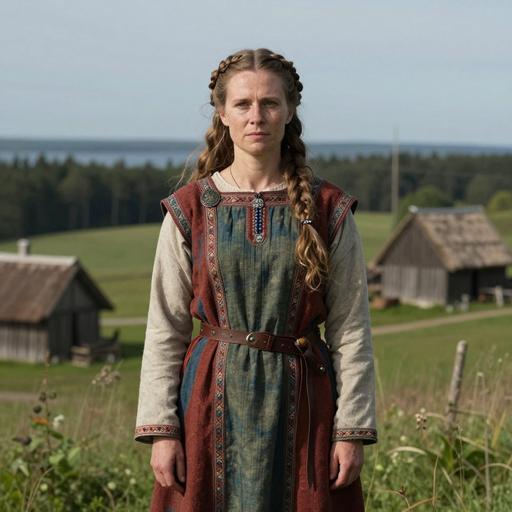
Portrait of ancient individual vik_stg026 from Sweden, dated 774 CE - 1018 CE
vik_stg026
Sweden Viking Age Sweden 774 CE - 1018 CE Viking J1c2k Direct
Portrait of ancient individual vik_stg026 from Sweden, dated 774 CE - 1018 CE
vik_stg026
Sweden The Viking Age 774 CE - 1018 CE J1c2k Direct
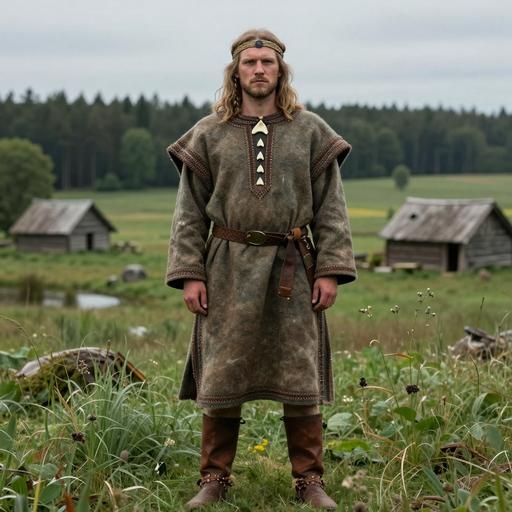
Portrait of ancient individual VK215 from Denmark, dated 800 CE - 900 CE
VK215
Denmark Viking Age Denmark 800 CE - 900 CE Viking Denmark J1c2k Direct
Portrait of ancient individual VK216 from Denmark, dated 800 CE - 900 CE
VK216
Denmark Viking Age Denmark 800 CE - 900 CE Viking Denmark J1c2k Direct
Portrait of ancient individual VK215 from Denmark, dated 800 CE - 900 CE
VK215
Denmark The Viking Age 800 CE - 900 CE J1c2k Direct
Portrait of ancient individual VK216 from Denmark, dated 800 CE - 900 CE
VK216
Denmark The Viking Age 800 CE - 900 CE J1c2k Direct
Portrait of ancient individual X11 from Estonia, dated 1046 BCE - 857 BCE
X11
Estonia Bronze Age Estonia 1046 BCE - 857 BCE Estonian Bronze Age J1c2k Direct
Portrait of ancient individual X11 from Estonia, dated 1046 BCE - 857 BCE
X11
Estonia Late Bronze Age Baltic 1046 BCE - 857 BCE J1c2k Direct
Chapter VI

Carrier Distribution Map

Geographic distribution of 8 ancient DNA samples carrying haplogroup J1C2K

Time Period Filter
All Time Periods
Showing all samples
Each marker represents an ancient individual
Chapter VII

Temporal Distribution

Distribution of carriers across archaeological periods

Chapter VIII

Geographic Distribution

Distribution of carriers by country of origin

Chapter IX

Country × Era Distribution

Cross-tabulation of carrier countries and archaeological periods

Data

Data & Provenance

Source information and data quality

Last Updated 2026-02-16
Confidence Score 50/100
Coverage Low
Data Source

We use the latest phylotree for MTDNA haplogroup classification and data.