The Story
The journey of mtDNA haplogroup J1C8A1
Origins and Evolution
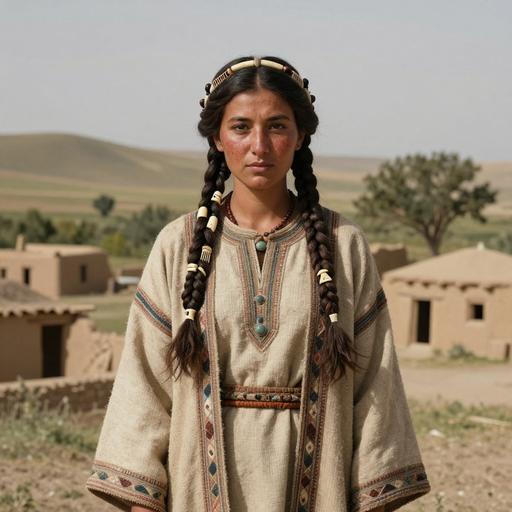
J1C8A1 is a low‑frequency maternal lineage nested within mtDNA haplogroup J1c → J1c8 → J1C8A. Based on phylogenetic position and coalescent estimates for its parent clade, J1C8A1 most plausibly arose in the Near East or Caucasus around 5 thousand years ago (5 kya), a timeframe that corresponds to late Neolithic/early Chalcolithic transitions in the region. Its emergence likely reflects diversification within local maternal pools already structured by earlier Neolithic farmer expansions and regional post‑Neolithic demographic processes.
Subclades
As a named subclade (J1C8A1) of J1C8A, this lineage currently shows limited downstream diversity in published databases and is represented at low frequency in modern populations and a small number of ancient DNA samples. Because sampling is sparse, J1C8A1 may appear as singleton or minor subbranches in complete mitogenome surveys; further complete mtDNA sequencing in the Near East and Mediterranean will clarify whether additional sublineages exist.
Geographical Distribution
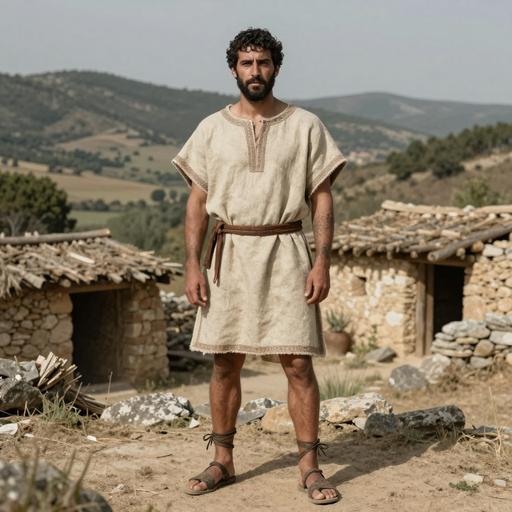
J1C8A1 is geographically concentrated in and around the Mediterranean and Near East but at low overall frequencies. Reported occurrences cluster along Mediterranean coastlines of Southern and Western Europe, Anatolia/Levant, the Caucasus, and coastal North Africa, with rare appearances in parts of Central Asia. The pattern is consistent with an origin in the Near East/Caucasus followed by dispersal via maritime and overland networks associated with farming communities and later historical movements (e.g., Bronze Age trade, Classical Mediterranean mobility, and diaspora movements).
Historical and Cultural Significance
Although J1C8A1 is not a marker of any single archaeological culture, its time depth and distribution tie it to post‑Neolithic population processes: the later phases of Neolithic farmer expansions, Chalcolithic and Bronze Age Mediterranean interactions, and subsequent historical mobility (trade, colonization, and diasporas). Low-frequency occurrences in some Jewish communities and in Mediterranean populations suggest that founder effects and long-distance movements (for example maritime traders or diasporic dispersal) have contributed to its modern distribution. Because it is rare, J1C8A1 is more useful for fine-scale maternal lineage tracing in population- and genealogical‑level studies than for broad continental inference.
Conclusion
J1C8A1 represents a recently derived, low-frequency maternal subclade with a Near Eastern/Caucasus origin around ~5 kya and a distribution reflecting Neolithic/post‑Neolithic farmer expansions and later historical dispersals into Mediterranean Europe, the Levant/Anatolia, North Africa, and adjacent regions. Continued mitogenome sequencing — particularly in under‑sampled Near Eastern, Caucasus, and Mediterranean archaeological contexts — will improve resolution of its internal structure and historical movements.
Key Points
- Origins and Evolution
- Subclades
- Geographical Distribution
- Historical and Cultural Significance
- Conclusion