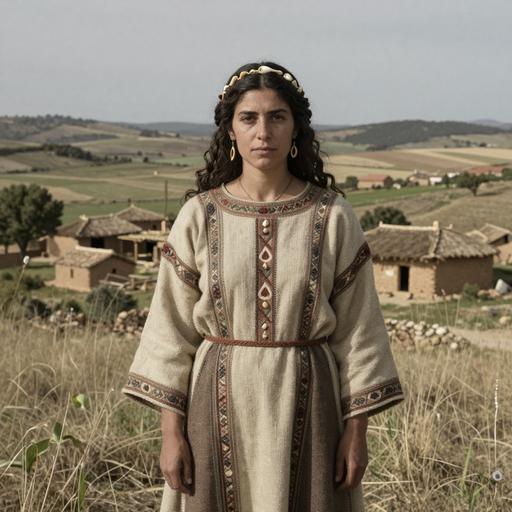
The Story
The journey of mtDNA haplogroup J2A1A
Origins and Evolution
mtDNA haplogroup J2A1A is a defined subclade of J2A1, itself a branch of haplogroup J2A. The parent clade J2A1 has been associated with populations in the Near East and Anatolia and is estimated to have arisen in the early post‑glacial or early Neolithic (parent estimates ~9 kya). Given that phylogenetic position, J2A1A most likely arose after the initial split of J2A1 as regional maternal lineages diversified during the Neolithic and Chalcolithic periods — a reasonable estimate for J2A1A's origin is on the order of ~7 kya (early to mid Neolithic timeframe), although precise dating requires larger calibrated molecular-clock analyses and additional ancient DNA samples.
J2A1A is characterized by one or more downstream mutations relative to J2A1 (specific diagnostic mutations are defined in curated phylogenies and sequence databases). Like many low-to-moderate frequency mtDNA subclades, its modern geographic pattern reflects both early demographic expansions (Neolithic farmer dispersals from Anatolia into the Mediterranean and Europe) and later regional movements and gene flow.
Subclades (if applicable)
As a downstream branch of J2A1, J2A1A may contain additional substructure (regional subclades) detectable only when large numbers of full mitochondrial genomes are sampled. At present, sampling is relatively sparse compared with major haplogroups, so some downstream branches may be under‑recognized. Future mitogenome studies and ancient DNA sampling from Anatolia, the Levant, the Aegean and North Africa will clarify internal diversity and allow finer dating of subclade splits.
Geographical Distribution
Modern occurrences of J2A1A are concentrated around the eastern and central Mediterranean and adjacent regions. Reported patterns (based on population surveys, mtDNA databases and limited ancient DNA hits) include:
- Near East / Anatolia: highest relative diversity and plausibly the region of origin or early persistence; moderate frequency in some datasets.
- Southern Europe (Mediterranean coasts of Italy, Greece, Spain): present at low-to-moderate frequencies consistent with Neolithic and later maritime connections.
- Caucasus: detected at low-to-moderate levels in Armenia, Georgia and nearby populations, reflecting Near Eastern gene flow and complex regional history.
- North Africa (coastal zones): low frequencies where historical contact with the Near East and Mediterranean networks occurred.
- Central Asia and broader Eurasia: rare, usually at very low frequency, reflecting long‑distance movement or later admixture.
- Jewish populations: occasional occurrences reported in some Ashkenazi and Sephardi lineages, reflecting the Near Eastern maternal substrate and later diasporic movements.
Ancient DNA results are still limited for this subclade, but the parent clade appears in Neolithic and later contexts in the eastern Mediterranean and Near East; J2A1A has been observed in a small number of archaeological samples, supporting continuity of this maternal lineage in the region through the Holocene.
Historical and Cultural Significance
Because of its Near Eastern origin and Mediterranean distribution, J2A1A is best understood in the context of Neolithic expansions and subsequent Bronze Age and historic maritime interactions. It likely rode the wave of Anatolian‑derived farming populations into the Aegean and Mediterranean coasts, and later participated in population movements linked to trade, colonization and empire:
- Neolithic Anatolian farmer expansion: contributes to the maternal gene pool of early farming communities in southeastern Europe and the Aegean.
- Bronze Age Mediterranean networks: continued mobility (trade, colonization by peoples such as Greeks and Phoenicians, and later Roman-era movements) could explain the persistence and coastal distribution of the lineage.
- Diasporic and historical movements: occurrences in Jewish and North African populations reflect later demographic processes (migration, conversion, trade, intermarriage).
It is important to emphasize that a mitochondrial subclade represents only a single maternal lineage among many; presence or absence of J2A1A in an archaeological context should be interpreted alongside autosomal, paternal and archaeological data.
Conclusion
mtDNA haplogroup J2A1A is a regional Mediterranean/Near Eastern maternal lineage deriving from the broader J2A1 clade. Its likely origin in Anatolia/Near East in the later post‑glacial/Neolithic period and its modern distribution around the eastern Mediterranean, southern Europe, the Caucasus and coastal North Africa are consistent with Neolithic farmer expansions and subsequent Bronze Age and historic connectivity. Continued mitogenome sequencing and targeted ancient DNA sampling will improve resolution of its age, internal structure and precise migratory history.
Key Points
- Origins and Evolution
- Subclades (if applicable)
- Geographical Distribution
- Historical and Cultural Significance
- Conclusion