The Story
The journey of mtDNA haplogroup J2A2C
Origins and Evolution
mtDNA haplogroup J2A2C is a subclade of J2A2, itself nested within haplogroup J2a. Given the established chronology for J2A2 (origin ca. ~12 kya in the Near East) and the phylogenetic position of J2A2C as a downstream branch, J2A2C most likely diversified in the early Holocene (roughly 9 kya) in or near Anatolia/Levant. Its emergence corresponds with the period of post-glacial population expansions and the onset and spread of early farming in western Asia and the eastern Mediterranean.
Like many J-derived lineages, J2A2C reflects a Near Eastern maternal legacy that was carried into neighbouring regions during the Neolithic and later movements. The clade is relatively low-frequency and patchily distributed, which is consistent with lineage drift after founder events and localized demographic processes.
Subclades
High-resolution mitogenome surveys indicate that J2A2C may contain minor internal structure (short branches and a few geographically localized sublineages), but sampling remains sparse in many regions. Where full mitogenomes are available, researchers sometimes report finer branches (e.g., J2A2C1-type subclades), though these are not yet widely represented in published population datasets. Because of limited sampling and the relatively recent branching time compared with deeper J lineages, the internal diversity of J2A2C appears modest.
Geographical Distribution
J2A2C is primarily a Near Eastern–Mediterranean lineage with measurable presence in:
- Anatolia and the Levant, where it likely originated and where frequencies are highest relative to other regions.
- Southern Europe (coastal and island areas of the Mediterranean), reflecting maritime and overland Neolithic/Chalcolithic movements from Anatolia and the Levant into Europe.
- The Caucasus and parts of North Africa and Central Asia at low frequencies, consistent with later region-to-region gene flow and historic contacts.
- Small but notable representation in some Jewish communities (Ashkenazi and certain Sephardi lineages), which often carry a mix of Near Eastern and Mediterranean maternal lineages.
Overall, the distribution pattern—concentration in the Near East with low-level presence around the Mediterranean and adjacent regions—matches expectations for a lineage involved in early farming expansions and subsequent localized demographic events.
Historical and Cultural Significance
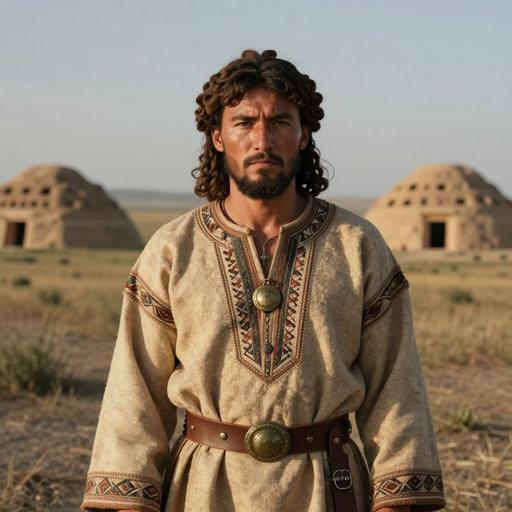
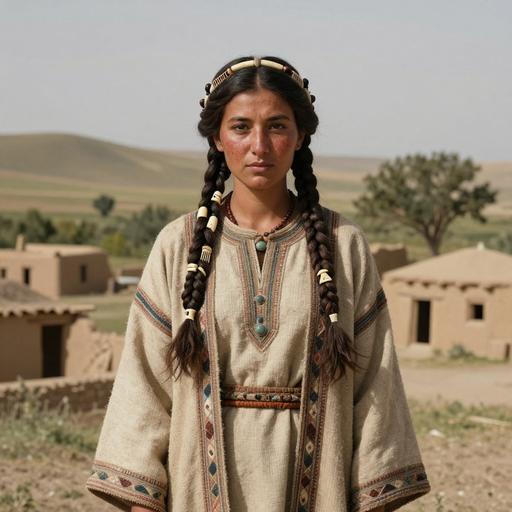
Because J2A2C sits within a group of haplogroups strongly associated with Neolithic farmer ancestry in ancient DNA studies, it is best interpreted as part of the maternal substrate that spread with early agriculturalists from Anatolia into Europe and the Mediterranean from the early Holocene onward. Its low-to-moderate frequencies in southern Europe and presence in North Africa and the Caucasus are consistent with:
- Neolithic agricultural expansions (primary association): movement of people, crops and technologies from Anatolia/Levant into southeastern and later southwestern Europe.
- Post-Neolithic regional movements (secondary): Bronze Age and later trade, migration and historical contacts (including Phoenician and classical-era Mediterranean networks) that redistributed lineages at low frequencies.
- Community-specific histories: the appearance of J2A2C in some Jewish maternal lineages likely reflects the incorporation of local Near Eastern and Mediterranean maternal ancestry during community formation and dispersal.
Because J2A2C is not a high-frequency lineage in any single large modern population, its cultural associations are primarily inferred from broader patterns seen in haplogroup J and J2 sublineages in paleogenomic and population-genetic studies.
Conclusion
mtDNA J2A2C is a modestly diverse, geographically focused maternal lineage that traces to the Near East in the early Holocene and shows a distribution pattern consistent with Neolithic farmer dispersals and subsequent regional gene flow across the Mediterranean, Caucasus, North Africa and parts of Central Asia. Continued mitogenome sequencing in undersampled regions (Anatolia, Levant, North Africa and Caucasus) and inclusion of ancient DNA will refine the internal structure, age estimates and the role of J2A2C in past demographic events.
Key Points
- Origins and Evolution
- Subclades
- Geographical Distribution
- Historical and Cultural Significance
- Conclusion