Menu
mtDNA Haplogroup • Maternal Lineage

L1B2A

mtDNA Haplogroup L1B2A

~12,000 years ago
West / Central Africa
0 subclades
1 ancient samples
Scroll to explore
Chapter I

The Story

The journey of mtDNA haplogroup L1B2A

Origins and Evolution

mtDNA haplogroup L1B2A is a subclade nested within L1B2 (itself a branch of L1B), placing it among the deep maternal lineages of Africa. Based on the parent lineage's estimated age (~30 kya) and the phylogenetic branching patterns observed in L1 diversity, L1B2A most plausibly diversified during the Late Pleistocene to early Holocene (roughly around 12 kya in our estimate). It represents a localized diversification within the broader West/Central African maternal gene pool and is defined by downstream mutations that separate it from other L1B2 sublineages.

Subclades (if applicable)

L1B2A sits below L1B2 in the mtDNA phylogeny. Where sampling density allows, L1B2A may itself split into finer subclades in regional studies, reflecting localized demographic events (founder effects, small-scale migrations, and admixture). Because African mtDNA diversity is high and many studies have limited resolution for rare sublineages, the internal substructure of L1B2A is still being refined by complete-mitogenome sequencing and denser sampling, especially in understudied West and Central African groups.

Geographical Distribution

L1B2A is concentrated in West and parts of Central Africa, occurring at appreciable frequencies in several West African coastal and inland populations and at lower frequencies in Sahelian, Central African rainforest, and some North African groups due to historical gene flow. It is also present among African-descended populations in the Americas as a consequence of the trans-Atlantic slave trade. Occasional detections in Central African hunter-gatherer groups (e.g., some Pygmy populations) reflect either ancient shared ancestry or more recent regional admixture.

Historical and Cultural Significance

L1B2A predates historical-era expansions but would have been part of the maternal background of populations involved in later demographic processes in Africa — for example, regional movements in the Holocene, the later spread of pastoralism and agriculture across parts of the Sahel and West Africa, and the movements associated with the Bantu expansions. In the past 500 years, haplogroups like L1B2A were carried to the Americas by enslaved West and Central Africans, leaving a detectable trace in African-descended communities in the Caribbean, North America and South America.

Although L1B2A is not tied to a single archaeological culture in the way some Eurasian haplogroups are (because of different archaeological and linguistic dynamics in West/Central Africa), its presence in diverse West African populations connects it to long-term regional continuity and local demographic histories.

Conclusion

L1B2A is a regionally informative maternal lineage that reflects deep West/Central African matrilineal ancestry and subsequent dispersals, including historic trans-Atlantic movements. Continued whole-mitochondrial sequencing and ancient DNA work in West and Central Africa will refine its internal topology, age estimates, and finer-scale distribution patterns.

Key Points

  • Origins and Evolution
  • Subclades (if applicable)
  • Geographical Distribution
  • Historical and Cultural Significance
  • Conclusion
Chapter II

Tree & Relationships

Phylogenetic context and subclades

Evolution Path

This haplogroup's evolutionary journey from its earliest ancestor to the present.

Steps Haplogroup Age Estimate Archaeology Era Time Passed Immediate Descendants Tested Modern Descendants Ancient Connections
1 L1B2A Current ~12,000 years ago 🌾 Neolithic 12,000 years 0 2 1
2 L1B2 ~30,000 years ago 🦴 Paleolithic 30,000 years 1 6 0
3 L1B ~55,000 years ago 🦴 Paleolithic 55,000 years 2 137 0
4 L1 ~120,000 years ago 🦴 Paleolithic 120,000 years 4 531 4
5 L ~160,000 years ago 🦴 Paleolithic 160,000 years 7 18,987 5

Subclades (0)

Terminal branch - no known subclades

Chapter III

Where in the World

Geographic distribution and modern presence

Place of Origin

West / Central Africa

Modern Distribution

The populations where mtDNA haplogroup L1B2A is found include:

  1. Yoruba (Nigeria, West Africa)
  2. Mende (Sierra Leone, West Africa)
  3. Akan (Ghana / Ivory Coast, West Africa)
  4. Mandinka and other Mande groups (West Africa)
  5. Fulani (West and Central Sahel)
  6. Mbuti and other Central African Pygmy groups (low to moderate frequencies in some surveys)
  7. African-descended populations in the Americas (African American, Afro-Caribbean, Afro-Brazilian) — via the trans-Atlantic slave trade
  8. Sahelian and North African populations (low frequencies consistent with historical admixture)
CHAPTER IV

When in Time

Your haplogroup in the context of human history

~12k years ago

Haplogroup L1B2A

Your mtDNA haplogroup emerged in West / Central Africa

West / Central Africa
~10k years ago

Neolithic Revolution

Agriculture begins, settled communities form

~5k years ago

Bronze Age

Metalworking, writing, and early civilizations

~3k years ago

Iron Age

Iron tools, expanded trade networks

~2k years ago

Classical Antiquity

Greek and Roman civilizations flourish

Present

Present Day

Modern era

Your Haplogroup
Historical Era
Chapter IV-B

Linked Cultures

Ancient cultures associated with mtDNA haplogroup L1B2A

Cultural Heritage

These ancient cultures have been linked to haplogroup L1B2A based on matching ancient DNA samples from archaeological excavations. The presence of this haplogroup in these cultures provides insights into the migrations and population movements of populations carrying this haplogroup.

Afro-Mexican Bungule Corded Ware Jordanow-Michelsberg Culture Khovd Long-Term Los Millares Mtwapa Nubian Christian Slab Grave Culture St. Helena Colonial Unetice Culture
Culture assignments are based on archaeological context of ancient DNA samples and may represent regional associations during specific time periods.
Chapter V

Sample Catalog

Top 1 ancient DNA samples directly related to haplogroup L1B2A or parent clades

1 / 1 samples
Portrait Sample Country Era Date Culture mtDNA Match
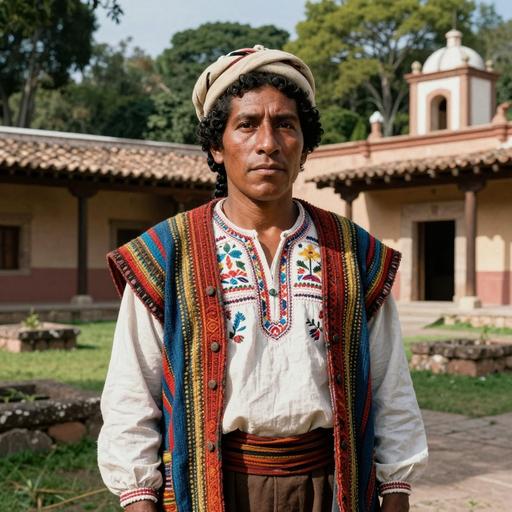
Portrait of ancient individual SJN001 from Mexico, dated 1453 CE - 1626 CE
SJN001
Mexico Afro-Mexican Community of Colonial Mexico City 1453 CE - 1626 CE Afro-Mexican L1b2a Direct
Chapter VI

Carrier Distribution Map

Geographic distribution of 1 ancient DNA samples carrying haplogroup L1B2A

Time Period Filter
All Time Periods
Showing all samples
Each marker represents an ancient individual
Chapter VII

Temporal Distribution

Distribution of carriers across archaeological periods

Chapter VIII

Geographic Distribution

Distribution of carriers by country of origin

Chapter IX

Country × Era Distribution

Cross-tabulation of carrier countries and archaeological periods

Data

Data & Provenance

Source information and data quality

Last Updated 2026-02-16
Confidence Score 50/100
Coverage Low
Data Source

We use the latest phylotree for MTDNA haplogroup classification and data.