The Story
The journey of mtDNA haplogroup M10A1B
Origins and Evolution
mtDNA haplogroup M10A1B is a descendant branch of M10A1, itself part of the broader East–Central Asian lineage M10 within macro-haplogroup M. Based on the phylogenetic position beneath M10A1 (which is estimated to have formed in the early Holocene, ~8 kya) and the observed geographic patterning, M10A1B most plausibly arose during the later Neolithic to Bronze Age interval on the eastern Eurasian steppe or adjacent forest-steppe zones. Its formation represents local diversification of East Eurasian maternal lineages associated with populations inhabiting the northern Chinese, Mongolian and Siberian borderlands.
Subclades
As a specific terminal subclade of M10A1, M10A1B may itself contain limited internal diversity in modern samples; published population surveys and targeted sequencing show M10A1 splits into multiple named subbranches, with M10A1B representing one of the rarer, geographically focused branches. Because published sampling for deep mtDNA substructure in some Siberian and steppe pastoralist groups remains incomplete, further mitogenome sequencing may reveal additional sublineages under M10A1B or refine its internal topology.
Geographical Distribution
M10A1B is concentrated in northern East Asia and adjacent parts of Central Asia and Siberia. Modern occurrences are reported primarily among:
- Mongolic-speaking groups (e.g., Mongolians, Buryats)
- Turkic-speaking groups of the Altai and adjacent Central Asian regions (e.g., Tuvans, Altaians)
- Indigenous Siberian peoples (e.g., Yakut/Sakha, Evenks)
- Tibetan Plateau populations in localized samples
- Low-frequency occurrences in northern Han Chinese, Koreans, and some Japanese regional samples
Ancient DNA evidence, while currently limited (a small number of archaeological samples in curated databases), places M10A1-derived lineages in eastern steppe Bronze Age and Iron Age assemblages, consistent with continuity of some maternal lineages in nomadic and semi-nomadic populations.
Historical and Cultural Significance
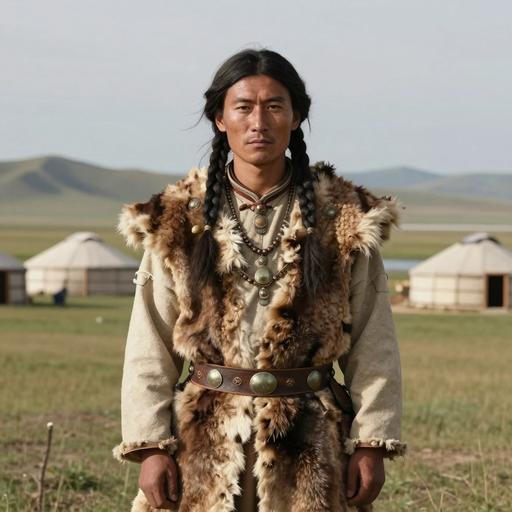
The distribution of M10A1B aligns with maternal lineages typical of northern East Eurasia and the eastern steppe. In archaeological contexts, M10A1 and its subclades have been identified in burials associated with pastoral and mobile lifeways across the Bronze Age and later nomadic horizons. This pattern suggests mitochondrial continuity among female lineages in populations involved in steppe pastoralism, mobile pastoral empires, and later multi-ethnic confederations. Co-occurrence with typical northeastern maternal haplogroups (for example D4, G and A lineages) and Y-chromosome lineages characteristic of the region (such as C2) reflects the mixed but regionally coherent genetic profile of many historical steppe groups.
Conclusion
M10A1B is a regionally informative mtDNA subclade that documents local maternal diversification in the Central–Northeast Asian/Eastern Steppe zone during the later Holocene. While currently observed at low to moderate frequencies, its presence in both modern populations (Mongolic, Turkic, Siberian, and some Tibetan and East Asian groups) and a limited number of ancient samples makes it useful for tracing maternal ancestry and population movements across northern East Asia and the Eurasian steppe. Expanded mitogenome sampling in underrepresented populations and additional ancient DNA recovery will improve resolution of its age, substructure, and historic dynamics.
Key Points
- Origins and Evolution
- Subclades
- Geographical Distribution
- Historical and Cultural Significance
- Conclusion