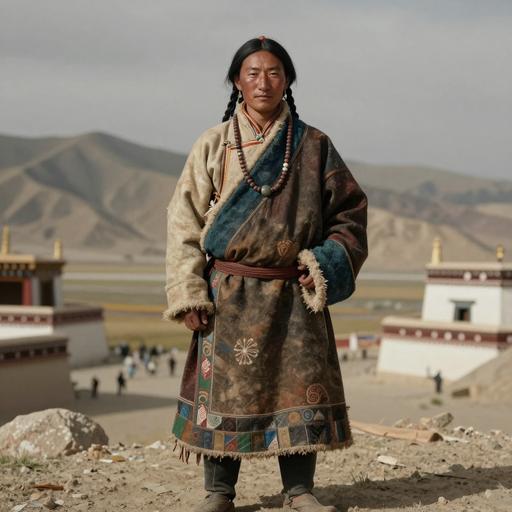
The Story
The journey of mtDNA haplogroup M52
Origins and Evolution
mtDNA haplogroup M52 is a downstream branch of macro-haplogroup M and specifically of the South-Asian-focused clade M5. As a subclade of M5, M52 most likely arose within the Indian subcontinent during the Late Pleistocene to early Holocene (plausibly around ~12 kya, though estimates vary by study and calibration). Its emergence represents further regional diversification of macro-haplogroup M following the initial colonization and long-term settlement of South Asia by anatomically modern humans.
The phylogenetic position of M52 beneath M5 implies that it shares many ancestral mutations characteristic of M5 while carrying one or more private mutations that define the M52 branch. The time depth and geographic concentration of M5 and its subclades support an in-situ South Asian origin rather than a recent introduction from outside the subcontinent.
Subclades
M52 itself may contain internal diversity (sub-subclades) defined in higher-resolution sequencing studies; however, many published surveys of South Asian mtDNA report M52 as a distinct terminal or near-terminal lineage at the resolution provided by control-region and partial coding-region typing. As more complete mitogenomes are sequenced from under-sampled tribal and rural populations across South Asia, further internal branching of M52 can be expected to be resolved. In phylogenetic terms, M52 is one of several M5-derived lineages that together reflect deep maternal structure within South Asia.
Geographical Distribution
M52 shows its highest frequencies and diversity in the Indian subcontinent, especially in central, eastern and some northern populations. Reported occurrences include:
- A range of caste and tribal groups across India (with particularly noticeable presence in central and eastern regions).
- Bengali-speaking populations of Bangladesh and the Indian state of West Bengal.
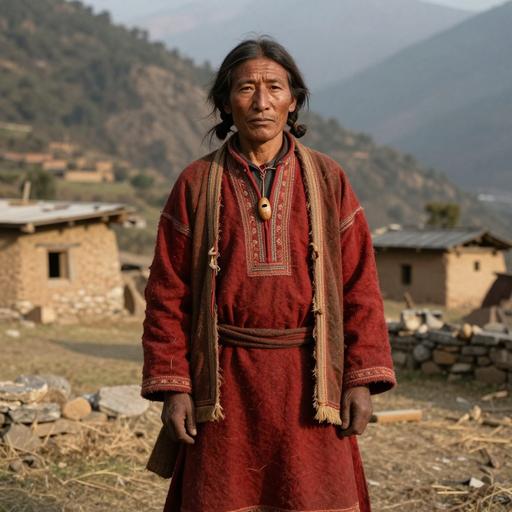
- Various ethnic groups in Nepal, particularly those in the Himalayan foothills and adjacent plains.
- Sri Lankan populations (both Sinhalese and Tamil groups) at low to moderate frequencies, consistent with broader South Asian maternal continuity.
- Low-frequency occurrences in Pakistan (Punjab and Sindh) and along India’s western margins, reflecting historical gene flow and geographic overlap.
- Occasional reports at low frequency in neighboring regions of South-Central and Southeast Asia, likely reflecting ancient or recent mobility and contact.
The pattern — concentrated diversity in India, lower-frequency presence in immediate neighbors — supports a long-standing South Asian presence with limited outward dispersal compared with some West Eurasian lineages.
Historical and Cultural Significance
M52 is best interpreted within population-genetic and archaeological frameworks as part of the deep maternal substratum of South Asia. Because its time depth precedes, or overlaps with, the development of regional Neolithic economies and later Bronze Age cultures, M52 likely reflects continuity from pre-Neolithic/early Neolithic populations into later agricultural and urban societies in the subcontinent.
It is not typically tied to any single archaeological complex in the way some Y-DNA lineages have been associated with steppe migrations; rather, M52 and sister M5 lineages testify to local maternal continuity through multiple cultural transitions (for example, from Mesolithic/early Holocene hunter-gatherer groups into Neolithic farmer communities and later Bronze Age urban societies such as the Harappan/Indus context). Observed frequencies across both tribal and caste groups indicate that M52 has been part of diverse social strata over millennia.
Conclusion
mtDNA M52 is a regionally informative maternal marker for South Asian prehistory. As sequencing studies expand and more complete mtDNA genomes from understudied South Asian populations become available, the internal structure, precise age estimate, and finer-grained geographic history of M52 will become better resolved. For now, M52 stands as one of several M5-derived lineages that document deep, predominantly South Asian maternal ancestry with continuity from the Late Pleistocene/Early Holocene into the present.
Key Points
- Origins and Evolution
- Subclades
- Geographical Distribution
- Historical and Cultural Significance
- Conclusion