Menu
mtDNA Haplogroup • Maternal Lineage

M5A

mtDNA Haplogroup M5A

~12,000 years ago
South Asia
1 subclades
8 ancient samples
Scroll to explore
Chapter I

The Story

The journey of mtDNA haplogroup M5A

Origins and Evolution

mtDNA haplogroup M5A is a descendant clade of haplogroup M5, itself a deeply rooted South Asian branch of macro-haplogroup M. Based on its phylogenetic position and patterns of diversity, M5A most likely arose in the Indian subcontinent during the terminal Pleistocene or early Holocene (post-Last Glacial Maximum), following or contemporaneous with regional population re-expansions. As a subclade of M5, M5A represents one of several lineages that reflect long-term maternal continuity within South Asia rather than recent Holocene gene flow from outside the region.

Although exact coalescence estimates vary by study and by molecular clock calibration, a time depth on the order of ~10–15 kya for M5A is consistent with its placement as a post‑LGM/early Holocene branch of M5 and with demographic events known from the region.

Subclades

M5A contains several downstream branches (for example M5a1, M5a2 and other sublineages reported in high-resolution surveys), some of which show localized concentration in particular parts of the subcontinent. Deep sequencing and full mitogenome studies have clarified internal structure, revealing subclades that can be informative about more recent geographic or social structuring (for example differences between tribal and caste populations). Ongoing phylogenetic refinement continues as more whole-mtDNA genomes from South Asia are published.

Geographical Distribution

M5A shows its highest diversity and frequency in the Indian subcontinent, with notable presence among diverse caste and tribal groups across central, eastern and northern India. It is also found at appreciable frequencies among Bengali-speaking populations of Bangladesh and in various ethnic groups of Nepal and Sri Lanka. At lower frequencies, M5A appears in parts of Pakistan (Punjab, Sindh and bordering regions), and in some neighboring South-Central Asian populations. The haplogroup is also detected at low frequency in South Asian diaspora communities in the Middle East, Europe and North America.

The distribution pattern — high diversity in India with progressively lower frequencies toward the periphery — supports an origin within South Asia followed by localized expansions rather than a recent introduction from outside the subcontinent.

Historical and Cultural Significance

Because M5A predates many archaeological cultures of the Holocene, it is best interpreted as reflecting long-term maternal continuity among South Asian hunter-gatherer and early farming populations rather than as a marker of a single archaeological culture. That said, M5A lineages were likely part of the maternal gene pool that contributed to Neolithic and later Chalcolithic societies in South Asia (for example populations in and around the Mehrgarh region and later urban centers). In modern genetic surveys, M5A occurs across both tribal and caste groups, which indicates deep maternal ancestry shared across social strata.

Ancient DNA recovery in South Asia remains sparse compared with some other regions, but M5/M5A clades have been observed in several archaeological samples, supporting continuity of maternal lineages from prehistoric to historic periods in parts of the subcontinent.

Conclusion

M5A is a regionally important mtDNA lineage that exemplifies the deep maternal structure of South Asian populations. It likely arose in the terminal Pleistocene/early Holocene within the subcontinent and persisted through subsequent demographic shifts, including the transition to agriculture and later Bronze Age complexity. Continued whole-mitogenome sampling, particularly from under-sampled regions and archaeological contexts, will refine its subclade structure and deepen understanding of maternal population history in South Asia.

Key Points

  • Origins and Evolution
  • Subclades
  • Geographical Distribution
  • Historical and Cultural Significance
  • Conclusion
Chapter II

Tree & Relationships

Phylogenetic context and subclades

Evolution Path

This haplogroup's evolutionary journey from its earliest ancestor to the present.

Steps Haplogroup Age Estimate Archaeology Era Time Passed Immediate Descendants Tested Modern Descendants Ancient Connections
1 M5A Current ~12,000 years ago 🌾 Neolithic 12,000 years 1 0 8
2 M5 ~35,000 years ago 🦴 Paleolithic 35,000 years 4 13 1
3 M ~60,000 years ago 🦴 Paleolithic 60,000 years 11 1,200 41
4 L3 ~70,000 years ago 🦴 Paleolithic 70,000 years 11 17,621 6
5 L ~160,000 years ago 🦴 Paleolithic 160,000 years 7 18,987 5

Siblings (3)

Other branches from the same parent haplogroup

Chapter III

Where in the World

Geographic distribution and modern presence

Place of Origin

South Asia

Modern Distribution

The populations where mtDNA haplogroup M5A is found include:

  1. Diverse caste and tribal groups across India (central, eastern and northern India)
  2. Bengali-speaking populations of Bangladesh and West Bengal
  3. Nepalese populations (various ethnic groups in the Himalayan foothills)
  4. Pakistani populations (notably in Punjab and Sindh at low frequencies)
  5. Sri Lankan populations (Sinhalese and Tamil groups)
  6. South Asian diaspora communities in the Middle East, Europe and North America (low frequency)
  7. Neighboring South-Central Asian groups at low frequency (e.g., parts of Afghanistan and Pakistan border regions)
CHAPTER IV

When in Time

Your haplogroup in the context of human history

~12k years ago

Haplogroup M5A

Your mtDNA haplogroup emerged in South Asia

South Asia
~10k years ago

Neolithic Revolution

Agriculture begins, settled communities form

~5k years ago

Bronze Age

Metalworking, writing, and early civilizations

~3k years ago

Iron Age

Iron tools, expanded trade networks

~2k years ago

Classical Antiquity

Greek and Roman civilizations flourish

Present

Present Day

Modern era

Your Haplogroup
Historical Era
Chapter IV-B

Linked Cultures

Ancient cultures associated with mtDNA haplogroup M5A

Cultural Heritage

These ancient cultures have been linked to haplogroup M5A based on matching ancient DNA samples from archaeological excavations. The presence of this haplogroup in these cultures provides insights into the migrations and population movements of populations carrying this haplogroup.

Goyet Cave Gravettian Hoabinhian Loebanr Culture Ostuni Culture Roopkund Culture Serkharakat Culture Spanish Gravettian Udegram
Culture assignments are based on archaeological context of ancient DNA samples and may represent regional associations during specific time periods.
Chapter V

Sample Catalog

Top 8 ancient DNA samples directly related to haplogroup M5A or parent clades

8 / 8 samples
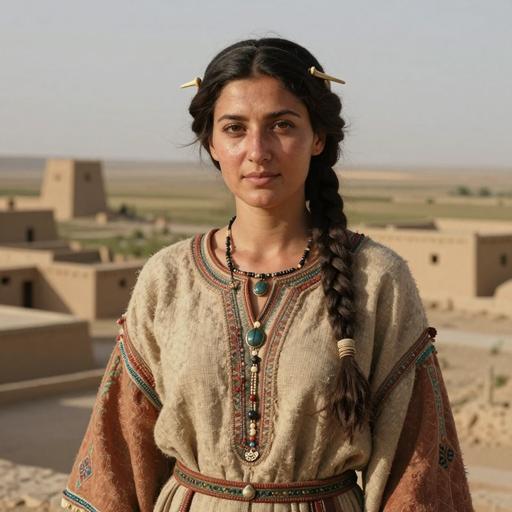
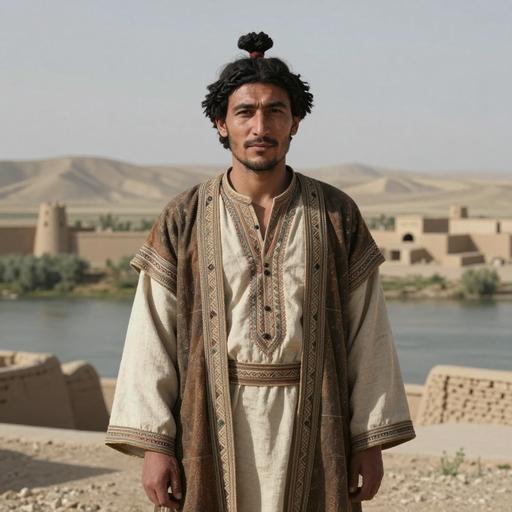
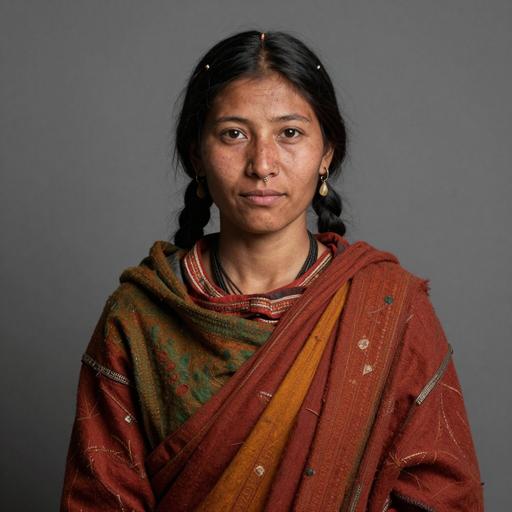
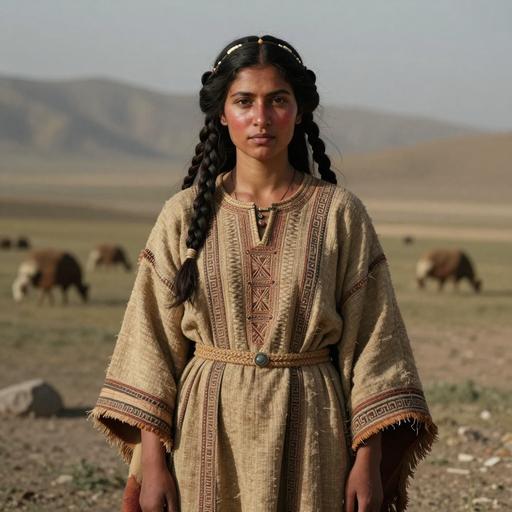
Portrait Sample Country Era Date Culture mtDNA Match
Portrait of ancient individual L8671 from Uzbekistan, dated 150 BCE - 50 CE
L8671
Uzbekistan Iron Age Serkharakat Culture of Surkhandaryo 150 BCE - 50 CE Serkharakat Culture M5a Direct
Portrait of ancient individual L8662 from Uzbekistan, dated 432 CE - 639 CE
L8662
Uzbekistan Iron Age Serkharakat Culture of Surkhandaryo 432 CE - 639 CE Serkharakat Culture M5a Direct
Portrait of ancient individual I3349 from India, dated 772 CE - 950 CE
I3349
India Roopkund Skeletons A 772 CE - 950 CE Roopkund Culture M5a Direct
Portrait of ancient individual I5400 from Pakistan, dated 928 BCE - 827 BCE
I5400
Pakistan The Loebanr Iron Age Culture of Pakistan 928 BCE - 827 BCE Loebanr Culture M5a Direct
Portrait of ancient individual I12455 from Pakistan, dated 1000 BCE - 800 BCE
I12455
Pakistan The Loebanr Iron Age Culture of Pakistan 1000 BCE - 800 BCE Loebanr Culture M5a Direct
Portrait of ancient individual I13222 from Pakistan, dated 1000 BCE - 800 BCE
I13222
Pakistan The Loebanr Iron Age Culture of Pakistan 1000 BCE - 800 BCE Loebanr Culture M5a Direct
Portrait of ancient individual I13228 from Pakistan, dated 1000 BCE - 800 BCE
I13228
Pakistan The Loebanr Iron Age Culture of Pakistan 1000 BCE - 800 BCE Loebanr Culture M5a Direct
Portrait of ancient individual I2959 from Pakistan, dated 1041 CE - 1217 CE
I2959
Pakistan Ghaznavid Udegram 1041 CE - 1217 CE Udegram M5a1 Direct
Chapter VI

Carrier Distribution Map

Geographic distribution of 8 ancient DNA samples carrying haplogroup M5A

Time Period Filter
All Time Periods
Showing all samples
Each marker represents an ancient individual
Chapter VII

Temporal Distribution

Distribution of carriers across archaeological periods

Chapter VIII

Geographic Distribution

Distribution of carriers by country of origin

Chapter IX

Country × Era Distribution

Cross-tabulation of carrier countries and archaeological periods

Data

Data & Provenance

Source information and data quality

Last Updated 2026-02-16
Confidence Score 50/100
Coverage Low
Data Source

We use the latest phylotree for MTDNA haplogroup classification and data.