The Story
The journey of mtDNA haplogroup M8A2
Origins and Evolution
mtDNA haplogroup M8A2 (often rendered M8a2) is a subclade of the broader M8A/M8a branch of macro-haplogroup M, a lineage that diversified in East Asia during the Upper Paleolithic. Based on its phylogenetic position beneath M8A and the geographic distribution of related lineages, M8A2 most likely formed in Northeast Asia around the terminal Pleistocene to early Holocene (estimated here ~18 kya). Its formation and early diversification probably occurred in populations that persisted through the Last Glacial Maximum (LGM) in East Asian refugia and then expanded locally during the late Paleolithic–Mesolithic as climates ameliorated.
Genetically, M8A2 carries defining coding-region and control-region mutations that separate it from sister branches of M8A. As with many mtDNA subclades, its age estimate and phylogeographic signal come from both modern population surveys and limited ancient DNA recoveries; in current databases M8A2 has been identified in several archaeological samples (five entries in the user's dataset), reinforcing an Upper Paleolithic–Holocene continuity in parts of Northeast Asia.
Subclades (if applicable)
M8A2 itself can split into more localized sub-branches in high-resolution studies; however, many sublineages remain sparsely sampled and are best resolved with full mitogenomes. Where mitogenome data are available, M8A2 subclades show patterns of local continuity in coastal and island contexts (for example northern Honshu / Hokkaido and parts of the Russian Far East) and limited inland dispersal into Mongolia and northeastern China. Because sampling density for complete mitogenomes is still incomplete across Siberia and the Russian Far East, additional substructure of M8A2 likely remains to be discovered.
Geographical Distribution
M8A2 has its strongest presence in Northeast Asia, with elevated frequencies in northern and eastern parts of East Asia and detectable, lower-frequency occurrences across adjacent Siberian and Central Asian populations. Modern and ancient occurrences concentrate in:
- Northern and eastern China (including Han and minority groups in the northeast)
- Japan (particularly among lineages linked to Jomon ancestry and northern island populations)
- Korea and the Korean peninsula
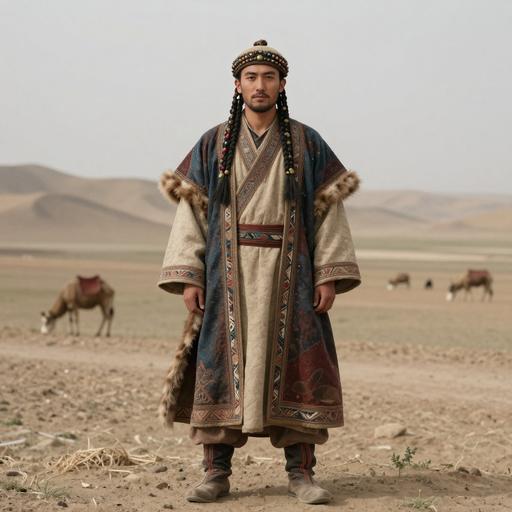
- Mongolia and Buryat populations
- Indigenous Siberian peoples (Evenks, Yakuts, Koryaks, Chukchi, etc.)
- Tungusic and some Turkic-speaking groups of Northeast Asia
These distributions reflect both deep Paleolithic roots in the region and subsequent localized continuity, with some signals of gene flow along coastal and riverine corridors.
Historical and Cultural Significance
M8A2 is often interpreted in population-genetic studies as part of the maternal substrate of Northeast Asian hunter-gatherer communities. Its detection in ancient Jomon remains and in contemporary northern Japanese populations links it to one of the best-documented regional continuities in East Asia: the persistence of Late Pleistocene–Holocene coastal forager groups in the Japanese archipelago. Outside Japan, M8A2 appears in Siberian and Mongolian contexts where it contributes to the genetic mosaic of northeastern Eurasian peoples.
Because mtDNA traces strictly maternal ancestry, M8A2 complements autosomal and Y-DNA lines that document migration, admixture, and demographic change; it is therefore a useful marker for identifying maternal continuity between prehistoric hunter-gatherers and some present-day Northeast Asian populations. Its occurrence at low levels in neighboring regions can also record later mobility and gene flow (for example, contacts between Siberian groups and Turkic-speaking communities).
Conclusion
mtDNA haplogroup M8A2 is a regional Northeast Asian maternal lineage with a time depth in the Late Upper Paleolithic to early Holocene. It is particularly informative for studying the maternal ancestry of Jomon-related and other ancient Northeast Asian hunter-gatherers, and it persists at varying frequencies across northern East Asia and adjacent Siberian populations. Ongoing mitogenome sequencing and expanded ancient DNA sampling will refine the substructure, age estimates, and finer-scale migrations associated with this lineage.
Key Points
- Origins and Evolution
- Subclades (if applicable)
- Geographical Distribution
- Historical and Cultural Significance
- Conclusion