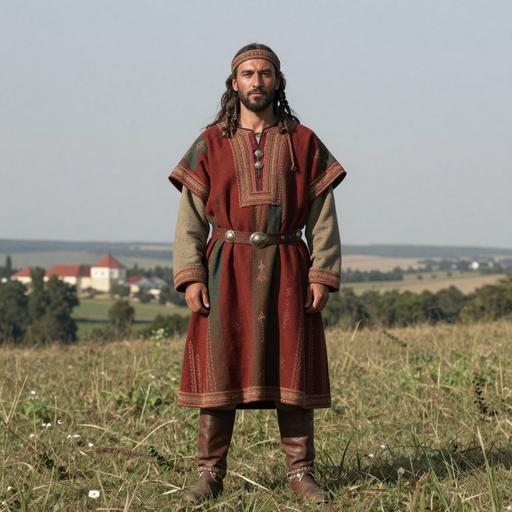
The Story
The journey of mtDNA haplogroup M8A2B
Origins and Evolution
mtDNA haplogroup M8A2B is a subclade of M8A2 (M8a2), itself derived from M8A within macro-haplogroup M. Given the parent clade's estimated origin around the Late Upper Paleolithic (~18 kya) and the phylogenetic placement of M8A2B downstream of M8A2, M8A2B most plausibly arose in Northeast Asia during the early Holocene or in the late post‑glacial period (roughly ~12 kya, with uncertainty of several thousand years). Its emergence is consistent with demographic processes that followed the Last Glacial Maximum (LGM), including population expansions, local differentiation among coastal and inland hunter-gatherers, and regional continuity in northeastern East Asia.
Subclades (if applicable)
As a named terminal or near‑terminal subclade, M8A2B may contain further internal variation detectable by full mitogenome sequencing. Published datasets and ancient DNA studies commonly resolve many sub-branches within M8 and M8A lineages; however, M8A2B itself is typically a relatively restricted branch compared with more widely distributed East Asian haplogroups. Where available, high‑resolution sequencing can reveal micro‑subclades that inform recent population movements (Holocene to late Holocene) and local founder effects in island or coastal communities.
Geographical Distribution
M8A2B is concentrated in Northeast Asia and adjacent Siberian regions, occurring at low-to-moderate frequencies in modern northeastern East Asian populations and in several ancient DNA samples from coastal and island contexts. Modern populations reporting M8A2 or closely related subclades include northern and eastern Han Chinese, Koreans, Japanese (with links to Jomon and other prehistoric lineages), Mongolic and Tungusic groups, and indigenous Siberian peoples (e.g., Evenks, Koryaks, Chukchi, Yakuts). The distribution pattern suggests longstanding regional continuity with particular enrichment in coastal and island populations of the Russian Far East and northern Japan.
Historical and Cultural Significance
Ancient DNA research has recovered M8A2 and related M8 lineages in Jomon-associated contexts and other prehistoric Northeast Asian hunter-gatherer remains, supporting a role for these lineages in the maternal ancestry of early coastal foragers and island populations. The presence of M8A2B in both ancient and modern samples implies local persistence and periodic demographic expansions, such as post‑LGM recolonization of higher-latitude habitats and Holocene coastal population growth. In regions such as northern Japan and the Russian Far East, M8-derived lineages are part of a genetic profile that complements archaeological signals for maritime subsistence, long‑term regional continuity, and contacts among neighboring groups (e.g., exchanges between Jomon, Okhotsk and later populations).
Conclusion
M8A2B is best understood as a regional Northeast Asian maternal branch that formed after the LGM and has been preserved through a combination of deep local continuity among hunter‑gatherer groups and later demographic processes in the Holocene. Its forensic visibility depends on dense mitogenome sampling: targeted sequencing and ancient DNA recovery continue to refine its age, internal structure, and precise distribution, improving resolution of Northeast Asia's maternal population history.
Key Points
- Origins and Evolution
- Subclades (if applicable)
- Geographical Distribution
- Historical and Cultural Significance
- Conclusion