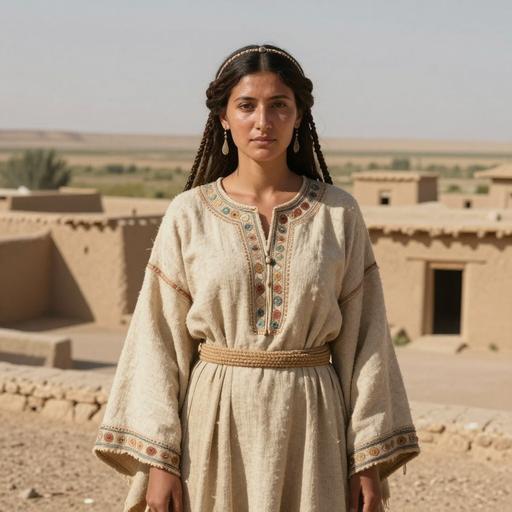
The Story
The journey of mtDNA haplogroup N1A
Origins and Evolution
Haplogroup N1a is a daughter clade of mtDNA haplogroup N1 and represents a lineage that diversified in or near the Near East/Anatolia during the late glacial to early Holocene (roughly the transition from the Pleistocene to the Holocene). Coalescence estimates for N1a and several of its subclades place its origin in the late Upper Paleolithic to early Mesolithic (on the order of ~10–15 kya), consistent with a Near Eastern focus prior to the Neolithic expansion into Europe. From that core area N1a lineages dispersed with human groups moving west into Anatolia and Europe and south into North Africa and the Horn of Africa.
Subclades
Major subclades of N1a include branches often labeled in the literature as N1a1, N1a1a, N1a1b and other downstream lineages. A subset of these subclades (notably lineages within what is often called N1a1a in ancient-DNA papers) are the ones most frequently detected in Early Neolithic farmer remains from Central and Western Europe. Different N1a subclades show distinct geographic signatures: some remain primarily Near Eastern/Anatolian, others appear in prehistoric European contexts, and a few are found in North Africa and the Horn of Africa, reflecting multiple dispersal episodes and possible back-migrations.
Geographical Distribution
In ancient DNA studies, N1a is best known for its elevated frequency among Early Neolithic farming assemblages in Central Europe (for example, LBK — Linearbandkeramik) and in Neolithic Anatolian contexts, indicating a Near Eastern origin of at least some of these maternal lineages. In modern populations N1a is generally low-frequency across most of Europe but persists at higher relative frequencies in parts of the Near East, the Caucasus, and sporadically in North Africa and the Horn of Africa. Small pockets or rare occurrences are reported in parts of South Asia and Central Asia, reflecting the deep time distribution of N1-derived matrilines.
Historical and Cultural Significance
The most striking historical signal of N1a comes from ancient DNA: its presence at appreciable frequencies in early farming communities of Anatolia and the first Neolithic farming cultures of Central Europe provides direct genetic evidence for the demic diffusion of agriculture from the Near East into Europe. Because N1a is much less common in Mesolithic hunter-gatherer remains (where haplogroups such as U5 dominate) and more common in early farmer remains, N1a is often interpreted as one of the maternal markers associated with the spread of food-producing communities during the Neolithic transition in Europe. Over subsequent millennia, the frequency of N1a in Europe declined as later migrations and demographic processes reshaped the maternal gene pool.
Conclusion
N1a illustrates how a lineage that diversified in the Near East during the late Pleistocene/early Holocene contributed disproportionately to the maternal ancestry of early farmers who spread into Europe with the Neolithic. Today N1a survives at low to moderate frequencies across a broad swath of Eurasia and North Africa, but its strongest historical signal remains in ancient Neolithic datasets where it helps trace the movement of people and cultural practices during the Holocene.
Key Points
- Origins and Evolution
- Subclades
- Geographical Distribution
- Historical and Cultural Significance
- Conclusion