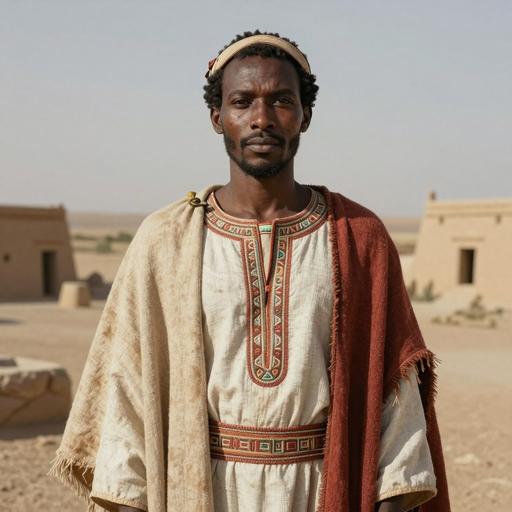
The Story
The journey of mtDNA haplogroup N1A1
Origins and Evolution
mtDNA haplogroup N1A1 is a downstream branch of haplogroup N1A, itself a daughter of macro-haplogroup N. Based on the phylogenetic position of N1A and the archaeological contexts in which N1A lineages appear, N1A1 most likely arose in the Near East or Anatolia during the late glacial or early post-glacial interval and became more visible during the early Neolithic (roughly the 9th–7th millennia cal BP). As a subclade of N1A, N1A1 shares the demographic history of early Near Eastern farming populations that contributed maternally to the first farmers of Europe.
Subclades
N1A1 resolves into further sublineages observed at low frequencies in modern and ancient samples. Different research papers and ancient DNA datasets report subbranches (often labeled N1A1a, N1A1b, etc.) that show geographic structure: some subclades are more typical of Anatolian and Levantine samples, while others are detected in early European Neolithic contexts. Because N1A1 is relatively rare today, the finer structure of its subclades is still being refined as more complete mitochondrial genomes from both modern and ancient samples are published.
Geographical Distribution
Today, N1A1 is uncommon but shows a distribution consistent with a Near Eastern origin and Neolithic expansion into Europe. It is observed in:
- Anatolia and the Levant (moderate frequency among historical and some modern samples),
- Early European Neolithic farmer assemblages (notably LBK and related early farming groups),
- Low frequencies across modern Southern and Central Europe, and
- Sporadic occurrences in North Africa, the Horn of Africa, and parts of Central and South Asia where Near Eastern gene flow occurred.
Ancient DNA has been particularly informative: N1A1 and closely related N1A sublineages are overrepresented in early Neolithic skeletal series compared with present-day populations, pointing to a substantial decline in frequency following later migrations and population turnovers.
Historical and Cultural Significance
The primary historical significance of N1A1 lies in its association with early farming communities that spread agriculture from Anatolia into Europe. Ancient samples carrying N1A lineages (including N1A1 sublineages) have been recovered from Linearbandkeramik (LBK) sites and other early Neolithic contexts, where maternal lineages from the Near East combined with local and incoming genetic inputs to shape early European mitochondrial diversity. Because N1A1 frequencies drop in later prehistoric and modern samples, its presence in archaeological contexts is often used as a molecular indicator of early Neolithic demography and migration.
Conclusion
N1A1 is a Near Eastern-derived mtDNA subclade that played a visible role in the maternal gene pool of early Neolithic farmers who colonized parts of Europe. It is now rare in modern populations, but ancient DNA from the Neolithic has been crucial for reconstructing its past distribution and for understanding the maternal contribution of Near Eastern populations to early European farming communities. Continued sampling of complete mitogenomes in both ancient and modern contexts will refine the internal branching and geographic history of N1A1.
Key Points
- Origins and Evolution
- Subclades
- Geographical Distribution
- Historical and Cultural Significance
- Conclusion