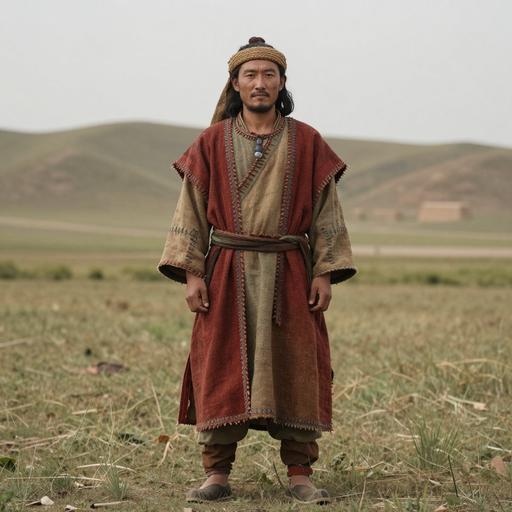
The Story
The journey of mtDNA haplogroup N1A3
Origins and Evolution
mtDNA haplogroup N1A3 is a downstream branch of the broader N1a clade, which itself derives from macro-haplogroup N. Based on the phylogenetic position of N1A3 inside N1a and on the archaeological and ancient DNA record for N1a more broadly, N1A3 most likely originated in the Near East/Anatolia in the late glacial to early post-glacial interval and became established among early Holocene populations. The estimated time to most recent common ancestor for N1A3 is in the range of the early Holocene (roughly 7–11 kya), consistent with a split from other N1a lineages during or shortly before the Neolithic expansions.
Because N1A3 is a relatively rare and geographically restricted subclade, its internal diversity is limited in modern datasets; this pattern is consistent with a founder effect or limited dispersals of particular maternal lineages during the Neolithic.
Subclades (if applicable)
N1A3 shows limited diversification in currently available datasets. A few downstream lineages (often annotated in mitochondrial phylogenies as N1a3a, N1a3b, etc., depending on the study and nomenclature) have been proposed from high-resolution sequencing of regional samples, but these subclades are low-frequency and often geographically localized. Because sampling is sparse, some named sub-branches remain provisional and require additional complete mitogenomes from the Near East, the Caucasus and Neolithic archaeological sites to resolve their phylogenetic relationships.
Geographical Distribution
N1A3 is concentrated in and around the Near East and adjacent regions. Modern and ancient occurrences indicate the haplogroup is:
- Present at low to moderate frequency in Anatolia and the Levant in both modern populations and in ancient Neolithic contexts.
- Detected at low frequencies in the Caucasus and on the Iranian plateau.
- Found sporadically in Southern Europe (coastal Mediterranean regions such as Greece and Italy) where early farmer ancestry left a genetic imprint.
- Recorded at low frequency in North African coastal populations and in limited cases in the Horn of Africa, likely reflecting prehistoric and historic gene flow across the Mediterranean and Red Sea corridors.
Overall, the distribution of N1A3 reflects the geography of early farming dispersals from an Anatolian/Near Eastern source and subsequent localized retention rather than broad high-frequency presence.
Historical and Cultural Significance
N1A3 is best interpreted in the context of the larger N1a signal that is strongly associated with early Neolithic farming communities. In archaeological genetics, N1a lineages are notable components of early farming populations such as those linked to Anatolian Neolithic and early European farmer groups (e.g., Cardial and LBK-associated communities). As a subclade, N1A3 likely rode demographic expansions associated with the spread of agriculture into southeastern Europe and the Mediterranean. Later demographic processes—Bronze Age migrations (including steppe-derived influxes) and millennia of local drift—reduced the relative frequency of many early farmer mtDNA lineages, including N1A3, in much of Europe.
In modern populations, the presence of N1A3 in the Near East, the Caucasus and parts of the Mediterranean provides a maternal genetic trace of early Holocene population structure and Neolithic dispersals. Its sporadic presence in North and East Africa highlights routes of prehistoric and historic connectivity across the Mediterranean and Red Sea.
Conclusion
N1A3 is a low-frequency but informative branch of N1a that helps characterize maternal ancestry tied to the Near Eastern origins of farming and the demographic processes of the early Holocene. Its rarity and geographic pattern—concentrated in Anatolia/Near East with scattered occurrences elsewhere—reflects founder effects, localized retention, and later population turnovers. Continued sequencing of complete mitogenomes from under-sampled regions and ancient remains will refine the internal structure, age estimates and migration history of N1A3.
Key Points
- Origins and Evolution
- Subclades (if applicable)
- Geographical Distribution
- Historical and Cultural Significance
- Conclusion