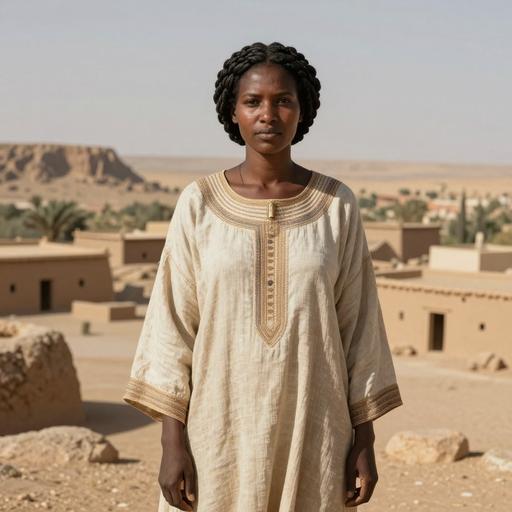
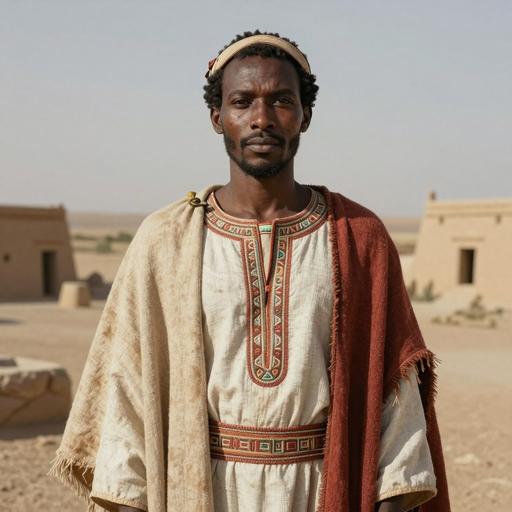
The Story
The journey of mtDNA haplogroup N1A3A1
Origins and Evolution
mtDNA haplogroup N1A3A1 is a downstream subclade of N1A3A and therefore sits within the broader N1A branch of macro-haplogroup N. Based on phylogenetic placement and the age estimates of upstream nodes, N1A3A1 most likely diversified in the Near East or Anatolia during the early post-glacial to early Neolithic interval (roughly the mid to late Holocene transition). Its emergence is plausibly associated with population processes tied to the spread of early farming, demographic growth in agricultural source regions, and local founder effects that produced low-frequency but geographically informative maternal lineages.
Ancient DNA studies show that sister and parent clades of N1A3A were present among Anatolian and early European Neolithic farmer assemblages. The restricted and often low-frequency occurrence of N1A3A1 in modern and ancient samples suggests a localized origin with subsequent limited dispersal along Neolithic migration routes (both inland via LBK-like movements and coastal via Cardial/Impressed Ware expansions). Later low-level gene flow and historical movements may have redistributed small amounts of this lineage to North Africa, the Horn of Africa, and parts of southern Europe.
Subclades
As a downstream branch (N1A3A1) of N1A3A, this clade represents a relatively fine-scale subdivision of maternal diversity. Known or inferred substructure below N1A3A1 is limited in published datasets because of the haplogroup's rarity; many sequences fall into a small number of private or semi-private sublineages. Future deeper mitogenome sequencing of both modern and ancient samples from Anatolia, the Levant, and neighboring regions may resolve additional subclades and refine coalescence time estimates.
Geographical Distribution
The geographic footprint of N1A3A1 is concentrated in the Near East / Anatolia, with spillover at low frequencies into adjacent regions. Documented and inferred occurrences include Anatolian and Levantine populations, early Anatolian and European Neolithic archaeological contexts (LBK/Cardial-related assemblages), parts of the southern European Mediterranean rim (Greece, Italy, the Balkans), coastal North Africa (Maghreb and Mediterranean coast), and occasional reports from the Horn of Africa (Ethiopia, Somalia) where Near Eastern maternal lineages have been introduced by prehistoric and historic contacts. Sporadic, low-confidence reports exist from central or western Europe and Central Asia, typically explained by later admixture or migration events rather than major demographic expansions of this clade.
Historical and Cultural Significance
Although N1A3A1 is not a high-frequency marker, its distribution is informative about Neolithic demography and maritime/inland dispersal corridors. The haplogroup aligns with the genetic signature of early farmers who spread agriculture from Anatolia into Europe and the Mediterranean during the 7th–6th millennia BCE. Its presence in some North African and Horn of Africa contexts reflects known channels of gene flow across the eastern Mediterranean and southern Red Sea, which include both prehistoric contacts and later historic exchanges.
Because the clade is rare, it is not diagnostic of any single archaeological culture on its own; instead, it functions as part of a broader maternal ancestry profile (often alongside haplogroups such as H, J, T, and K) that together mark early farming populations and their descendants. In archaeological genetics, finding N1A3A1 in ancient samples helps corroborate Anatolian/Levantine ancestry components in archaeological individuals.
Conclusion
N1A3A1 is a locally informative, low-frequency maternal lineage that likely originated in the Near East/Anatolia in the early Neolithic period and dispersed in small numbers with early farming groups into the Mediterranean, parts of Europe, North Africa, and, via longer-range connections, into the Horn of Africa. Its rarity in modern datasets makes it valuable for tracing specific migration episodes and fine-scale population structure when present, and further full mitogenome sampling—especially from Anatolia and adjacent regions—will improve resolution of its history and substructure.
Key Points
- Origins and Evolution
- Subclades
- Geographical Distribution
- Historical and Cultural Significance
- Conclusion