The Story
The journey of mtDNA haplogroup P5B1
Origins and Evolution
mtDNA haplogroup P5B1 is a subclade of P5B, itself part of the broader P lineage that diversified in and around Sahul (the combined Pleistocene landmass of Australia and New Guinea) and adjacent Island Southeast Asia. The parent P5B has been dated to the Late Pleistocene/early Holocene (around ~15 kya); P5B1 likely branched from P5B somewhat later, in the early Holocene or terminal Pleistocene (we estimate roughly ~12 kya), during a period of local population differentiation after initial peopling of Sahul. This timing is consistent with a model in which maternal lineages already established in New Guinea and northern Australia underwent regional diversification as groups adapted to varied ecologies and became partially isolated by sea-level and environmental changes.
Molecular diversity within P5B1 appears low in published samples, which suggests either a relatively recent founder effect for this subclade in particular populations or undersampling of deep diversity in remote regions. The clade’s internal structure is still poorly resolved because of limited complete mitogenome sampling and sparse ancient DNA points, but the pattern is typical of maternal lineages that experienced long-term regional continuity with occasional female-mediated gene flow across nearby islands.
Subclades
As currently recognized, P5B1 is a terminal or near-terminal branch under P5B in many phylogenies; potential downstream subbranches (e.g., P5B1a) have been proposed in some high-resolution mitogenome datasets but are not yet well-established or widely sampled. With expanded full-mitogenome sequencing from New Guinea, Wallacea, and Indigenous Australian contexts, finer substructure is likely to emerge. Because only a small number of ancient samples have been assigned to P5B or P5B1 in published aDNA datasets, archaeological calibration of younger subclades is still limited.
Geographical Distribution
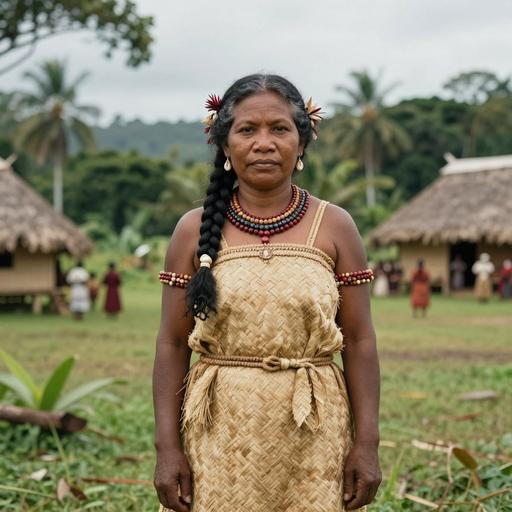
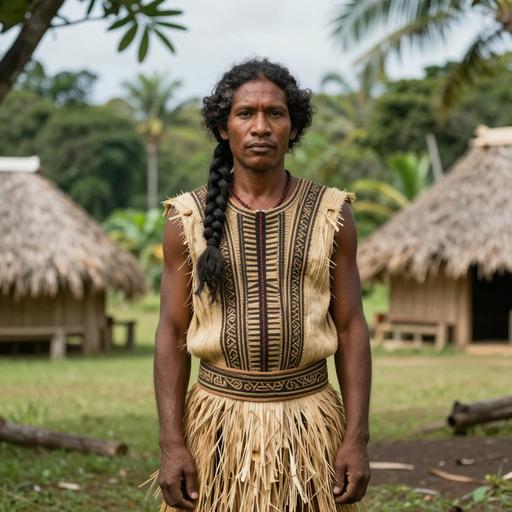
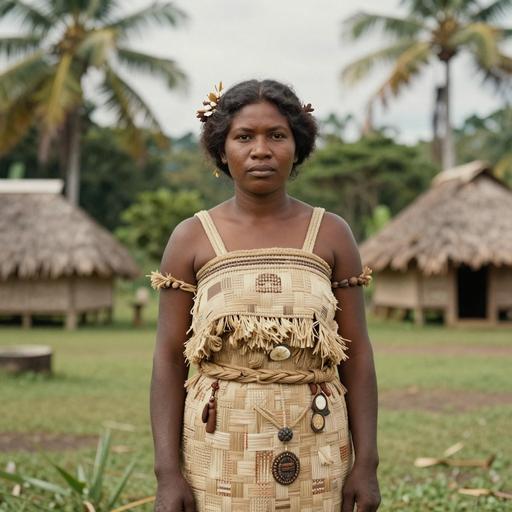
P5B1 is concentrated in Near Oceania, with highest frequencies and diversity in:
- New Guinea (Papuan highland and coastal groups) and neighboring Melanesian islands, where long-term in situ continuity of P-lineages is well documented.
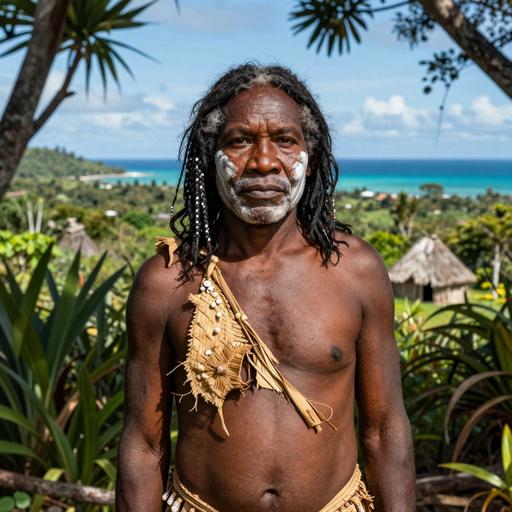
- Indigenous Australian (Aboriginal Australian) populations, reflecting shared deep ancestry across Sahul prior to/around the Last Glacial Maximum and early Holocene.
Lower-frequency occurrences of P5B1 or closely related P5B lineages are observed in Wallacea (e.g., the Moluccas, Timor) and in some eastern Indonesian or Philippine island groups, consistent with limited female-mediated dispersal across the Wallace Line during the Holocene. Occasional low-frequency detections in Remote Oceanic (Polynesian) samples reflect later admixture from Melanesian sources rather than primary settlement by P5B1-bearing groups.
Historical and Cultural Significance
The distribution and antiquity of P5B1 make it an informative marker for the deep maternal history of Sahul and its neighboring islands. Its presence in both Papuan and Indigenous Australian peoples underscores genetic continuity dating to the earliest phases of human occupation of New Guinea and Australia. P5B1 is not primarily associated with the later Austronesian/Lapita-driven population expansions that reshaped parts of Island Southeast Asia and Remote Oceania; where it occurs in Lapita-descended or Polynesian-descended groups, the pattern is best explained by admixture with local Melanesian/Papuan-descended populations.
Archaeogenetic sampling remains limited in many parts of Near Oceania; the identification of P5B1 in at least one ancient DNA context highlights the potential of ancient mitogenomes to refine the timing and movement of maternal lineages across the region. Understanding P5B1’s spread and substructure contributes to reconstructing sex-biased migration patterns (female continuity versus male-mediated movements) and the demographic history of hunter-gatherer and early Holocene populations in Sahul.
Conclusion
mtDNA haplogroup P5B1 represents a geographically focused, deep maternal lineage that arose in Near Oceania or adjacent Island Southeast Asia in the terminal Pleistocene to early Holocene and persists prominently among Papuan and Indigenous Australian populations. Its limited later dispersal into Wallacea and Remote Oceania reflects localized gene flow rather than large-scale population replacement. Future full mitogenome sequencing and increased ancient DNA sampling across New Guinea, Wallacea, and northern Australia will clarify P5B1’s internal topology, finer dating, and the detailed paths of maternal ancestry in Sahul and neighbouring islands.
Key Points
- Origins and Evolution
- Subclades
- Geographical Distribution
- Historical and Cultural Significance
- Conclusion