Menu
mtDNA Haplogroup • Maternal Lineage

R11

mtDNA Haplogroup R11

~15,000 years ago
South Asia / Southeast Asia border region
1 subclades
Scroll to explore
Chapter I

The Story

The journey of mtDNA haplogroup R11

Origins and Evolution

Haplogroup R11 is a mitochondrial sublineage nested within the R superclade. Given the broader phylogeography of R and the regional concentration of many R-derived subclades, R11 most plausibly diversified on the southern margins of Asia during the Late Pleistocene or early Holocene (roughly the last 20,000–10,000 years). Its emergence likely reflects post‑glacial population structuring and local expansions in refugial zones of South and Southeast Asia following the Last Glacial Maximum.

From a phylogenetic perspective, R11 derives from R1-related lineages that themselves are rooted in the major R radiation that spread across Eurasia. The mutational steps separating R11 from other R-subclades indicate a degree of internal diversity consistent with a Pleistocene/early Holocene origin followed by localized differentiation.

Subclades

R11 contains internal variation but is generally represented by a small number of downstream branches in modern population surveys. Where subclades are reported, they tend to be geographically restricted and show low to moderate diversity, which is typical for mtDNA lineages that underwent localized expansions rather than continent‑wide dispersals. Ancient DNA hits to R11 or closely related branches are relatively uncommon in published datasets, reflecting either low past frequency or undersampling of relevant regions and time periods.

Geographical Distribution

Modern observations place R11 primarily in South Asia with measurable presence across parts of Southeast Asia and occasional detections in southern East Asia and Central Asia. Frequencies are usually low to moderate at the population level but the haplogroup can reach locally higher values in particular communities, indicative of drift or founder effects. The distribution pattern is consistent with a South Asian origin and subsequent spread along coastal and inland corridors into Southeast Asia, possibly accompanying both pre-Neolithic hunter‑gatherer movements and later Holocene demographic processes (for example, Neolithic dispersals and Austronesian expansions).

Historical and Cultural Significance

R11 does not appear to be a dominant lineage associated with a single high‑profile archaeological culture; rather, it behaves as a regional marker that helps trace maternal continuity and micro‑demographic events. It may appear at low frequencies in contexts linked to South Asian Neolithic and Bronze Age assemblages and can be detected among populations that later participated in Austronesian and other Holocene expansions. Because of its moderate antiquity and regional concentration, R11 is useful for reconstructing maternal gene flow across South and Southeast Asia and for identifying localized founder events in island and coastal populations.

Conclusion
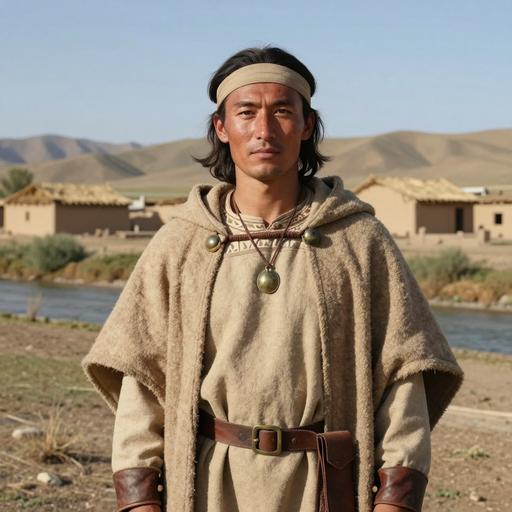
Haplogroup R11 represents a regional mtDNA lineage tracing maternal ancestries that largely span South and parts of Southeast Asia. Its phylogenetic placement within R indicates a deep connection to the major post‑Out‑of‑Africa expansions across Eurasia, while its geographic pattern reflects later, more localized demographic processes during the Late Pleistocene and Holocene. Additional sampling—especially ancient DNA from South and Southeast Asia—would clarify the timing and routes of its dispersal and the internal structure of its subclades.

Key Points

  • Origins and Evolution
  • Subclades
  • Geographical Distribution
  • Historical and Cultural Significance
  • Conclusion

Chapter II

Tree & Relationships

Phylogenetic context and subclades

Evolution Path

This haplogroup's evolutionary journey from its earliest ancestor to the present.

Steps Haplogroup Age Estimate Archaeology Era Time Passed Immediate Descendants Tested Modern Descendants Ancient Connections
1 R11 Current ~15,000 years ago 🏹 Mesolithic 15,000 years 1 2 0
2 R1 ~40,000 years ago 🦴 Paleolithic 40,000 years 4 11 8
3 R ~60,000 years ago 🦴 Paleolithic 60,000 years 12 10,987 57
4 N ~60,000 years ago 🦴 Paleolithic 60,000 years 15 15,452 13
5 L3 ~70,000 years ago 🦴 Paleolithic 70,000 years 11 17,621 6
6 L ~160,000 years ago 🦴 Paleolithic 160,000 years 7 18,987 5

Siblings (3)

Other branches from the same parent haplogroup

Chapter III

Where in the World

Geographic distribution and modern presence
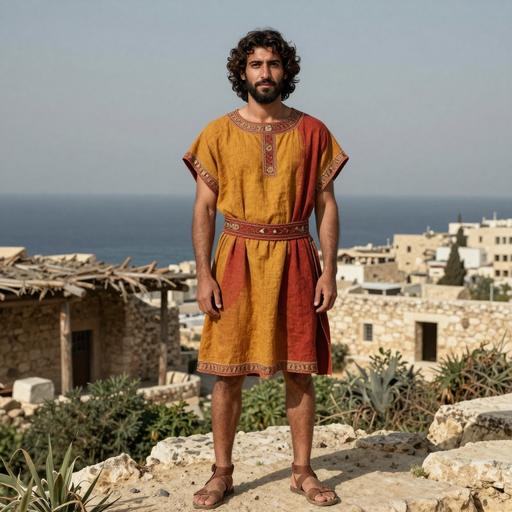

Place of Origin

South Asia / Southeast Asia border region

Modern Distribution

The populations where mtDNA haplogroup R11 is found include:

  1. South Asian populations (India and Pakistan)
  2. Sri Lankan populations
  3. Bangladeshi populations
  4. Southeast Asian populations (Thailand, Malaysia, Indonesia)
  5. Southern Chinese and Vietnamese populations
  6. Austronesian islander groups (Philippines, Taiwan)
CHAPTER IV

When in Time

Your haplogroup in the context of human history

~20k years ago

Last Glacial Maximum

Peak of the last ice age, populations isolated

~15k years ago

Haplogroup R11

Your mtDNA haplogroup emerged in South Asia / Southeast Asia border region

South Asia / Southeast Asia border region
~10k years ago

Neolithic Revolution

Agriculture begins, settled communities form

~5k years ago

Bronze Age

Metalworking, writing, and early civilizations

~3k years ago

Iron Age

Iron tools, expanded trade networks

~2k years ago

Classical Antiquity

Greek and Roman civilizations flourish

Present

Present Day

Modern era

Your Haplogroup
Historical Era
Chapter IV-B

Linked Cultures

Ancient cultures associated with mtDNA haplogroup R11

Cultural Heritage

These ancient cultures have been linked to haplogroup R11 based on matching ancient DNA samples from archaeological excavations. The presence of this haplogroup in these cultures provides insights into the migrations and population movements of populations carrying this haplogroup.

Afontova Gora Chinese Neolithic Ganj Dareh Culture Khovd Long-Term Kitoi Kitoi Culture Ust-Ishim Culture Wuzhuangguoliang Culture Yuzhny Oleny Ostrov
Culture assignments are based on archaeological context of ancient DNA samples and may represent regional associations during specific time periods.
Chapter V

Sample Catalog

Top 50 ancient DNA samples directly related to haplogroup R11 or parent clades

50 / 50 samples
Portrait Sample Country Era Date Culture mtDNA Match
Portrait of ancient individual I3614 from Taiwan, dated 1 CE - 800 CE
I3614
Taiwan Iron Age Taiwan 1 CE - 800 CE Taiwanese Iron R Direct
Portrait of ancient individual I3618 from Taiwan, dated 1 CE - 800 CE
I3618
Taiwan Iron Age Taiwan 1 CE - 800 CE Taiwanese Iron R Direct
Portrait of ancient individual I8071 from Taiwan, dated 1 CE - 800 CE
I8071
Taiwan Iron Age Taiwan 1 CE - 800 CE Taiwanese Iron R Direct
Portrait of ancient individual I8076 from Taiwan, dated 1 CE - 800 CE
I8076
Taiwan Iron Age Taiwan 1 CE - 800 CE Taiwanese Iron R30 Direct
Portrait of ancient individual I13697 from Taiwan, dated 1 CE - 800 CE
I13697
Taiwan Iron Age Taiwan 1 CE - 800 CE Taiwanese Iron R Direct
Portrait of ancient individual I3620 from Taiwan, dated 22 CE - 201 CE
I3620
Taiwan Iron Age Taiwan 22 CE - 201 CE Taiwanese Iron R Direct
Portrait of ancient individual I3615 from Taiwan, dated 32 CE - 206 CE
I3615
Taiwan Iron Age Taiwan 32 CE - 206 CE Taiwanese Iron R Direct
Portrait of ancient individual I7714 from Pakistan, dated 45 BCE - 66 CE
I7714
Pakistan Historic Barikot 45 BCE - 66 CE Barikot R30b1 Direct
Portrait of ancient individual I1680 from Cambodia, dated 78 CE - 234 CE
I1680
Cambodia Iron Age Cambodia 78 CE - 234 CE Cambodian Iron Age R30 Direct
Portrait of ancient individual I15519 from Serbia, dated 100 CE - 300 CE
I15519
Serbia Roman Serbia 100 CE - 300 CE Roman Provincial R0a2d Direct
Chapter VI

Carrier Distribution Map

Geographic distribution of 100 ancient DNA samples carrying haplogroup R11

Time Period Filter
All Time Periods
Showing all samples
Each marker represents an ancient individual
Chapter VII

Temporal Distribution

Distribution of carriers across archaeological periods

Chapter VIII

Geographic Distribution

Distribution of carriers by country of origin

Chapter IX

Country × Era Distribution

Cross-tabulation of carrier countries and archaeological periods

Data

Data & Provenance

Source information and data quality

Last Updated 2026-02-16
Confidence Score 50/100
Coverage Low
Data Source

We use the latest phylotree for MTDNA haplogroup classification and data.