The Story
The journey of mtDNA haplogroup T2B28
Origins and Evolution
mtDNA haplogroup T2B28 is a downstream lineage of T2B2, itself a subclade of the broader T2 branch. T2 lineages expanded primarily after the Last Glacial Maximum and several subclades, including T2B2, are strongly associated with populations on the Near Eastern and Mediterranean margin. Given its phylogenetic position under T2B2, T2B28 most plausibly arose during the early-to-middle Neolithic period (roughly 6–9 kya) as farming populations expanded from Anatolia and the Near East into the Mediterranean and temperate Europe.
Subclades (if applicable)
T2B28 is a relatively terminal and low-frequency designation within the T2B2 subtree. At present there are few well-documented downstream subclades described in the literature or public phylogenies for T2B28, reflecting its rarity and limited sampling. As more complete mitogenomes are sequenced, finer subdivisions may be discovered and named; currently most references treat T2B28 as a specific terminal branch within T2B2.
Geographical Distribution
Modern distribution: T2B28 is detected at low to occasional moderate frequencies in populations along the Mediterranean rim and in parts of Southern and Central Europe, with sporadic finds in the Near East, North Africa and occasionally in the Caucasus and Central Asia. Its pattern mirrors that of other T2B2 lineages — concentrated near source regions of early farming with scatter due to later mobility and historical migrations.
Ancient DNA: Related T2B2 lineages occur in early farmer contexts; T2B28 itself has been reported only rarely in archaeogenetic datasets, consistent with a low-frequency but persistent maternal lineage carried by Neolithic and post-Neolithic populations.
Historical and Cultural Significance
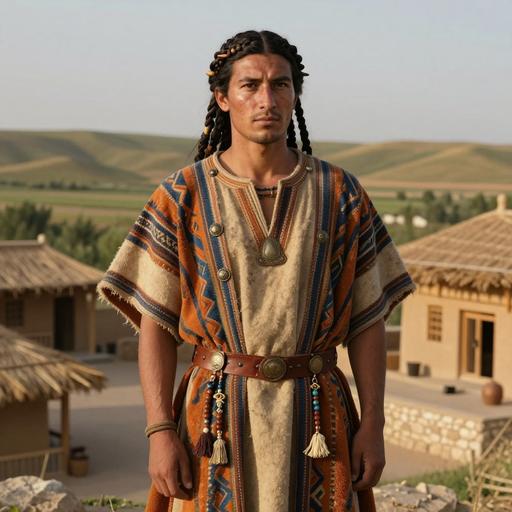
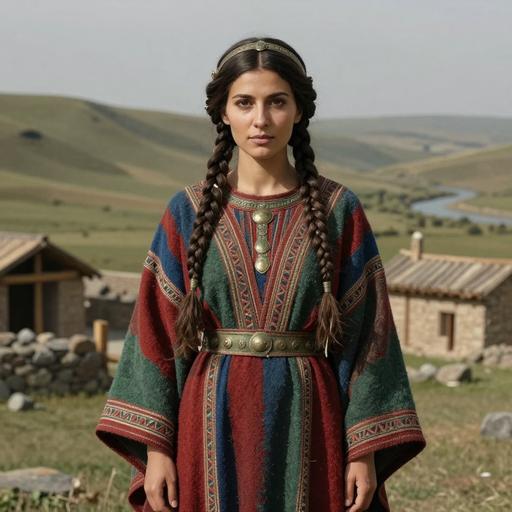
Because of its emergence on the Near Eastern / Mediterranean margin and its presence in early farmer contexts, T2B28 is best interpreted as part of the maternal genetic legacy of early agriculturalist expansions into Europe. It likely accompanied populations associated with Anatolian and Mediterranean Neolithic cultures (for example, early Anatolian farmers, Cardial/Impressed Ware expansions along the Mediterranean, and early Central European farmer groups). Over subsequent millennia, the lineage dispersed further via local demographic processes, trade, population movements, and later historical migrations — leading to its sporadic appearance in island populations, Jewish diaspora groups and North African communities.
Conclusion
T2B28 is a low-frequency, regionally informative mtDNA subclade nested within T2B2 that reflects Neolithic-era demographic processes originating on the Near Eastern / Mediterranean margin. Its rarity in modern and ancient datasets limits fine-scale inference, but its phylogenetic placement and geographic pattern make it a marker of early farmer-related maternal ancestry in the Mediterranean and parts of Europe.
Key Points
- Origins and Evolution
- Subclades (if applicable)
- Geographical Distribution
- Historical and Cultural Significance
- Conclusion