The Story
The journey of mtDNA haplogroup T2G1A1
Origins and Evolution
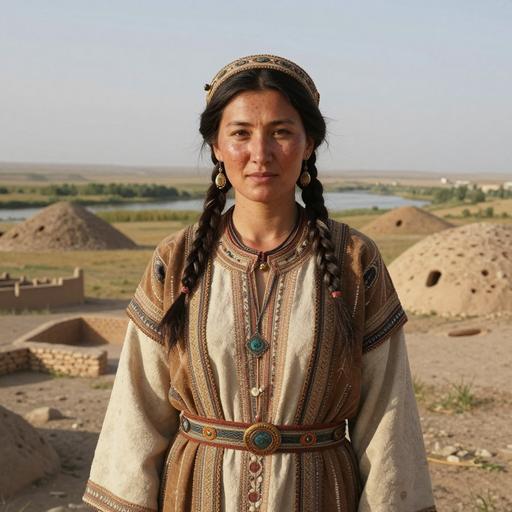
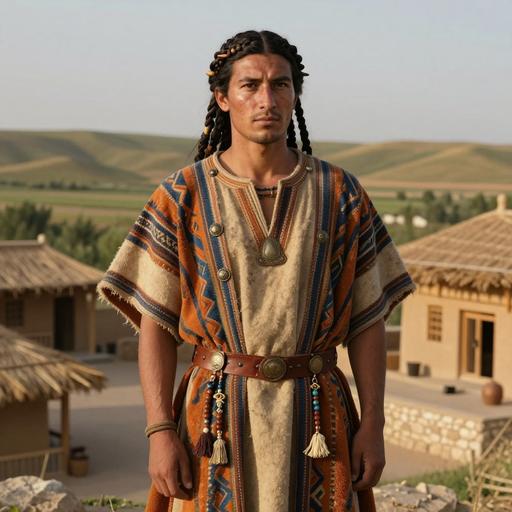
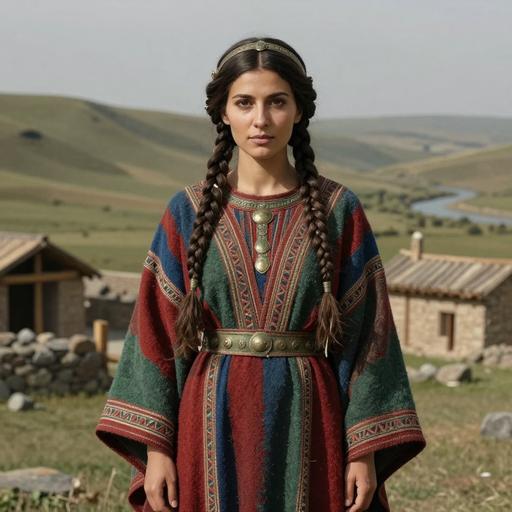
T2G1A1 is a downstream subclade of the maternal lineage T2G1A, itself nested within haplogroup T2. The broader T2 lineage is strongly associated with Near Eastern and Anatolian Neolithic farmer populations; T2G1A likely arose during the Neolithic in that region and spread into Europe and neighboring areas with early agricultural expansions. Based on the parent haplogroup's age (~5.5 kya) and the pattern of diversity observed in related lineages, T2G1A1 is plausibly younger and is estimated to have originated in the late Neolithic to early Chalcolithic (approximately 4.5 kya). This timing places its emergence in an era of continuing population movement, local differentiation, and cultural change across Anatolia, the Levant and southeastern Europe.
Subclades
T2G1A1 is a terminal or narrowly distributed subclade in many modern phylogenies and currently shows low internal diversity, consistent with a relatively recent origin and limited geographic spread. At present there are few documented downstream branches that have been widely reported in public databases; much of the fine-scale internal structure remains to be resolved as more complete mitogenomes from relevant regions and populations are published. The scarcity of observations (including a small number of modern and a single reported ancient sample) suggests limited expansion compared with major T2 subclades.
Geographical Distribution
The distribution of T2G1A1 is patchy and low-frequency. It appears most often in populations with historical links to the Near East/Anatolia and in regions that received gene flow from farming communities. Modern occurrences have been reported in southern, central and eastern Europe, parts of the Middle East (including Anatolia), the Caucasus and North Africa, with rare detections in some Central Asian samples and within a subset of Jewish populations. Its geographic pattern is consistent with a Near Eastern origin and subsequent dispersal along routes used by Neolithic farmers and later trade and migratory networks.
Historical and Cultural Significance
Because T2G1A1 is rare, its presence is primarily informative at the level of micro-history and population contact rather than as a marker of large-scale demographic replacement. Its association with Neolithic Anatolian farmer-derived populations links it to the spread of agriculture into Europe, though unlike some broader T2 lineages it does not appear to have experienced a sweeping expansion. Occasional presence in Jewish communities and in North Africa likely reflects historic mobility, trade, and gene flow rather than a single defining migration event. The single documented ancient DNA occurrence demonstrates that the lineage was present in archaeological contexts, supporting continuity between ancient Near Eastern/Anatolian populations and some modern carriers.
Conclusion
T2G1A1 is best understood as a localized, low-frequency maternal lineage that branched from a Near Eastern/Anatolian farmer-associated background in the late Neolithic to Chalcolithic. Its rarity and scattered distribution make it a useful marker for tracing specific migratory or contact events in regional studies, but it does not represent a major demographic expansion on its own. Continued mitogenome sequencing from understudied regions and ancient remains will clarify its internal structure and refine estimates of its age and historical movements.
Key Points
- Origins and Evolution
- Subclades
- Geographical Distribution
- Historical and Cultural Significance
- Conclusion