Menu
mtDNA Haplogroup • Maternal Lineage

T2G1B

mtDNA Haplogroup T2G1B

~6,000 years ago
Near East / Anatolia
0 subclades
1 ancient samples
Scroll to explore
Chapter I

The Story

The journey of mtDNA haplogroup T2G1B

Origins and Evolution

T2G1B is a subclade nested within mtDNA haplogroup T2G1, itself part of T2G and the broader macro-haplogroup T. Given the known phylogeography of T2G1, T2G1B most plausibly arose in the Near East/Anatolia during or shortly after the Neolithic spread of agriculture. The estimated time depth for T2G1B is on the order of a few thousand years younger than its parent clade (T2G1 ~7 kya), compatible with a local diversification event in the early to mid-Holocene (~5–6 kya).

Mitochondrial phylogenies based on complete mitogenomes place T2G1B as a derived branch with few diagnostic substitutions separating it from sibling lineages; its rare frequency and limited sampling in modern and ancient databases mean that age estimates have wider confidence intervals than for common haplogroups.

Subclades (if applicable)

At present T2G1B appears to be a terminal or near-terminal branch in published phylogenies and public databases, represented by a small number of modern mitogenomes and very few ancient instances. If deeper sampling uncovers additional internal structure, those lineages would be described as T2G1B1, T2G1B2, etc. For now, the substructure is minimal and most analyses treat T2G1B as a low-diversity clade derived from T2G1.

Geographical Distribution

T2G1B is detected at low to very low frequencies across a geographically broad but sparse distribution that mirrors the spread of Neolithic and post-Neolithic gene flow from the Near East into neighboring regions. Contemporary occurrences and secure haplotype matches have been reported in:

  • Anatolia and the broader Near East (reflecting origin and local persistence)
  • Southern, Central and Eastern Europe at scattered low frequencies (likely Neolithic and later dispersal)
  • The Caucasus region (low frequencies)
  • North Africa in isolated occurrences (low frequency)
  • Some Jewish and diaspora communities where Near Eastern maternal lineages have been documented

Ancient DNA evidence for T2G1B is currently limited; a very small number of archaeological genomes show T2G1/T2G1-derived lineages associated with Neolithic or later contexts, but T2G1B specifically remains rare in published ancient datasets.

Historical and Cultural Significance

Because of its phylogenetic position and geographic pattern, T2G1B is best interpreted as a marker of maternal ancestry tied to Neolithic farmer expansions from Anatolia and adjacent Near Eastern regions, followed by continued low-level gene flow and localized persistence. It is not a hallmark of any single pan-regional late prehistoric migration (unlike very common haplogroups), but rather reflects the patchy survival of Near Eastern maternal lineages in diverse populations.

In some Jewish communities and other groups with historical Near Eastern connections, the presence of T2G1B (or closely related T2G1 lineages) reinforces documented maternal links to the eastern Mediterranean. Its rarity makes it useful in fine-scale maternal lineage studies and in tracing specific maternal genealogies where it occurs.

Conclusion

T2G1B is a rare, diagnostically derived branch of T2G1 whose distribution and time depth point to an origin in the Near East/Anatolia during or shortly after the Neolithic transition. Its low-frequency, scattered presence across Europe, the Caucasus, North Africa and some Jewish populations is consistent with demographic processes associated with early farming expansions and subsequent regional movements. Continued mitogenome sequencing—especially of under-sampled regions and ancient remains—will clarify its internal diversity, exact age, and finer-scale migration history.

Key Points

  • Origins and Evolution
  • Subclades (if applicable)
  • Geographical Distribution
  • Historical and Cultural Significance
  • Conclusion
Chapter II

Tree & Relationships

Phylogenetic context and subclades

Evolution Path

This haplogroup's evolutionary journey from its earliest ancestor to the present.

Steps Haplogroup Age Estimate Archaeology Era Time Passed Immediate Descendants Tested Modern Descendants Ancient Connections
1 T2G1B Current ~6,000 years ago 🪨 Chalcolithic 5,500 years 0 4 1
2 T2G1 ~7,000 years ago 🌾 Neolithic 7,000 years 2 17 0
3 T2G ~9,000 years ago 🌾 Neolithic 9,000 years 2 24 8
4 T2 ~21,000 years ago 🏹 Mesolithic 21,000 years 11 918 70
5 T ~27,000 years ago 🦴 Paleolithic 27,000 years 2 1,615 84
6 JT ~45,000 years ago 🦴 Paleolithic 45,000 years 2 3,237 1
7 N ~60,000 years ago 🦴 Paleolithic 60,000 years 15 15,452 13
8 L3 ~70,000 years ago 🦴 Paleolithic 70,000 years 11 17,621 6
9 L ~160,000 years ago 🦴 Paleolithic 160,000 years 7 18,987 5

Subclades (0)

Terminal branch - no known subclades

Siblings (1)

Other branches from the same parent haplogroup

Chapter III

Where in the World

Geographic distribution and modern presence

Place of Origin

Near East / Anatolia

Modern Distribution

The populations where mtDNA haplogroup T2G1B is found include:

  1. Southern, Central, and Eastern European populations
  2. Middle Eastern populations (including Anatolia)
  3. North African populations (lower frequencies)
  4. Populations in the Caucasus region
  5. Some Central Asian populations (sporadic)
  6. Some Jewish populations (including diaspora communities)
CHAPTER IV

When in Time

Your haplogroup in the context of human history

~10k years ago

Neolithic Revolution

Agriculture begins, settled communities form

~5k years ago

Haplogroup T2G1B

Your mtDNA haplogroup emerged in Near East / Anatolia

Near East / Anatolia
~5k years ago

Bronze Age

Metalworking, writing, and early civilizations

~3k years ago

Iron Age

Iron tools, expanded trade networks

~2k years ago

Classical Antiquity

Greek and Roman civilizations flourish

Present

Present Day

Modern era

Your Haplogroup
Historical Era
Chapter IV-B

Linked Cultures

Ancient cultures associated with mtDNA haplogroup T2G1B

Cultural Heritage

These ancient cultures have been linked to haplogroup T2G1B based on matching ancient DNA samples from archaeological excavations. The presence of this haplogroup in these cultures provides insights into the migrations and population movements of populations carrying this haplogroup.

Byzantine Culture Çayönü Culture Chernyakhiv Davydovskoye Geoksyur Culture Ghassulian Katelai Culture Late Antique Loebanr Culture Magyar Elite Culture Middle Bronze Age Armenian Rabat Culture
Culture assignments are based on archaeological context of ancient DNA samples and may represent regional associations during specific time periods.
Chapter V

Sample Catalog

Top 1 ancient DNA samples directly related to haplogroup T2G1B or parent clades

1 / 1 samples
Portrait Sample Country Era Date Culture mtDNA Match
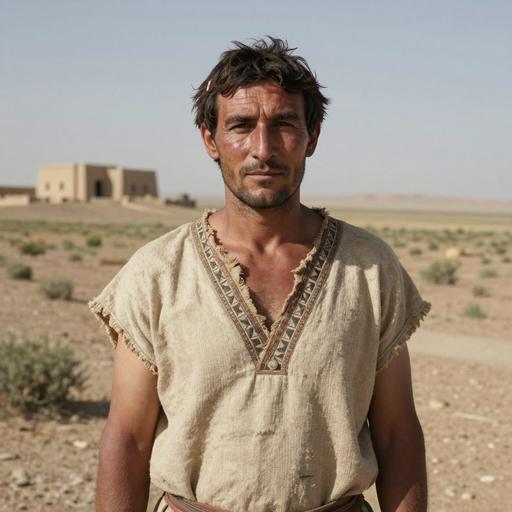
Portrait of ancient individual I12487 from Turkmenistan, dated 3400 BCE - 2800 BCE
I12487
Turkmenistan Chalcolithic Geoksyur 3400 BCE - 2800 BCE Geoksyur Culture T2g1b Direct
Chapter VI

Carrier Distribution Map

Geographic distribution of 1 ancient DNA samples carrying haplogroup T2G1B

Time Period Filter
All Time Periods
Showing all samples
Each marker represents an ancient individual
Chapter VII

Temporal Distribution

Distribution of carriers across archaeological periods

Chapter VIII

Geographic Distribution

Distribution of carriers by country of origin

Chapter IX

Country × Era Distribution

Cross-tabulation of carrier countries and archaeological periods

Data

Data & Provenance

Source information and data quality

Last Updated 2026-02-16
Confidence Score 50/100
Coverage Low
Data Source

We use the latest phylotree for MTDNA haplogroup classification and data.