Menu
mtDNA Haplogroup • Maternal Lineage

U2E1B

mtDNA Haplogroup U2E1B

~6,000 years ago
South Asia
2 subclades
20 ancient samples
Scroll to explore
Chapter I

The Story

The journey of mtDNA haplogroup U2E1B

Origins and Evolution

mtDNA haplogroup U2E1B is a maternal subclade of U2E1, itself nested within the broader U2E branch of haplogroup U. U2E1 has been inferred to have a South Asian origin in the late Pleistocene to early Holocene (roughly ~12 kya for the parent clade). As a downstream lineage, U2E1B most likely diverged from other U2E1 lineages during the Holocene (we estimate a time depth on the order of ~6 kya), reflecting regional differentiation among maternal lineages within South Asia after the Last Glacial and during the Neolithic-to-Bronze Age transition.

Phylogenetically, U2E1B inherits the defining mutations of U2E1 and carries additional private or derived variants that distinguish it from sibling subclades (e.g., U2E1A, U2E1C where recognized). Its presence in modern and ancient samples indicates it has been a persistent, though typically low- to moderate-frequency, maternal lineage in the subcontinent and adjacent regions.

Subclades

As a named subclade (U2E1B), this lineage may itself contain further lower-level branches detected in population or ancient DNA surveys; however, published sampling has been sparse compared with major continental haplogroups. Reported structure is usually limited to a few derived branches defined by private mutations in high-resolution mtDNA studies. Continued mitogenome sequencing in South Asia and neighboring regions is likely to clarify internal diversity and reveal additional sub-branches of U2E1B.

Geographical Distribution

Primary distribution: U2E1B is concentrated in South Asia, where it appears across both tribal and caste populations in India and in neighboring Pakistani groups. Within South Asia, its frequency varies by population and region, often appearing at low-to-moderate frequencies in targeted sampling of rural and tribal groups.

Secondary and sporadic occurrences: U2E1B (and closely related U2E1 lineages) have been reported at low frequencies in Central Asia and on the Iranian Plateau (West Asia), and there are occasional detections in West Eurasia and North Africa in both modern and ancient DNA datasets. The presence of U2E1 lineages in ancient West Eurasian contexts indicates episodic movement or long-distance ancestry connections, but U2E1B itself is more strongly linked to South Asian demographic history.

Ancient DNA: U2E1 and its subclades, including U2E1B-like lineages, have been observed in a modest number of ancient samples (the parent clade has recorded multiple identifications). These ancient occurrences help anchor the clade to South Asian and adjacent archaeological contexts through the Holocene.

Historical and Cultural Significance

Because U2E1B is largely a regional maternal lineage, it is most informative for reconstructing population structure, maternal continuity, and local demographic events in South Asia. Its time depth in the Holocene makes it relevant to discussions of Neolithic and post-Neolithic population processes in the subcontinent, including the spread and local adoption of agriculture, regional population expansions, and continuity of tribal and caste maternal lineages.

U2E1B may appear in archaeological contexts associated with South Asian Neolithic–Bronze Age cultures (for example, populations contemporaneous with the early agricultural communities and later the Indus Valley/Harappan cultural horizon), but current data are insufficient to tie it conclusively as a marker of any single archaeological culture; it is better interpreted as part of the broader maternal genetic tapestry of Holocene South Asia.

Conclusion

U2E1B is a regional, Holocene-aged mtDNA subclade of U2E1 that highlights maternal continuity and local diversification within South Asia. While not a high-frequency continental marker, its presence in modern and ancient samples across South Asia and neighboring regions makes it valuable for fine-scale studies of maternal lineage history, migration, and population structure. Ongoing mitogenome sequencing and denser ancient DNA sampling will refine the phylogeny, dating and geographic resolution for U2E1B and its sub-branches.

Key Points

  • Origins and Evolution
  • Subclades
  • Geographical Distribution
  • Historical and Cultural Significance
  • Conclusion
Chapter II

Tree & Relationships

Phylogenetic context and subclades

Evolution Path

This haplogroup's evolutionary journey from its earliest ancestor to the present.

Steps Haplogroup Age Estimate Archaeology Era Time Passed Immediate Descendants Tested Modern Descendants Ancient Connections
1 U2E1B Current ~6,000 years ago 🪨 Chalcolithic 6,000 years 2 20 20
2 U2E1 ~12,000 years ago 🌾 Neolithic 12,000 years 6 99 0
3 U2E ~18,000 years ago 🏹 Mesolithic 18,000 years 3 194 45
4 U2 ~38,000 years ago 🦴 Paleolithic 38,000 years 5 757 37
5 U ~46,000 years ago 🦴 Paleolithic 46,000 years 12 2,835 110
6 R ~60,000 years ago 🦴 Paleolithic 60,000 years 12 10,987 57
7 N ~60,000 years ago 🦴 Paleolithic 60,000 years 15 15,452 13
8 L3 ~70,000 years ago 🦴 Paleolithic 70,000 years 11 17,621 6
9 L ~160,000 years ago 🦴 Paleolithic 160,000 years 7 18,987 5

Siblings (5)

Other branches from the same parent haplogroup

Chapter III

Where in the World

Geographic distribution and modern presence

Place of Origin

South Asia

Modern Distribution

The populations where mtDNA haplogroup U2E1B is found include:

  1. Various Indian caste and tribal groups (India)
  2. Pakistani populations (Punjabi, Sindhi, Pashtun, Baloch and related groups)
  3. Central Asian populations (Kazakh, Uzbek, Tajik and adjacent groups)
  4. Populations on the Iranian Plateau and broader West Asian corridor
  5. European populations at very low, sporadic frequency (mainly Eastern/Central Europe in isolated reports)
  6. North African groups at low frequency (reported in limited Berber-adjacent samples)
  7. Ancient archaeological samples from South Asia and neighboring West Eurasian contexts (Holocene-period detections)
CHAPTER IV

When in Time

Your haplogroup in the context of human history

~10k years ago

Neolithic Revolution

Agriculture begins, settled communities form

~6k years ago

Haplogroup U2E1B

Your mtDNA haplogroup emerged in South Asia

South Asia
~5k years ago

Bronze Age

Metalworking, writing, and early civilizations

~3k years ago

Iron Age

Iron tools, expanded trade networks

~2k years ago

Classical Antiquity

Greek and Roman civilizations flourish

Present

Present Day

Modern era

Your Haplogroup
Historical Era
Chapter IV-B

Linked Cultures

Ancient cultures associated with mtDNA haplogroup U2E1B

Cultural Heritage

These ancient cultures have been linked to haplogroup U2E1B based on matching ancient DNA samples from archaeological excavations. The presence of this haplogroup in these cultures provides insights into the migrations and population movements of populations carrying this haplogroup.

Altai-Sayan Anatolian Iron Age Bell Beaker British Chalcolithic Canaanite Fatyanovo Culture Iranian Bronze-Iron Transition Kairan Culture Kuokesuxi Culture Magyar Commoner Culture Middle Bronze Age Romanian North Caucasus Culture Sarmatian Culture
Culture assignments are based on archaeological context of ancient DNA samples and may represent regional associations during specific time periods.
Chapter V

Sample Catalog

Top 20 ancient DNA samples directly related to haplogroup U2E1B or parent clades

20 / 20 samples
Portrait Sample Country Era Date Culture mtDNA Match
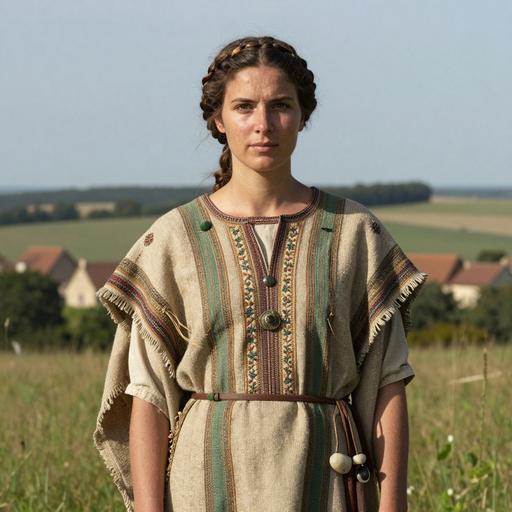
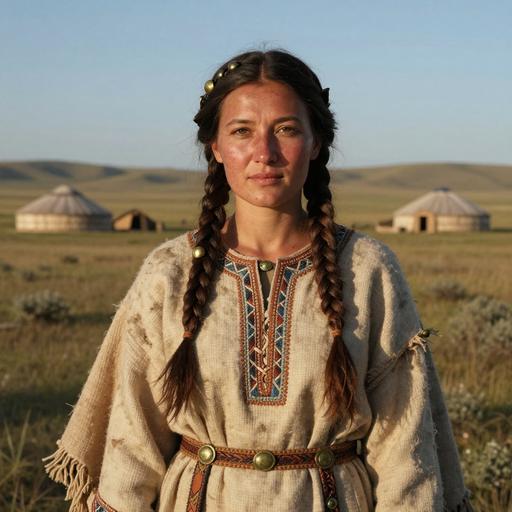
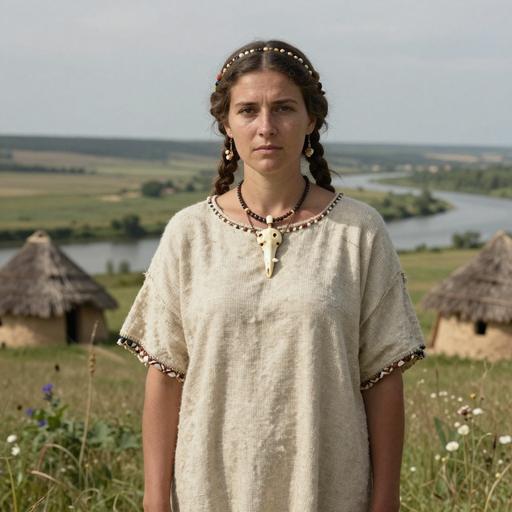
Portrait of ancient individual BFM265 from France, dated 300 BCE - 150 BCE
BFM265
France Iron Age II Hauts-de-France, France 300 BCE - 150 BCE Iron Age II Culture U2e1b2 Direct
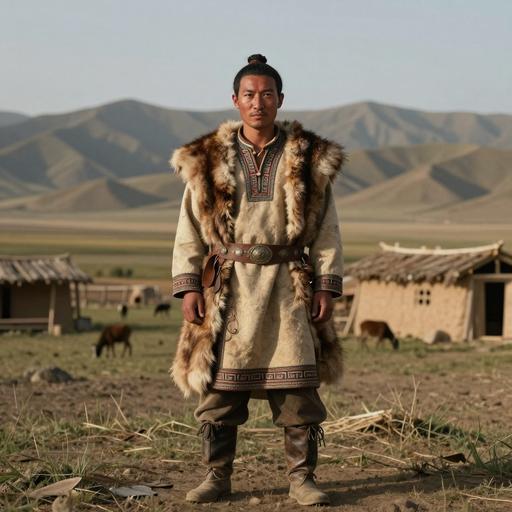
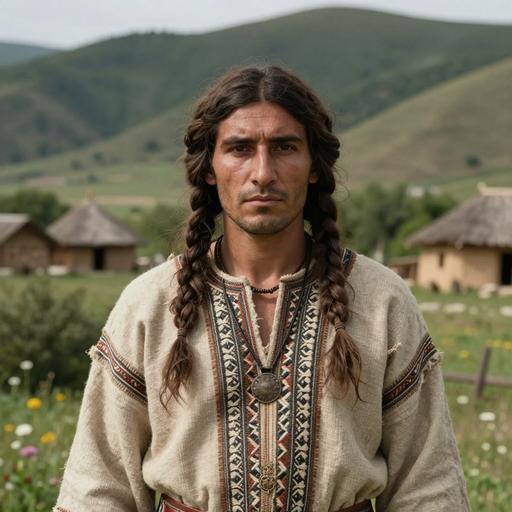
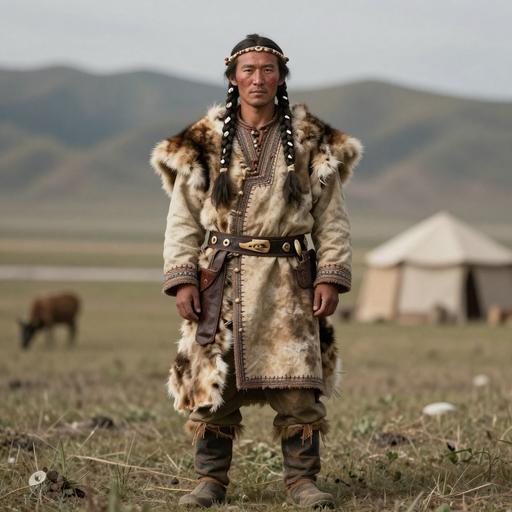
Portrait of ancient individual C1673 from China, dated 361 BCE - 197 BCE
C1673
China Early Iron Age Kuokesuxi, Xinjiang, China 361 BCE - 197 BCE Kuokesuxi Culture U2e1b Direct
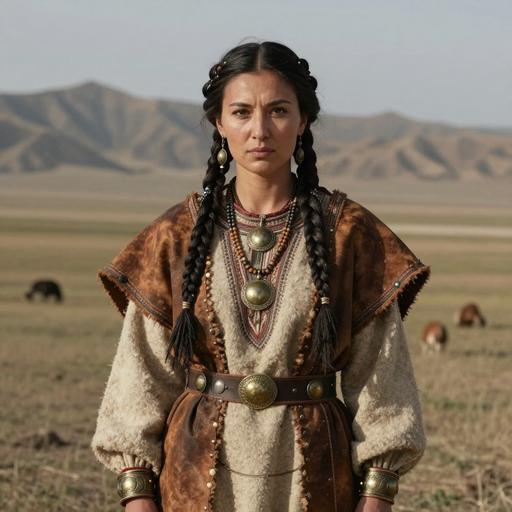
Portrait of ancient individual AIG003 from Kazakhstan, dated 386 BCE - 203 BCE
AIG003
Kazakhstan Iron Age Sarmatian, Kazakhstan 386 BCE - 203 BCE Sarmatian Culture U2e1b Direct
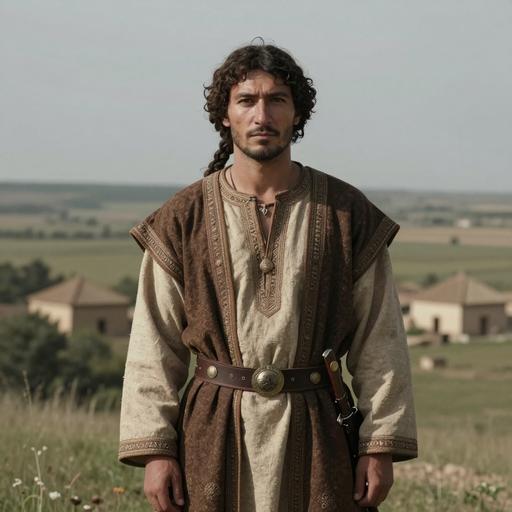
Portrait of ancient individual RKF027 from Hungary, dated 580 CE - 804 CE
RKF027
Hungary Avar Khaganate 580 CE - 804 CE Avar U2e1b1 Direct
Portrait of ancient individual SZKT-265 from Hungary, dated 600 CE - 900 CE
SZKT-265
Hungary Late Avar Period Hungary 600 CE - 900 CE Avar Culture U2e1b1 Direct
Portrait of ancient individual PLE-28 from Hungary, dated 950 CE - 1000 CE
PLE-28
Hungary Conqueror Commoner Hungary 950 CE - 1000 CE Magyar Commoner Culture U2e1b Direct
Portrait of ancient individual I14734 from Turkey, dated 1000 BCE - 100 BCE
I14734
Turkey Iron Age Turkey 1000 BCE - 100 BCE Anatolian Iron Age U2e1b Direct
Portrait of ancient individual PCA0550 from Poland, dated 1000 CE - 1200 CE
PCA0550
Poland Iron Age Balczewo Culture 1000 CE - 1200 CE Balczewo Culture U2e1b1 Direct
Portrait of ancient individual I3915 from Iran, dated 1002 BCE - 841 BCE
I3915
Iran The Transition from Bronze Age to Iron Age in Iran 1002 BCE - 841 BCE Iranian Bronze-Iron Transition U2e1b Direct
Portrait of ancient individual I10101 from Israel, dated 1600 BCE - 1500 BCE
I10101
Israel Middle to Late Bronze Age Israel 1600 BCE - 1500 BCE Canaanite U2e1b Direct
Chapter VI

Carrier Distribution Map

Geographic distribution of 20 ancient DNA samples carrying haplogroup U2E1B

Time Period Filter
All Time Periods
Showing all samples
Each marker represents an ancient individual
Chapter VII

Temporal Distribution

Distribution of carriers across archaeological periods

Chapter VIII

Geographic Distribution

Distribution of carriers by country of origin

Chapter IX

Country × Era Distribution

Cross-tabulation of carrier countries and archaeological periods

Data

Data & Provenance

Source information and data quality

Last Updated 2026-02-16
Confidence Score 50/100
Coverage Low
Data Source

We use the latest phylotree for MTDNA haplogroup classification and data.