Menu
mtDNA Haplogroup • Maternal Lineage

U2E1H

mtDNA Haplogroup U2E1H

~6,000 years ago
South Asia
2 subclades
21 ancient samples
Scroll to explore
Chapter I

The Story

The journey of mtDNA haplogroup U2E1H

Origins and Evolution

mtDNA haplogroup U2E1H is a downstream subclade of U2E1, itself a branch of the broader U2E/U2 lineage. The parent clade U2E1 most likely arose in South Asia in the late Pleistocene–early Holocene (around ~12 kya) and diversified into several subbranches. U2E1H appears to be a later, regionally restricted offshoot that likely differentiated in South Asia during the mid-Holocene (estimated here at roughly ~6 kya), reflecting further local maternal-lineage diversification after the initial establishment of U2E1 in the subcontinent.

The evolutionary history of U2E1H is best interpreted in the context of South Asian maternal phylogeography: many U2-derived lineages show long-term continuity in the region, often concentrated among both tribal and caste populations. Mutational markers that define U2E1H place it as a derived lineage nested within U2E1; therefore its time depth is necessarily younger than the parental node and its geographic footprint is more localized.

Subclades (if applicable)

As a named subclade beneath U2E1, U2E1H may itself harbor further downstream diversity detectable with high-resolution whole-mitogenome sequencing. Current classification and sampling density in South Asia remain incomplete relative to some regions, so additional fine-scale subclades of U2E1H may be discovered as more mitogenomes from under-sampled tribal and rural populations are analyzed. At present, U2E1H is best treated as a regional sub-branch with limited reported internal substructure in public databases.

Geographical Distribution

Primary concentration: South Asia (India and surrounding areas), where U2E1 and its subclades including U2E1H are observed at appreciable frequencies in diverse caste and tribal groups. Secondary presence: Pakistan and parts of Central Asia, reflecting historical gene flow across the northwestern and north-central corridors of the subcontinent. Tertiary/rare occurrences: Sporadic low-frequency detections reported in West Eurasia (including some Eastern/Central European and Near Eastern samples) and North Africa; such occurrences are likely the result of long-distance migrations, trade, or rare founder events.

Ancient DNA evidence shows that the parental U2E1 lineage has been identified in archaeological contexts (the parent U2E1 appears in multiple ancient samples in some databases). U2E1H itself has more limited ancient representation in publicly available datasets, consistent with a regional Holocene expansion and incomplete sampling.

Historical and Cultural Significance

Because U2E1H is concentrated in South Asia, its historical significance is tied to the maternal demographic history of the subcontinent. It likely persisted through major cultural transitions in the region — from Mesolithic/Neolithic forager-to-farmer processes to Chalcolithic and Bronze Age societies (including populations that participated in or neighbored the Indus Valley/Harappan cultural sphere). In many South Asian populations, U2-derived lineages are found across both tribal and caste groups, indicating deep ancestry that predates many later social reorganizations.

Secondary dispersal into Pakistan and Central Asia may reflect prehistoric and historic northwestern connections (overland routes, trade, and population movements) rather than a major continent-scale expansion. The low-frequency detections in West Eurasia and North Africa, when present, are most plausibly attributed to episodic contacts, trading networks, or small-scale migrations rather than large-scale demographic replacements.

Conclusion

U2E1H represents a geographically focused maternal lineage that illustrates the fine-scale structure of South Asian mitochondrial diversity generated in the Holocene. Its position as a derived branch of U2E1 situates it within a lineage with deep South Asian roots, and its distribution highlights continuity within the subcontinent with limited spillover into adjacent regions. Improved mitogenomic sampling across South and Central Asia and further ancient DNA recovery will refine the internal topology and chronology of U2E1H and clarify its role in regional prehistory.

Key Points

  • Origins and Evolution
  • Subclades (if applicable)
  • Geographical Distribution
  • Historical and Cultural Significance
  • Conclusion
Chapter II

Tree & Relationships

Phylogenetic context and subclades

Evolution Path

This haplogroup's evolutionary journey from its earliest ancestor to the present.

Steps Haplogroup Age Estimate Archaeology Era Time Passed Immediate Descendants Tested Modern Descendants Ancient Connections
1 U2E1H Current ~6,000 years ago 🪨 Chalcolithic 6,000 years 2 0 21
2 U2E1 ~12,000 years ago 🌾 Neolithic 12,000 years 6 99 0
3 U2E ~18,000 years ago 🏹 Mesolithic 18,000 years 3 194 45
4 U2 ~38,000 years ago 🦴 Paleolithic 38,000 years 5 757 37
5 U ~46,000 years ago 🦴 Paleolithic 46,000 years 12 2,835 110
6 R ~60,000 years ago 🦴 Paleolithic 60,000 years 12 10,987 57
7 N ~60,000 years ago 🦴 Paleolithic 60,000 years 15 15,452 13
8 L3 ~70,000 years ago 🦴 Paleolithic 70,000 years 11 17,621 6
9 L ~160,000 years ago 🦴 Paleolithic 160,000 years 7 18,987 5

Siblings (5)

Other branches from the same parent haplogroup

Chapter III

Where in the World

Geographic distribution and modern presence

Place of Origin

South Asia

Modern Distribution

The populations where mtDNA haplogroup U2E1H is found include:

  1. Various Indian caste and tribal groups (India)
  2. Pakistani populations (Punjabi, Sindhi, Pashtun, Baloch groups)
  3. Central Asian populations (Kazakh, Uzbek, Tajik and related groups)
  4. Near Eastern populations on the Iranian Plateau and adjacent areas
  5. European populations at very low frequency (sporadic detections in Eastern/Central Europe)
  6. North African groups at low frequency (reported in some Berber-adjacent samples)
  7. Indigenous northern European groups in rare cases (reported in limited studies)
  8. Ancient Mesolithic/Neolithic archaeological samples in West Eurasia and South Asia (sporadic ancient DNA occurrences)
CHAPTER IV

When in Time

Your haplogroup in the context of human history

~10k years ago

Neolithic Revolution

Agriculture begins, settled communities form

~6k years ago

Haplogroup U2E1H

Your mtDNA haplogroup emerged in South Asia

South Asia
~5k years ago

Bronze Age

Metalworking, writing, and early civilizations

~3k years ago

Iron Age

Iron tools, expanded trade networks

~2k years ago

Classical Antiquity

Greek and Roman civilizations flourish

Present

Present Day

Modern era

Your Haplogroup
Historical Era
Chapter IV-B

Linked Cultures

Ancient cultures associated with mtDNA haplogroup U2E1H

Cultural Heritage

These ancient cultures have been linked to haplogroup U2E1H based on matching ancient DNA samples from archaeological excavations. The presence of this haplogroup in these cultures provides insights into the migrations and population movements of populations carrying this haplogroup.

Arkotkila Culture Bell Beaker Fedorovo Culture Frälsegården Jierzankale Culture Kazakh Mys Culture Late Bronze Age Armenian Magyar Elite Culture Sarmatian Sintashta Culture Yenisei Culture
Culture assignments are based on archaeological context of ancient DNA samples and may represent regional associations during specific time periods.
Chapter V

Sample Catalog

Top 21 ancient DNA samples directly related to haplogroup U2E1H or parent clades

21 / 21 samples
Portrait Sample Country Era Date Culture mtDNA Match
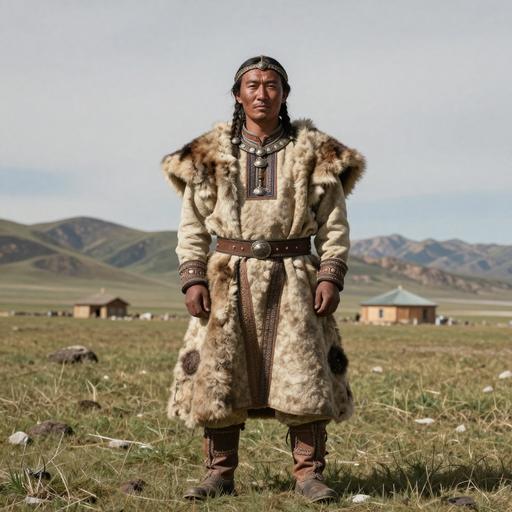
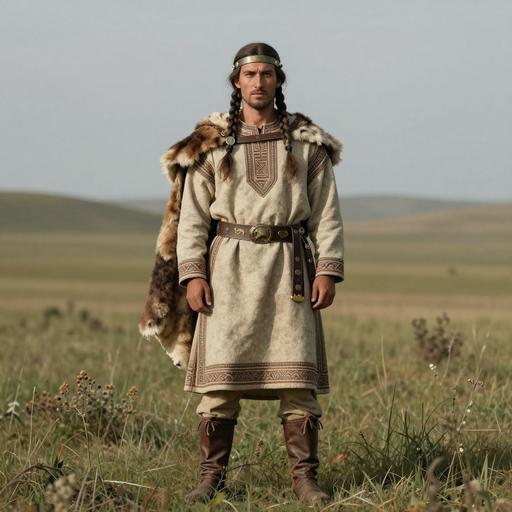
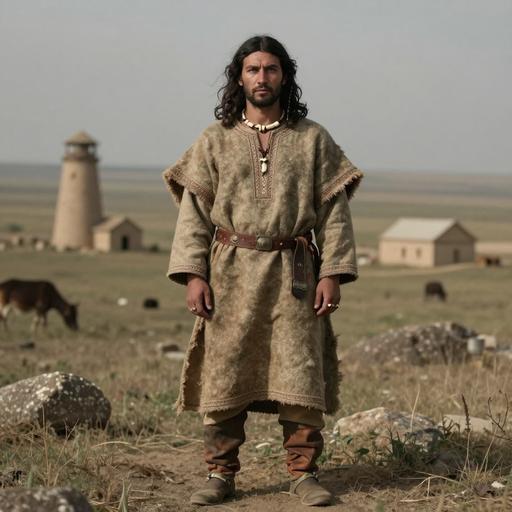
Portrait of ancient individual C2032 from China, dated 70 CE - 208 CE
C2032
China Historical Period Xianshuiquangucheng, Xinjiang, China 70 CE - 208 CE Xianshuiquangucheng Culture U2e1h Direct
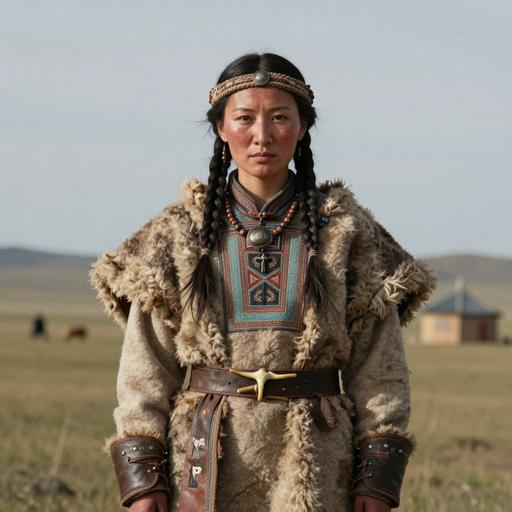
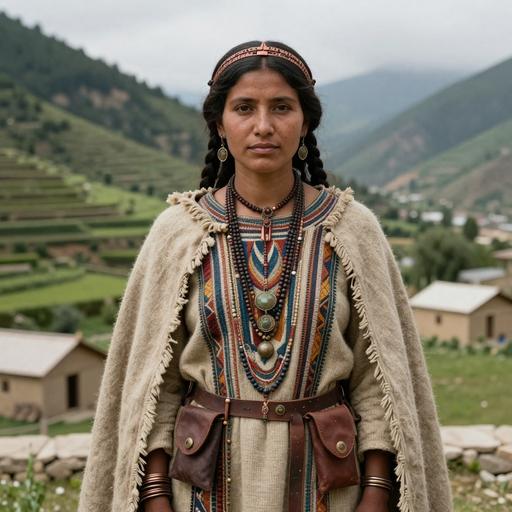
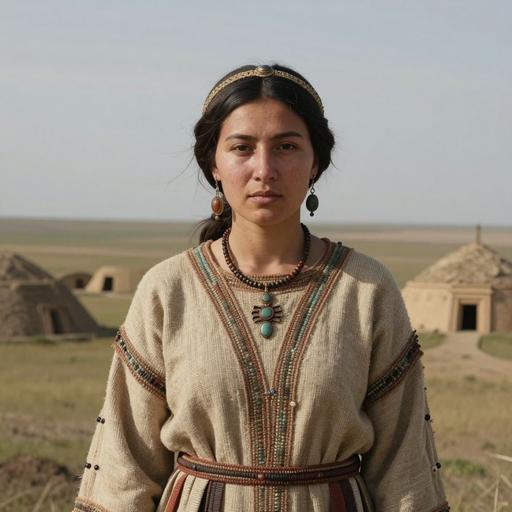
Portrait of ancient individual I6230 from Mongolia, dated 346 BCE - 57 BCE
I6230
Mongolia Early Iron Age Sagly Culture 4, Mongolia 346 BCE - 57 BCE Sagly Culture U2e1h Direct
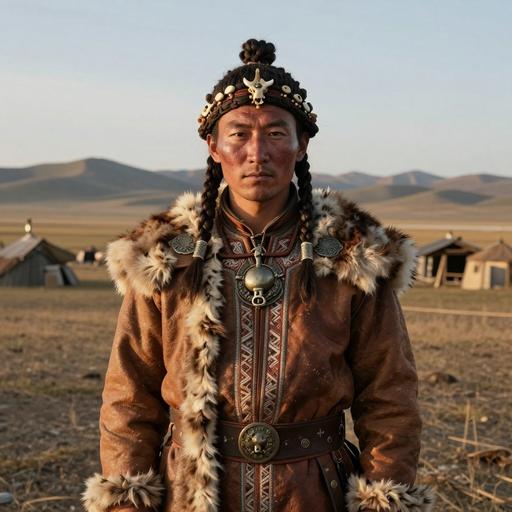
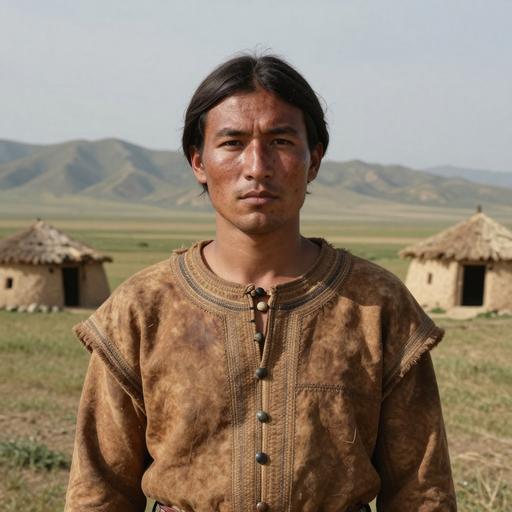
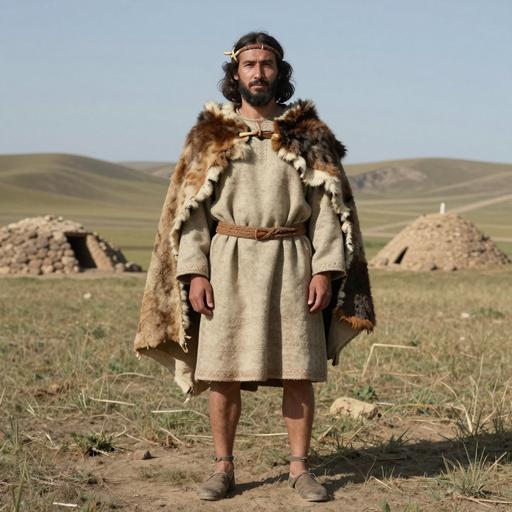
Portrait of ancient individual CHN006 from Mongolia, dated 400 BCE - 1500 CE
CHN006
Mongolia Early Iron Age to Xiongnu to Late Medieval Uvs, Mongolia 400 BCE - 1500 CE Uvs Multi-Period U2e1h Direct
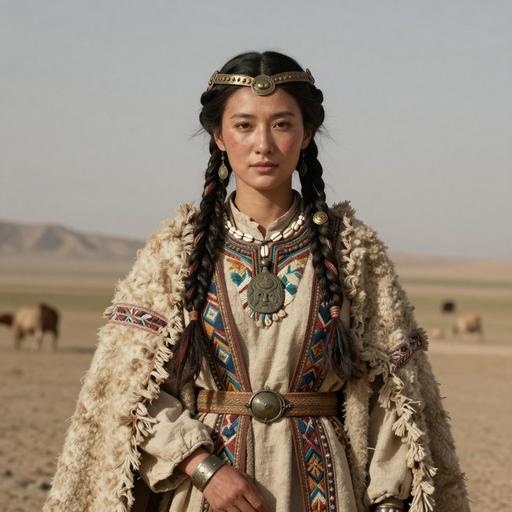
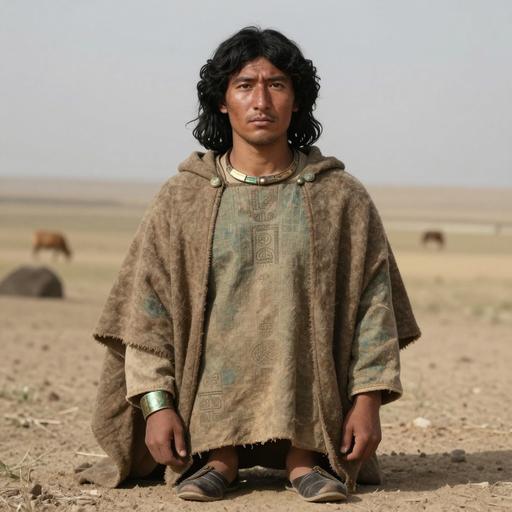
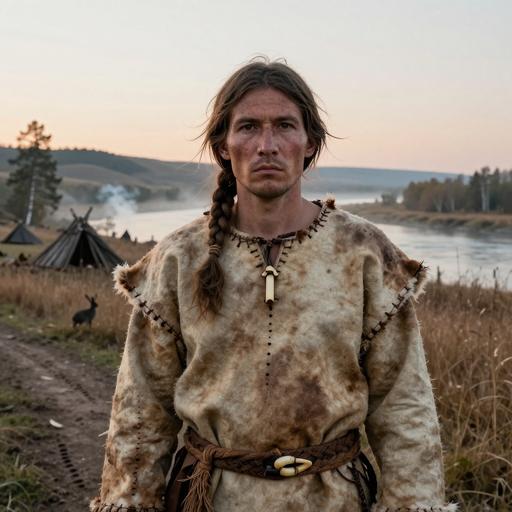
Portrait of ancient individual CHN007 from Mongolia, dated 400 BCE - 1500 CE
CHN007
Mongolia Early Iron Age to Xiongnu to Late Medieval Uvs, Mongolia 400 BCE - 1500 CE Uvs Multi-Period U2e1h Direct
Portrait of ancient individual A181015 from Hungary, dated 400 CE - 500 CE
A181015
Hungary Late Sarmatian to Early Hun Period Danube-Tisza, Hungary 400 CE - 500 CE Sarmatian-Hun U2e1h Direct
Portrait of ancient individual I16759 from Hungary, dated 700 CE - 750 CE
I16759
Hungary Late Avar Period in South Transdanubia, Hungary 700 CE - 750 CE Avar Culture U2e1h Direct
Portrait of ancient individual C1203 from China, dated 733 BCE - 397 BCE
C1203
China Iron Age Jierzankale, Xinjiang, China 733 BCE - 397 BCE Jierzankale Culture U2e1h Direct
Portrait of ancient individual DA145 from Russia, dated 800 BCE - 100 CE
DA145
Russia Sarmatian Culture, Russia 800 BCE - 100 CE Sarmatian U2e1h Direct
Portrait of ancient individual DA145 from Russia, dated 800 BCE - 100 CE
DA145
Russia The Sarmatian Culture 800 BCE - 100 CE U2e1h Direct
Portrait of ancient individual SEO-3 from Hungary, dated 900 CE - 1000 CE
SEO-3
Hungary Conqueror Elite Hungary 900 CE - 1000 CE Magyar Elite Culture U2e1h Direct
Chapter VI

Carrier Distribution Map

Geographic distribution of 21 ancient DNA samples carrying haplogroup U2E1H

Time Period Filter
All Time Periods
Showing all samples
Each marker represents an ancient individual
Chapter VII

Temporal Distribution

Distribution of carriers across archaeological periods

Chapter VIII

Geographic Distribution

Distribution of carriers by country of origin

Chapter IX

Country × Era Distribution

Cross-tabulation of carrier countries and archaeological periods

Data

Data & Provenance

Source information and data quality

Last Updated 2026-02-16
Confidence Score 50/100
Coverage Low
Data Source

We use the latest phylotree for MTDNA haplogroup classification and data.