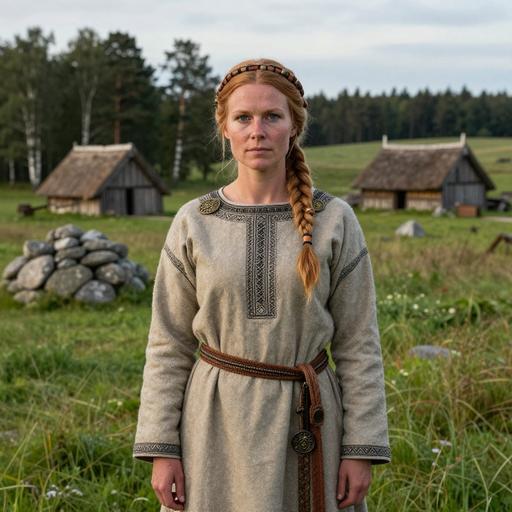
The Story
The journey of mtDNA haplogroup U2E1F
Origins and Evolution
mtDNA haplogroup U2E1F is a downstream subclade of U2E1 (itself within U2E → U2), a maternal lineage that has strong ties to the South Asian Holocene population history. Given the estimated origin of U2E1 at ~12 kya and the internal diversity observed in U2E-derived lineages, U2E1F plausibly coalesced in the early Holocene (roughly around 7 kya), likely within South Asia. Its emergence fits the pattern of localized diversification of U lineages in the subcontinent following late Pleistocene population stabilizations and early Holocene demographic processes.
Contemporary and ancient DNA data indicate that U2E1 and descendant subclades (including U2E1F) were maintained at low to moderate frequencies in a range of South Asian populations and occasionally transmitted beyond the subcontinent through migration and long-distance contacts.
Subclades
U2E1F is an intermediate/terminal branch within U2E1. Depending on future sequencing of more full mitochondrial genomes, it may itself split into further sublineages defined by additional private mutations. At present it is best treated as a locality-sensitive subclade whose internal structure is sparsely sampled; many published studies identify U2E1 sublineages by control-region or partial mitogenomes, so full mitogenome surveys in South Asia and adjoining regions are likely to reveal finer branching under U2E1F.
Geographical Distribution
The highest relative frequency and diversity of U2E1F are expected in mainland South Asia, particularly among a mix of caste and tribal groups sampled in India. Secondary occurrences are documented in Pakistan (Punjab, Sindh and some Pashtun/Baloch groups) and in parts of Central Asia (e.g., populations of the northern Indian subcontinent–Central Asian contact zone). At very low frequency, U2E1-derived lineages including U2E1F appear sporadically in West Eurasian and North African datasets and in rare ancient DNA contexts in West/Central Asia and parts of Europe — these occurrences typically reflect long-distance gene flow, historical migrations, or survivals of older trans-regional lineages rather than broad regional expansion.
Historical and Cultural Significance
Because U2E1F is most concentrated in South Asia and arises in the early Holocene, it likely traces maternal lineages associated with local hunter-gatherer and early farming communities that persisted through the Neolithic into the Bronze Age societies of the subcontinent. It may have been present in populations associated with early South Asian Neolithic sites (e.g., Neolithic/Chalcolithic settlements such as Mehrgarh) and later within the genetic substrate of Bronze Age urban/complex societies (e.g., the Indus Valley), though direct ancient-DNA evidence for U2E1F specifically remains limited. Sporadic detections outside South Asia are useful for reconstructing historical contacts (trade, migration, or small-scale population movements) across the Iranian plateau, Central Asia and into parts of West Eurasia.
Conclusion
U2E1F represents a localized maternal branch within the broader U2E1 family, reflecting early Holocene diversification in South Asia with limited downstream spread. Its study is informative for reconstructing fine-scale maternal demographic events in the Indian subcontinent and for tracking episodes of low-frequency maternal gene flow between South Asia and adjacent regions. Expanded full mitogenome sampling in South Asia, Pakistan and Central Asia will refine the internal phylogeny and precise age estimates of U2E1F and its sublineages.
Key Points
- Origins and Evolution
- Subclades
- Geographical Distribution
- Historical and Cultural Significance
- Conclusion