Menu
mtDNA Haplogroup • Maternal Lineage

U5A2

mtDNA Haplogroup U5A2

~18,000 years ago
Northern and Eastern Europe
6 subclades
Scroll to explore
Chapter I

The Story

The journey of mtDNA haplogroup U5A2

Origins and Evolution

Haplogroup U5A2 is a subclade of U5a, itself a major branch of mitochondrial haplogroup U5, one of the oldest and most characteristic maternal lineages of prehistoric Europe. U5a likely diversified during the Late Upper Paleolithic, and U5A2 is inferred to have arisen after the Last Glacial Maximum, roughly in the range of the Late Upper Paleolithic to early Mesolithic (here estimated ~18 kya). This timing and phylogenetic position link U5A2 to the post-glacial re-expansion and persistence of hunter-gatherer populations in northern and eastern parts of the continent.

Genetic studies of both modern populations and ancient DNA have shown that U5 lineages were widespread among European hunter-gatherers, with U5A2 representing one of the specific maternal lines that survived into later prehistoric and historic populations. The lineage's coalescence within U5a makes it part of the deep European maternal substrate that predates the Neolithic farming expansions.

Subclades

Within U5A2 there are further downstream branches (commonly reported in the literature and databases as U5a2a, U5a2b, etc.), each defined by additional private mutations. Subclades of U5A2 can show regional structure: some branches are enriched in northern Fennoscandia and the Baltic, while others appear with low frequency in western and central Europe or in archaeological contexts beyond Europe. Ancient DNA increasingly resolves finer substructure, allowing assignment of archaeological samples to particular U5A2 sublineages.

Geographical Distribution

Modern distribution: U5A2 is most frequent in Northern and Eastern Europe, including elevated representation among Saami and some Finno-Ugric-speaking populations, as well as among Scandinavians and Baltic groups. It also appears at lower frequencies in Western Europe (including parts of Iberia and the British Isles), the Caucasus, and sporadically in parts of North Africa and Central Asia, reflecting complex prehistoric movements and later gene flow.

Ancient DNA: U5A2 is detected in Mesolithic and later prehistoric European remains, consistent with a strong association with Paleolithic/Mesolithic hunter-gatherers and with persistence into the Neolithic and Bronze Age at variable frequencies. The presence of U5A2 in archaeological contexts supports continuity of some maternal lines from the Late Pleistocene into more recent periods.

Historical and Cultural Significance

U5A2 is part of the maternal signature often used to identify the genetic legacy of European hunter-gatherers. Its persistence into historical populations — and its high relative frequency among the Saami and some northern groups — has made it a marker for studies of postglacial recolonization, continuity versus replacement debates, and the genetic impacts of later migrations (for example, Neolithic farmers and Bronze Age pastoralists).

Although U5A2 itself is not tied to a single archaeological culture, it appears in contexts associated with Mesolithic hunter-gatherer groups and can be found at low frequencies in later cultural horizons (Neolithic, Corded Ware, Bell Beaker) where hunter-gatherer ancestry mixed with incoming farming and steppe-derived groups.

Conclusion
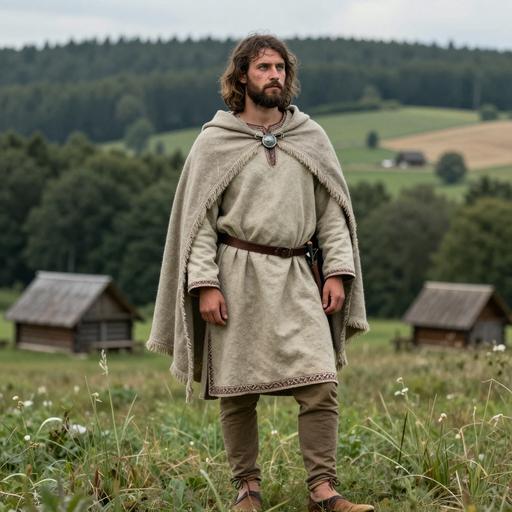
Haplogroup U5A2 is a geographically and temporally informative mtDNA lineage that signals deep European maternal ancestry. Its distribution and persistence from the Late Upper Paleolithic through the Mesolithic and into historic times make it valuable for reconstructing the demographic history of northern and eastern Europe, particularly regarding hunter-gatherer continuity and regional population structure. As ancient DNA sampling grows, the phylogeographic resolution of U5A2 subclades continues to refine our understanding of postglacial population dynamics in Europe.

Key Points

  • Origins and Evolution
  • Subclades
  • Geographical Distribution
  • Historical and Cultural Significance
  • Conclusion

Chapter II

Tree & Relationships

Phylogenetic context and subclades

Evolution Path

This haplogroup's evolutionary journey from its earliest ancestor to the present.

Steps Haplogroup Age Estimate Archaeology Era Time Passed Immediate Descendants Tested Modern Descendants Ancient Connections
1 U5A2 Current ~18,000 years ago 🏹 Mesolithic 18,000 years 6 119 0
2 U5a ~27,000 years ago 🦴 Paleolithic 27,000 years 1 126 110
3 U ~46,000 years ago 🦴 Paleolithic 46,000 years 12 2,835 110
4 R ~60,000 years ago 🦴 Paleolithic 60,000 years 12 10,987 57
5 N ~60,000 years ago 🦴 Paleolithic 60,000 years 15 15,452 13
6 L3 ~70,000 years ago 🦴 Paleolithic 70,000 years 11 17,621 6
7 L ~160,000 years ago 🦴 Paleolithic 160,000 years 7 18,987 5
Chapter III

Where in the World

Geographic distribution and modern presence


Place of Origin

Northern and Eastern Europe

Modern Distribution

The populations where mtDNA haplogroup U5A2 is found include:

  1. Northern Europeans (Scandinavia, Finland)
  2. Saami people of Fennoscandia
  3. Eastern Europeans (Baltic states, northwestern Russia)
  4. Western and Central Europeans at lower to moderate frequencies
  5. Populations in the Caucasus at low frequencies
  6. Isolated occurrences in North Africa and Central Asia (low frequency)
  7. Ancient European hunter-gatherer populations (Mesolithic archaeological contexts)
CHAPTER IV

When in Time

Your haplogroup in the context of human history

~20k years ago

Last Glacial Maximum

Peak of the last ice age, populations isolated

~18k years ago

Haplogroup U5A2

Your mtDNA haplogroup emerged in Northern and Eastern Europe

Northern and Eastern Europe
~10k years ago

Neolithic Revolution

Agriculture begins, settled communities form

~5k years ago

Bronze Age

Metalworking, writing, and early civilizations

~3k years ago

Iron Age

Iron tools, expanded trade networks

~2k years ago

Classical Antiquity

Greek and Roman civilizations flourish

Present

Present Day

Modern era

Your Haplogroup
Historical Era
Chapter IV-B

Linked Cultures

Ancient cultures associated with mtDNA haplogroup U5A2

Cultural Heritage

These ancient cultures have been linked to haplogroup U5A2 based on matching ancient DNA samples from archaeological excavations. The presence of this haplogroup in these cultures provides insights into the migrations and population movements of populations carrying this haplogroup.

Belgian Mesolithic Culture Les Closeaux Culture Mesolithic British Mesolithic Ukrainian Minino Scandinavian Mesolithic Sidelkino Culture
Culture assignments are based on archaeological context of ancient DNA samples and may represent regional associations during specific time periods.
Chapter V

Sample Catalog

Top 50 ancient DNA samples directly related to haplogroup U5A2 or parent clades

50 / 50 samples
Portrait Sample Country Era Date Culture mtDNA Match
Portrait of ancient individual R114 from Italy, dated 1 CE - 200 CE
R114
Italy Imperial Rome 1 CE - 200 CE Roman Empire U1b1 Direct
Portrait of ancient individual R115 from Italy, dated 1 CE - 200 CE
R115
Italy Imperial Rome 1 CE - 200 CE Roman Empire U4 Direct
Portrait of ancient individual R116 from Italy, dated 1 CE - 200 CE
R116
Italy Imperial Rome 1 CE - 200 CE Roman Empire U3a2c Direct
Portrait of ancient individual R436 from Italy, dated 1 CE - 200 CE
R436
Italy Imperial Rome 1 CE - 200 CE Roman Empire U5b3a Direct
Portrait of ancient individual R45 from Italy, dated 1 CE - 400 CE
R45
Italy Imperial Rome 1 CE - 400 CE Roman Empire U3b1 Direct
Portrait of ancient individual R51 from Italy, dated 1 CE - 400 CE
R51
Italy Imperial Rome 1 CE - 400 CE Roman Empire U3b1 Direct
Portrait of ancient individual KD042 from United Kingdom, dated 1 CE - 250 CE
KD042
United Kingdom Iron Age Orkney, Scotland 1 CE - 250 CE Orcadian Iron Age U5a1b1a Direct
Portrait of ancient individual VK532 from Denmark, dated 1 CE - 200 CE
VK532
Denmark Iron Age Denmark 1 CE - 200 CE Danish Iron Age U2e2a1 Direct
Portrait of ancient individual I15514 from Serbia, dated 1 CE - 400 CE
I15514
Serbia Roman Serbia 1 CE - 400 CE Roman Provincial U4a2a Direct
Portrait of ancient individual I15536 from Serbia, dated 1 CE - 400 CE
I15536
Serbia Roman Serbia 1 CE - 400 CE Roman Provincial U5a1j Direct
Chapter VI

Carrier Distribution Map

Geographic distribution of 100 ancient DNA samples carrying haplogroup U5A2

Time Period Filter
All Time Periods
Showing all samples
Each marker represents an ancient individual
Chapter VII

Temporal Distribution

Distribution of carriers across archaeological periods

Chapter VIII

Geographic Distribution

Distribution of carriers by country of origin

Chapter IX

Country × Era Distribution

Cross-tabulation of carrier countries and archaeological periods

Data

Data & Provenance

Source information and data quality

Last Updated 2026-02-16
Confidence Score 50/100
Coverage Low
Data Source

We use the latest phylotree for MTDNA haplogroup classification and data.