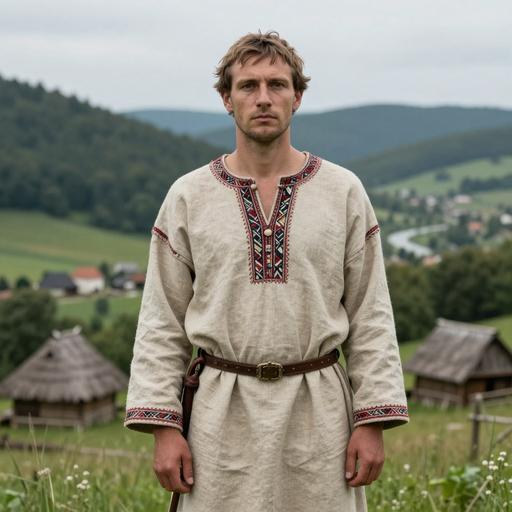
The Story
The journey of mtDNA haplogroup U5A2B1B
Origins and Evolution
Haplogroup U5A2B1B is a downstream branch of the U5A2B1 clade, itself part of the deep-rooted European maternal lineage U5. U5 lineages expanded in Europe during and after the Last Glacial Maximum (LGM) and are strongly associated with Mesolithic hunter-gatherer populations. Based on the phylogenetic position relative to U5A2B1 (estimated ~11 kya) and the limited observed diversity within U5A2B1B, this subclade most likely formed in Northern/Eastern Europe during the early Holocene (on the order of ~9 kya), following post-glacial recolonization and local diversification of hunter-gatherer groups.
Subclades (if applicable)
U5A2B1B is currently a rare and narrowly distributed subclade with limited documented internal branching in modern databases and ancient DNA reports. Where present, it tends to appear as isolated lineages or very small clusters rather than a broad, deeply diversified clade. Ancient DNA representation for this specific subclade is minimal (one identified sample in the referenced database), so finer substructure is not yet well resolved.
Geographical Distribution
The geographic footprint of U5A2B1B follows the broader pattern of U5A-derived lineages but is more restricted. It shows its highest relative concentrations in northern Fennoscandia (including Scandinavia and Finland) and among populations with documented continuity to Mesolithic hunter-gatherer ancestry (for example, Saami and some Baltic / northwestern Russian groups). Low-frequency occurrences have been reported in western and central Europe, and occasional isolated findings appear in adjacent regions such as the Caucasus, North Africa and parts of Central Asia, most likely reflecting later migrations, gene flow, or rare long-distance founder events rather than primary centers of origin.
Historical and Cultural Significance
Haplogroup U5A2B1B reflects the persistence of Mesolithic maternal ancestry in northern Europe. Its presence in modern northern populations and at least one ancient DNA context supports continuity of maternal lineages through the transition to the Neolithic and later periods, albeit at reduced frequencies after the arrival of agricultural populations. U5 subclades are often interpreted as markers of pre-farming hunter-gatherer ancestry in archaeological and population-genetic studies; U5A2B1B fits this pattern as a locally derived northern branch that survived into historic times in regions where hunter-gatherer ancestry remained comparatively high.
Conclusion
U5A2B1B is a diagnostically narrow, regionally concentrated mtDNA subclade derived from the Mesolithic U5 tradition. Its limited diversity and lowfrequency distribution emphasize continuity of ancient northern maternal lineages in Scandinavia, Finland and nearby areas, while its scarcity elsewhere highlights the strong regional structure of postglacial maternal ancestry in Europe. Continued sampling of modern populations and ancient remains may clarify its internal structure and historical migration events.
Key Points
- Origins and Evolution
- Subclades (if applicable)
- Geographical Distribution
- Historical and Cultural Significance
- Conclusion