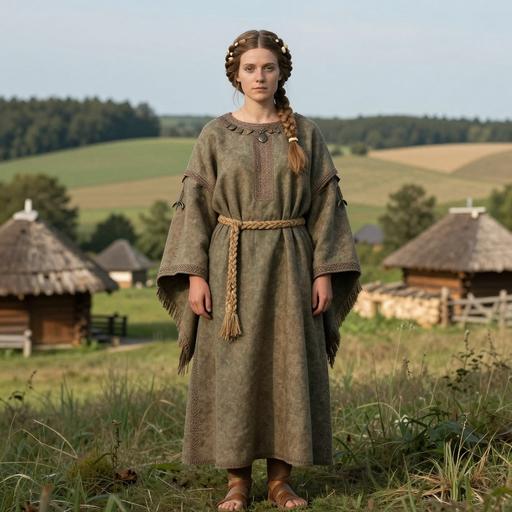
The Story
The journey of mtDNA haplogroup U5A2B4
Origins and Evolution
mtDNA haplogroup U5A2B4 sits as a downstream subclade within U5A2B, itself part of the broader U5A branch of haplogroup U5 — one of the oldest and most characteristic maternal lineages of post-glacial Europe. Based on the position of U5A2B4 in the phylogenetic tree and coalescent estimates for nearby U5A2 sublineages, its origin is best placed in northern or northeastern Europe shortly after the Last Glacial Maximum (LGM), roughly ~13 thousand years ago (kya). This timing and location are consistent with the expansion and regional differentiation of European hunter-gatherer groups recolonizing northern latitudes as the ice sheets retreated.
Subclades (if applicable)
U5A2B4 is an intermediate terminal subclade within U5A2B. At present, U5A2B4 is treated as a relatively specific lineage with few widely documented downstream branches in published population datasets; many reported observations of U5A2B4 represent individual lineages identified in modern population surveys or ancient DNA contexts. Its placement helps link the parent U5A2B diversity to local maternal lineages preserved in northern populations. As more high-resolution mitogenomes are published, additional sub-branching under U5A2B4 may be resolved.
Geographical Distribution
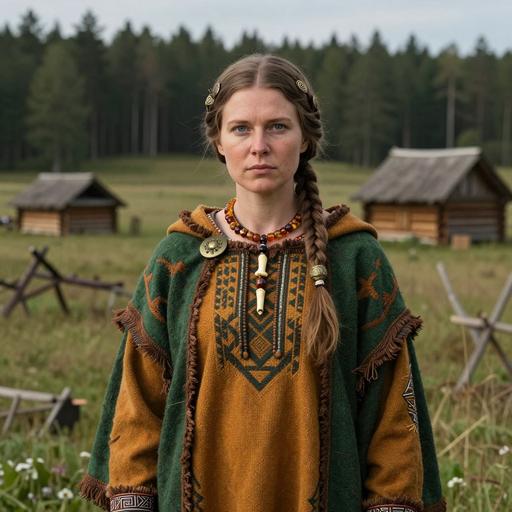
The distribution of U5A2B4 mirrors the broader U5A2B pattern but at generally lower absolute frequencies: it is most frequent in northern Fennoscandia and parts of northwestern Russia, present at appreciable frequency among some Scandinavian and Finnish populations and notably among the Saami, where deep Mesolithic-derived maternal lineages are concentrated. U5A2B4 also appears in eastern Baltic and northwestern Russian populations at moderate frequencies, while occurrences in western and central Europe are typically low and sporadic. A small number of isolated occurrences have been reported further afield (e.g., the Caucasus, parts of Central Asia, and North Africa) reflecting later movements, gene flow, or rare sampling of lineages with broader geographic histories.
Ancient DNA studies from Mesolithic European contexts have recovered U5 sublineages including U5A2 and related clades; these findings support the interpretation that U5A2B4 represents continuity from Mesolithic hunter-gatherer maternal stock into later northern populations.
Historical and Cultural Significance
U5A2B4 should be viewed primarily as a marker of Mesolithic and post-glacial maternal continuity in northern Europe. Its persistence into historic and modern populations (for example among some Scandinavian, Finnish, and Saami groups) indicates maternal-line continuity across the Mesolithic–Neolithic transition in some northern regions, where the incoming Neolithic farmer demography had a smaller genetic impact compared with southern and central Europe.
While U5A2B4 itself is not diagnostic of later migratory cultures, its presence in northern populations means it can appear in contexts associated with later archaeological cultures (e.g., Corded Ware or regional Bronze Age assemblages) as part of a mosaic population history, typically as a survivor lineage rather than a signature of those specific cultural movements.
Conclusion
U5A2B4 is a regionally informative mtDNA lineage that documents long-term maternal continuity in northern and northeastern Europe dating to the post-LGM recolonization of those areas. It is most valuable when combined with other genetic, archaeological, and linguistic data to reconstruct local demographic histories, particularly for understanding the legacy of Mesolithic hunter-gatherers in modern northern European populations.
Key Points
- Origins and Evolution
- Subclades (if applicable)
- Geographical Distribution
- Historical and Cultural Significance
- Conclusion